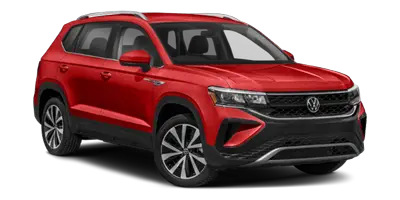
Volkswagen Taos: Customer information
- Warranty
- Event Data Recorder (EDR)
- Infotainment system and aerials
- Component protection
- Product recycling
Warranty
Warranty Information
Your vehicle may be covered by several different warranties, depending on the model, country, equipment, registration location, and applicable legal requirements:
- New Vehicle Limited Warranty.
- Limited Warranty Against Corrosion Perforation.
- Emissions Control System Warranties: Federal Emissions Control System Defect Warranty, Federal Emissions Performance Warranty.
- US battery electric vehicles: High-Voltage System Limited Warranty.
- US models: Kansas Safety Belt Limited Warranty.
- US models: California Emissions Control System Warranties: Short-term Emissions Defects Warranty, Long-term Emissions Defect Warranty, California Emissions Performance Warranty.
Warranty coverage can vary depending on vehicle use, mileage, time in service, maintenance history, market regulations, and whether repairs have been performed according to Volkswagen requirements. For the Volkswagen Taos, it is important to keep service records, repair invoices, maintenance documentation, and any warranty-related paperwork in a safe place.
You can find detailed information on the website: maintenance.vw.com
Warranty information should be reviewed together with the maintenance schedule and the vehicle documentation supplied at delivery. Some warranty coverage may require that maintenance be carried out at the specified intervals and that approved fluids, parts, and repair procedures are used.
Reporting Safety Defects
If you believe that your vehicle has a defect that could cause a crash or could cause injury or death, you should immediately inform the National Highway Traffic Safety Administration (NHTSA) in addition to notifying Volkswagen of America, Inc.
If NHTSA receives similar complaints, it may open an investigation. If the agency finds that a safety defect exists in a group of vehicles, it may order a recall and remedy campaign. However, NHTSA cannot become involved in individual problems between you, your dealer, or Volkswagen of America, Inc.
Reporting a possible safety defect is different from requesting an individual repair. A safety report helps authorities identify patterns across multiple vehicles, while warranty or service concerns should still be handled through Volkswagen, the dealer, or an authorized service facility.
To contact NHTSA, you may call the Vehicle Safety Hotline toll-free at:
Tel.: 1-888-327-4236 (TTY: 1-800-424-9153)
go to:
http://www.nhtsa.gov
or write to:
Administrator, NHTSA, 1200 New Jersey Avenue, SE. Washington, D.C. 20590
You can also obtain other information about motor vehicle safety from
http://www.safercar.gov
If you notice repeated warning lights, braking concerns, airbag warnings, steering issues, fuel odors, electrical malfunctions, or other conditions that may affect safe operation of the Volkswagen Taos, stop using the vehicle if continued driving could be unsafe and arrange for professional inspection.
Declaration of conformity
With this document, the manufacturer declares that the components listed below comply with the basic requirements and other relevant regulations and laws that applied at the time the vehicle was produced.
This declaration relates to the vehicle equipment as built and supplied by the manufacturer. If accessories, electrical devices, or retrofit components are added later, the installer and the component manufacturer may need to confirm separate compliance with applicable regulations.
Components
- 12 V socket
- Depending on the equipment and the country, additional sockets with a voltage of 100-230 V ⇒ Introduction.
Event Data Recorder (EDR)
This vehicle is equipped with an event data recorder (EDR). The main purpose of an EDR is to record, in certain crash or near crash-like situations, such as an airbag deployment or hitting a road obstacle, data that can help explain how a vehicle's systems performed. The EDR is designed to record data related to vehicle dynamics and safety systems for a short period of time, typically 30 seconds or less. The EDR in this vehicle is designed to record such data as:
- How various systems in your vehicle were operating;
- Whether or not the driver and passenger safety belts were buckled/fastened;
- How far, if at all, the driver was depressing the accelerator and/or brake pedal; and,
- How fast the vehicle was traveling.
These data can help provide a better understanding of the circumstances in which crashes and injuries occur. The information is technical in nature and is intended to describe vehicle operation and safety system response during specific events.
In addition, data from the driver assistance systems is also collected. In addition to information about whether these systems were switched on or off, had limited availability, or were inactive, it can also be understood if these functions steered, accelerated, or braked the vehicle in the situations listed above. Depending on the vehicle equipment, systems may include:
- Adaptive Cruise Control (ACC).
- Lane Assist
- Park Assist.
- Parking systems
- Autonomous Emergency Braking Function (Front Assist)
Depending on equipment, the Volkswagen Taos may use driver assistance functions that support the driver during braking, steering, parking, lane guidance, or distance monitoring. If an event occurs, recorded system data may help clarify whether these systems were available, limited, inactive, or actively assisting at the time.
NOTE: EDR data are recorded by your vehicle only if a non-trivial crash situation occurs. No data are recorded by the EDR under normal driving conditions, and no personal data such as name, gender, age, or crash location are recorded. However, other parties, such as law enforcement, could combine the EDR data with the type of personally identifying data routinely acquired during a crash investigation.
The EDR does not operate as a continuous trip recorder and is not intended to monitor everyday driving. It records only limited technical data connected with specific crash or near crash-like situations, such as airbag deployment, strong deceleration, or impact-related events.
To read data recorded by an EDR, special equipment is required, and access to the vehicle or the EDR is needed. In addition to the vehicle manufacturer, other parties, such as law enforcement, that have the special equipment, can read the information if they have access to the vehicle or the EDR.
Volkswagen will not access, read or process the Event Data Recorder (EDR) data unless the vehicle owner gives permission.
This excludes contractual or legal regulations.
Due to the legal obligation to monitor products, Volkswagen is allowed to use data for field observation as well as for research purposes and quality improvement of vehicle safety systems. For research purposes, Volkswagen provides the data to third parties in an anonymous format. This means the data does not reference the individual vehicle or the vehicle owner.
For the Volkswagen Taos, EDR information may be useful when analyzing how vehicle safety systems responded during a serious incident. At the same time, the recorded data is limited and should be interpreted only with the correct equipment, technical knowledge, and legal authority where required.
Infotainment system and aerials
The aerials for the Infotainment system are fitted in several different places in the vehicle. Depending on equipment and market version, these aerials may be integrated into glass surfaces, body areas, or exterior mounting points so radio reception, navigation, communication services, and other Infotainment functions can operate as intended.
- On the inside of the rear window.
- On the inside of the rear side windows.
- On the inside of the windshield.
- On the roof of the vehicle.
Antennas on the inside of the window glass can often be recognized as very thin metal wires or printed conductive lines. These lines are part of the vehicle equipment and must be treated carefully during cleaning, tinting, decal installation, glass repair, or any work near the window surface.
On the Volkswagen Taos, good reception depends not only on the Infotainment unit itself, but also on the correct condition of the aerials, antenna amplifier, wiring, connectors, and glass-integrated antenna structures. Damage to one of these components can lead to poor radio reception, interrupted signals, reduced navigation accuracy, or limited communication functions depending on vehicle equipment.
NOTICE
Antennas that are located on the inside of the window glass can be damaged by abrasive objects or by corrosive and acidic materials.
- Never apply stickers over metal wires, for example on the rear window.
- Never clean the antennas with corrosive or acidic materials.
- Do not scrape, polish, sand, or rub the antenna wires with hard tools, rough cloths, ice scrapers, or abrasive pads.
- If window tinting film is installed, make sure it is suitable for vehicles with glass-integrated antennas and is applied without damaging the antenna lines.
NOTICE
A retrofitted Infotainment system that is incompatible with the antenna amplifier installed in the vehicle by the manufacturer may damage the antenna amplifier.
- Before retrofitting an Infotainment system, contact an authorized Volkswagen dealer or authorized Volkswagen Service Facility. Volkswagen recommends contacting an authorized Volkswagen dealer or authorized Volkswagen Service Facility.
- Do not connect aftermarket radio, navigation, amplifier, or communication equipment to factory antenna wiring unless compatibility has been confirmed.
- Do not cut, splice, or bypass antenna cables without approved repair information, because incorrect wiring can damage components or reduce reception quality.
If the Infotainment system is replaced, upgraded, or repaired, the antenna system should be checked as part of the installation. Poor reception after retrofit work can be caused by an incompatible head unit, incorrect adapter, damaged antenna amplifier, poor grounding, weak connection, or damage to the glass antenna lines.
Component protection
Some electronic components and control modules, such as the Infotainment system, are equipped with component protection at the factory.
Component protection is designed to help prevent certain factory-installed electronic components from being used without authorization outside the vehicle for which they were intended. It also helps ensure that replacement or installation work is carried out through legitimate service procedures.
The component protection allows suitably qualified professionals to legitimately install or replace components and control modules. Volkswagen recommends contacting your Volkswagen dealership.
In the following situations, component protection reduces the risk of components supplied by the factory being operated without restrictions outside the vehicle.
- Installation in other vehicles, for example the components have been stolen.
- Operating components outside of the vehicle.
If a message about component protection appears in the instrument cluster display or on the Infotainment system screen, contact a suitably qualified professional for assistance. Volkswagen recommends contacting your Volkswagen dealership.
In the Volkswagen Taos, a component protection message may appear after certain electronic components or control modules have been replaced, installed, or repaired. The message should not be ignored, because affected functions may be limited until the component is correctly adapted using approved diagnostic equipment and service authorization.
Third Party Copyright Information
https://www.volkswagen.com/softwareinfo
Some products installed in this vehicle contain software components that are covered under Open Source licenses.
A list of the Open Source software components being used, including copyright information, the relevant Open Source license conditions, and the applicable license texts, is available at the website given above. The source code of specific Open Source software components can be requested from the vehicle manufacturer. The manufacturer will provide the source code in accordance with the relevant license conditions, whereby you will only be charged for the provision costs, such as delivery costs. The required information can be obtained at the website given above.
Open Source software information is provided to satisfy the relevant license requirements for software used in certain vehicle systems. This information does not authorize unauthorized changes to vehicle software, control modules, safety-related systems, Infotainment functions, or diagnostic settings.
Labels and signs
Factory labels and signs with important information regarding vehicle operation are located in the engine compartment and on several vehicle components. These labels may include warnings, filling specifications, safety instructions, refrigerant information, identification data, tire and load information, emission details, or service-related notices.
- Never remove these labels and signs or make them illegible.
- If vehicle components equipped with labels and signs are replaced, suitably qualified professionals must place identical labels and signs correctly in the same locations on the new components. Volkswagen recommends contacting an authorized Volkswagen dealer or authorized Volkswagen Service Facility.
Labels and signs are part of the vehicle's technical information. They help owners, technicians, emergency personnel, and inspection authorities identify correct procedures, hazards, specifications, and legal information. Missing or unreadable labels can lead to incorrect service work or unsafe handling.
Safety certificate
A safety certificate on the driver's door jamb specifies all necessary safety standards and guidelines of the traffic safety authorities in the applicable country at the time of manufacture. The month and year of production as well as the VIN may also be listed. Read the information in the Owner's Manual ⇒ Safety certificate.
The safety certificate should remain attached, clean, and legible. It can be important for registration, inspection, repairs, parts identification, and verifying that the vehicle met applicable safety requirements when it was manufactured.
WARNING
Removing labels and signs reduces the amount of information about potential hazards and may cause reduced vigilance when working on the vehicle. This can cause serious or fatal injuries.
- Never remove these labels and signs or make them illegible.
- Follow the legal regulations.
- Follow the Owner's Manual instructions.
- If a label becomes damaged, unreadable, or missing after repair work, have it replaced correctly.
NOTICE
Removing labels and signs increases the risk of operating errors and can cause damage to the vehicle.
- Never remove these labels and signs or make them illegible.
- Follow the legal regulations.
- Perform service according to the specifications.
- Do not paint over, cover, scrape, or chemically damage labels that provide service or safety information.
Fluids in the air conditioning system
Refrigerant in the air conditioning system
The label in the hood space provides information about the type and amount of refrigerant used in the vehicle air conditioner. This information is important because the air conditioning system must only be serviced with the correct refrigerant, correct oil type, approved equipment, and procedures that match the system design.
The label is in the front section of the hood space near the refrigerant filler tubes ⇒  .
.
Before any service work is performed on the air conditioning system, the technician must identify the refrigerant type and system requirements from the label and service information. Mixing refrigerants, using incorrect oil, or servicing the system with unsuitable equipment can damage components and create safety hazards.
Refrigerant oil in the air conditioner
The air conditioner is filled with refrigerant oil. For information about the type and volume of refrigerant oil used, contact a suitably qualified professional. Volkswagen recommends contacting an authorized Volkswagen dealer or authorized Volkswagen Service Facility ⇒ Repairs and technical modifications.
Refrigerant oil is not interchangeable between all air conditioning systems. The wrong oil type or incorrect quantity can reduce cooling performance, damage the compressor, contaminate the system, or cause premature component failure.
 Warning: the air conditioning system must only be serviced by qualified technicians.
 Refrigerant type.
 Type of refrigerant oil.
  See service information (only available for authorized Volkswagen dealers and authorized Volkswagen Service Facilities).
  The air conditioning system must only be serviced by qualified technicians.
 Flammable refrigerant.
 Make sure all components are disposed of correctly and never install components removed from old vehicles or from recycling in the vehicle.
The air conditioning system in this vehicle contains pressurized refrigerant and specialized components. Service work requires training, protective equipment, suitable recovery and charging machines, and knowledge of the applicable safety standards. Improper handling can create a risk of fire, explosion, poisoning, frostbite, environmental damage, or severe system damage.
DANGER
Maintenance of the air conditioner carried out by non-qualified personnel may endanger its operation and cause serious or fatal injuries.
- Only have the air conditioner serviced by suitably qualified professionals who have been trained according to the SAE standard J2845 and certified according to the SAE standard J2911. SAE standard J639 must be complied with while performing work on the air conditioner.
- Do not attempt to open, discharge, refill, seal, or repair the air conditioning refrigerant circuit yourself.
DANGER
The refrigerant is flammable and may cause serious or fatal injuries if maintenance is carried out incorrectly.
- Only have the air conditioner serviced by qualified professionals.
- Keep the vehicle away from naked flames, sparks and other ignition sources.
- Do not smoke near the vehicle when air conditioning service work is being performed.
DANGER
The refrigerant is under pressure and may explode if heated. This may cause serious or fatal injuries.
- Only have the air conditioner serviced by qualified professionals.
- Keep the vehicle away from naked flames, sparks and other ignition sources.
- Do not heat refrigerant lines, air conditioning components, or the evaporator area with open flame or uncontrolled heat sources.
DANGER
The refrigerant may form toxic fumes if it comes into contact with hot surfaces. Inhaling them may cause poisoning or even death.
- Only have the air conditioner serviced by qualified professionals.
- Avoid working near hot engine parts, welding areas, or other hot surfaces if refrigerant leakage is suspected.
NOTICE
Repairing or replacing the evaporator with replacement parts from scrap vehicles or recycled parts may damage the air conditioner.
- Never have repairs to the evaporator carried out with replacement parts from scrap vehicles or recycled parts.
- Only have replacement parts for the air conditioner evaporator fitted that are certified and marked in accordance with SAE standards J2842 HFO-1234yf and R744.
- Only have the air conditioner serviced by suitably qualified professionals who have been trained according to the SAE standard J2845 and certified according to the SAE standard J2911. SAE standard J639 must be complied with while performing work on the air conditioner.
- Have damaged or missing refrigerant labels, e.g. in the engine compartment, replaced.
- Do not install used, unmarked, uncertified, or unknown air conditioning parts in the refrigerant circuit.
For the Volkswagen Taos, air conditioning labels, component markings, and service information must remain clear and available for technicians. Correct refrigerant identification, certified replacement parts, and qualified service help protect the vehicle, the occupants, and the environment.
Product recycling
Disposal of Old Batteries
As with electronic devices, old batteries must be collected and recycled separately by the end user. Batteries must not be thrown away with normal household waste, because they may contain materials that can harm people, animals, and the environment if handled incorrectly. These batteries are indicated by the crossed-out wheeled garbage can symbol  . You, as the end user, are legally obliged to return old batteries ⇒
  .
.
- In many federal states, old batteries can be handed in to an authorized Volkswagen dealer or authorized Volkswagen Service Facility.
- You can obtain more information on return and recycling from your authorized Volkswagen dealer or authorized Volkswagen Service Facility.
- Do not store old batteries loose together with metal objects, tools, coins, keys, or other conductive items that could bridge the terminals.
- If a battery is leaking, swollen, damaged, overheated, or has an unusual odor, handle it only with extreme caution and follow local disposal instructions.
For the Volkswagen Taos, old batteries may include batteries from the remote control vehicle key, remote-control accessories, electronic devices, or other equipment used with the vehicle. Proper return and recycling help recover valuable materials and reduce the risk of pollution caused by careless disposal.
Disposal of Old Electric/Electronic Devices
Your vehicle contains electric/electronic devices, such as remote controls. You can recognize these from the symbol of the crossed-out wheeled garbage can  .
.
Old devices with this marking must be collected separately from normal household garbage and disposed of in accordance with legal requirements. Electronic devices may contain circuit boards, batteries, plastics, metals, and small components that require separate handling and proper recycling.
- Batteries within devices that are not permanently installed must be removed beforehand and disposed of separately as batteries.
- Any saved personal data must be erased before disposal of old devices.
- Do not dispose of remote controls, electronic keys, chargers, adapters, or small vehicle-related electronics together with unsorted household waste.
- If personal data cannot be erased because the device is damaged, ask a suitably qualified professional or an approved recycling facility for the correct disposal procedure.
You can obtain more information on return and recycling from your authorized Volkswagen dealer or authorized Volkswagen Service Facility.
Before disposing of an old electronic device used with the vehicle, check whether it contains pairing data, access data, stored settings, or personal information. Erasing data before return protects privacy and helps ensure the device can be processed safely.
WARNING
If batteries containing lithium are damaged, gaseous or liquid substances may escape, posing a significant risk to health and the environment. A short circuit at the battery terminal may result in a fire or explosion. This could result in serious or fatal injuries.
- Take extreme care when handling batteries containing lithium.
- Never heat up lithium-containing batteries.
- Never damage lithium-containing batteries.
- Never short circuit the battery terminals.
- Do not open, crush, puncture, burn, or immerse lithium-containing batteries in water.
- Keep damaged batteries away from children, heat sources, flammable materials, and direct sunlight.
 Batteries containing heavy metals are marked with the chemical symbols Hg (mercury), Cd (cadmium) and/or Pb (lead).
Heavy metals can be harmful to the health of humans and animals and can accumulate in the environment. If batteries are discarded incorrectly, these substances may enter soil or water and remain there for a long time.
- In order to avoid these consequences, it is imperative to ensure you collect batteries separately and return them properly.
- Follow all local rules for battery return points, transport, packaging, and disposal.
 Batteries for the remote control vehicle key and remote controls may contain perchlorate. For information on how to handle these materials correctly, see the following website: www.dtsc.ca.gov/perchlorate. Follow all the legal specifications for dealing with and disposing of these batteries. Volkswagen recommends having these batteries replaced and disposed of by suitably qualified professionals. Volkswagen recommends contacting an authorized Volkswagen dealer or authorized Volkswagen Service Facility.
Correct battery replacement is especially important for remote controls and vehicle keys. Incorrect handling can damage the housing, affect sealing, reduce remote-control range, or cause battery leakage. Dispose of the removed battery immediately through an approved return channel.
Old vehicle return and scrap disposal
Old vehicle return
At the end of its life cycle, your vehicle should be recycled or disposed of in an environmentally friendly manner. This is why the last owners of vehicles in many states are legally obliged to hand their vehicles over to an authorized treatment facility.
Volkswagen has already made provision for this point: recycling centers where you can hand over your vehicle are available throughout many federal states.
Find out more information about recycling centers from your authorized Volkswagen dealer or authorized Volkswagen Service Facility.
When a Volkswagen Taos reaches the end of its service life, professional dismantling helps ensure that fluids, batteries, electronic components, airbags, safety belt pretensioners, tires, plastics, metals, and other materials are handled correctly. This reduces environmental impact and helps recover materials that can be reused or recycled.
Scrap disposal
If scrapping the vehicle or its individual parts such as the airbag system and the safety belt pretensioners, the applicable safety regulations must always be followed. Suitably qualified professionals will be familiar with these provisions. Volkswagen recommends contacting your authorized Volkswagen dealer or authorized Volkswagen Service Facility.
Airbag modules, pyrotechnic safety belt pretensioners, refrigerant circuits, high-pressure components, batteries, and electronic control units must not be removed or disposed of casually. Incorrect dismantling can create fire, explosion, chemical, injury, or environmental risks.