Volkswagen Taos: Transporting
- Stowing luggage and cargo
- Luggage compartment cover
- Luggage compartment floor
- Luggage compartment features
- Roof rack
Stowing luggage and cargo
Stowing luggage securely in the vehicle
Before driving, all luggage, cargo, loose items, and travel accessories should be positioned so they cannot slide, tip over, or move into the passenger area. Proper loading is especially important in the Volkswagen Taos because even smaller objects can become dangerous during sudden braking, evasive steering, or a collision.
- Distribute luggage as evenly as possible in the vehicle. Do not cover any vent openings, as blocked ventilation can reduce comfort and affect air circulation inside the cabin.
- Always stow luggage and heavy objects in the luggage compartment and place them as far forward in the compartment as possible ⇒
 .
. - Adhere to the Gross Axle Weight Rating and Gross Vehicle Weight Rating ⇒ Technical data.
- Secure objects in the luggage compartment using suitable securing cords, fixation belts or tensioning straps on the tiedowns.
- Also store small objects securely, including bottles, tools, electronic devices, charging cables, shopping bags, and other loose items.
- If necessary, fold the rear seat backrest down and lock it securely before loading longer items.
- If necessary, adjust the headlight range. Vehicles with dynamic headlight range control will adjust automatically.
- Adjust the tire pressure based on the load. Follow the tire pressure label ⇒ Checking the tire pressure.
Heavy cargo should sit low and close to the rear seat backrest whenever possible. This helps reduce movement in the luggage compartment and supports more predictable handling while accelerating, cornering, or braking.
WARNING
Objects or animals that are not secured or are secured incorrectly can cause serious or fatal injuries in the event of sudden driving and braking maneuvers or a collision. This is especially true if the airbags deploy and strike objects, causing them to fly through the vehicle interior.
- Store all objects securely in the vehicle. Follow the legal regulations whilst doing so.
- Stow objects in the vehicle interior in such a way that they will not enter the airbag deployment zone while you are driving.
- Secure animals in vehicle restraint systems that are appropriate for their weight and size.
- Always keep the storage compartments closed while driving.
- Do not leave hard, heavy, or sharp objects loose in open storage compartments, on the surface behind the rear seat backrest, or on the instrument panel.
- Remove hard, heavy, or sharp objects from clothing and bags in the vehicle interior and store them securely.
Items such as laptops, tools, glass bottles, sports equipment, and metal objects should never be left unsecured in the passenger compartment. During an impact, their weight and speed can increase dramatically and create a serious injury risk.
WARNING
If objects stowed in the vehicle cause people to sit in the wrong position, serious or fatal injuries may occur in the event of sudden driving and braking maneuvers or accidents.
- Never stow objects on a seat if a person is going to use it.
- Make sure every passenger has enough space to sit upright, wear the safety belt correctly, and keep the seatback properly positioned.
WARNING
When transporting heavy objects, the vehicle's handling performance may change because of the altered center of gravity and the braking distance may increase. Heavy loads that have not been stowed or secured properly may change vehicle handling, for example if the load slides around. This can result in a loss of vehicle control and lead to serious or fatal injuries.
- Never overload the vehicle. Both the load and the distribution of the load in the vehicle affect driving behavior and braking efficiency.
- Always distribute the load evenly and as low down in the vehicle as possible.
- Secure heavy objects in the luggage compartment as far in front of the rear axle as possible.
- Secure any loose objects to prevent them from sliding around.
- Always adapt your speed and driving style to the visibility, weather, road and traffic conditions.
- Accelerate with extra care and caution.
- Avoid sudden braking or driving maneuvers.
- Brake earlier than usual if the vehicle has a heavy load.
When the Volkswagen Taos is loaded for a trip, the driver should allow more time and distance for braking. A fully loaded vehicle may feel different when changing lanes, driving downhill, entering curves, or reacting to sudden traffic movement.
NOTICE
Abrasive objects on the rear windows can cause damage, for example to the heating wires of the rear window defroster.
- Do not load the luggage compartment to a height where objects rest against the rear window.
- Keep sharp edges, rough surfaces, and hard cargo away from glass, trim panels, and electrical heating elements.
NOTICE
Carrying systems fixed to the rear spoiler may damage the vehicle.
- Do not attach a luggage rack or any other kind of carrying system, for example a bicycle rack, to the vehicle's rear spoiler.
Only use carrying systems that are designed for the correct mounting points and approved for the vehicle. An incorrectly attached rack or carrier can damage body parts, create noise, loosen during driving, or affect vehicle stability.
Luggage compartment cover
Luggage compartment cover
When opening and closing the trunk lid, the luggage compartment cover is raised or lowered by the attached retaining straps. This helps cover the luggage compartment and keeps stored items out of direct view from outside the vehicle.
The luggage compartment cover is not designed to carry objects, even lightweight items of clothing ⇒  .
.
In the Volkswagen Taos, the cover should be treated as a trim and privacy component, not as a shelf. Even small items placed on it can slide forward, fall into the luggage area, or become dangerous during sudden vehicle movement.
WARNING
Objects or animals on the luggage compartment cover can damage the luggage compartment cover and cause serious injury or death in the event of sudden driving and braking maneuvers or an accident.
- Never transport objects on the luggage compartment cover.
- Never allow animals to ride on the luggage compartment cover.
NOTICE
Incorrect handling of the luggage compartment cover can cause damage.
- Do not load the luggage compartment so high that the luggage compartment cover presses on the load when the trunk lid is closed.
- Never close the trunk lid while the luggage compartment floor is open or locked.
If the cover does not move freely when the trunk lid is opened or closed, check that the retaining straps are attached correctly and that the cargo underneath is not pushing against the cover.
Installing and removing the luggage compartment cover
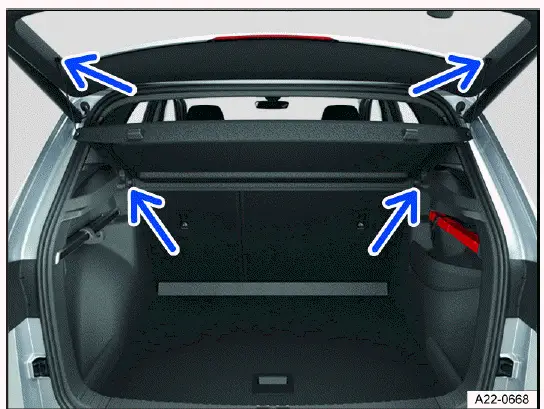
Fig. 136 In the luggage compartment: installing and removing the luggage compartment cover (general example).
Removing the luggage compartment cover
1. Unhook the top retaining straps from the trunk lid fig. 136 (upper arrows).
2. Push the luggage compartment cover out of the side holders from below fig. 136 (lower arrows).
When removing the cover, guide it carefully with both hands so it does not drop, bend, or scratch the interior trim. Store it in a clean area where it will not be stepped on or damaged by heavy cargo.
Installing the luggage compartment cover
1. Press the luggage compartment cover into the side holders in the luggage compartment fig. 136 (lower arrows).
2. Hook the retaining straps onto the trunk lid fig. 136 (upper arrows).
After installation, open and close the trunk lid slowly once to confirm that the retaining straps lift and lower the cover correctly. Make sure the cover sits evenly in the side holders and does not interfere with the trunk lid or luggage.
Storing the luggage compartment cover
Depending on the equipment, the removed luggage compartment cover can be stored below the variable luggage compartment floor. To do so, the luggage compartment cover must be turned over.
Before storing the cover under the luggage compartment floor, remove loose dirt and make sure no sharp objects are placed against it. Proper storage helps protect the cover and keeps the luggage area organized when the full cargo height is needed.
Luggage compartment floor
Opening and closing the luggage compartment floor
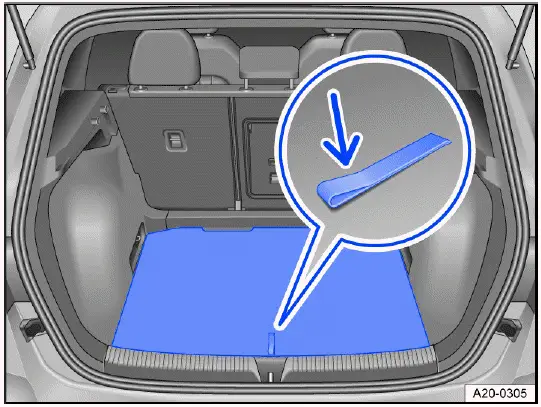
Fig. 137 In the luggage compartment: opening the luggage compartment floor.
Opening the luggage compartment floor
1. Grasp the opening or tab in the luggage compartment floor fig. 137 (arrow) and lift the luggage compartment floor.
Lift the floor panel slowly and keep it under control while opening. This helps prevent the panel from dropping back down, hitting cargo, or damaging the side trim in the luggage compartment.
Closing the luggage compartment floor
1. Carefully lay down the luggage compartment floor in the original position.
Before closing, check that no objects, straps, tools, or small items are trapped underneath the floor panel. The luggage compartment floor should sit flat and stable in its intended position.
NOTICE
Improper use may damage the luggage compartment floor or the luggage compartment trim.
- When closing the luggage compartment floor, always carefully guide it downward, and do not drop it.
- Always distribute loads as evenly as possible across the entire luggage compartment floor to avoid concentrating the load in a single place.
- Do not force the luggage compartment floor closed if cargo, tools, or stored accessories are preventing it from sitting correctly.
In the Volkswagen Taos, even load distribution helps protect the luggage compartment floor and keeps cargo more stable while driving. Heavy items should be positioned carefully so the floor panel and surrounding trim are not exposed to concentrated pressure.
Luggage compartment features
Tie-downs
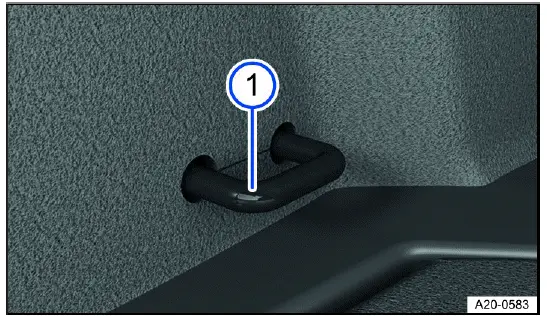
Fig. 138 In the luggage compartment: Tie-down (general example).
- Tie-down.
Tie-downs are located in the luggage compartment to help secure loose objects and luggage using suitable cords, fixation belts, or securing straps fig. 138. They are intended to reduce cargo movement during normal driving, cornering, braking, or sudden maneuvers.
When securing cargo, choose straps that match the weight, shape, and surface of the load. A properly secured object should not be able to slide freely across the luggage compartment floor or move into the passenger area.
WARNING
Unsuitable or damaged tie-down straps or tensioning straps could break during braking maneuvers or an accident. This could result in objects being thrown through the vehicle interior and causing serious or fatal injuries.
- Use only suitable and undamaged tie-downs, fixing and tensioning straps.
- Secure cords, fixation belts and tensioning straps diagonally and tightly across the items placed on the luggage compartment floor, and fasten the cords, fixation belts and tensioning straps securely to the tie-downs.
- Make sure that the upper edge of the load is above the tie-downs, especially on flat objects.
- Follow the signs about storing cargo in the luggage compartment, depending on the vehicle equipment.
- Never secure a child restraint to the tie-downs.
The tie-downs are for cargo securing only. They are not designed to replace approved child restraint anchorages, seat belts, or other safety systems intended for passengers.
WARNING
Elastic tensioning straps must be stretched for securing to the tie-downs and are therefore under tension. If elastic tensioning straps slip off and spring back toward your body, the hooks attached to them may cause serious injuries.
- Protect your eyes and face when securing and releasing the straps.
- Always secure elastic tensioning straps to the tie-downs in the front part of the luggage compartment first. Then pull them to the loading edge. Secure the elastic tensioning straps to the tie-downs so that they will spring away from your body if they come off.
Do not use cracked, frayed, stretched, rusty, or bent securing equipment. If a strap hook does not sit firmly on the tie-down, use a different securing method before driving.
 Suitable straps and cargo securing systems are available from an authorized Volkswagen dealer or authorized Volkswagen Service Facility. Volkswagen recommends contacting an authorized Volkswagen dealer or authorized Volkswagen Service Facility.
Shopping bag hooks
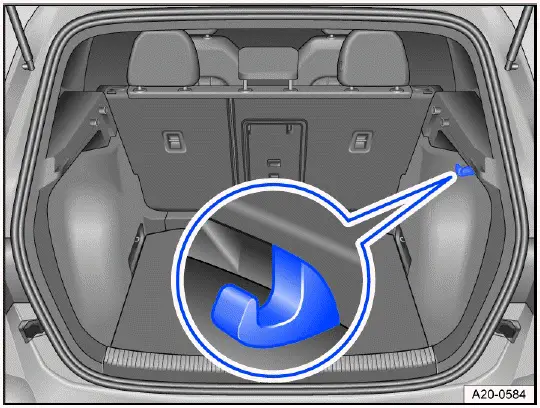
Fig. 139 Shopping bag hooks on the left and right of the luggage compartment.
You may have shopping bag hooks in your luggage compartment for hanging light shopping bags. These hooks are intended to keep small, lightweight bags upright and help prevent their contents from spilling during gentle driving.
Shopping bag hooks are not cargo anchors. They should not be used for heavy bags, tools, luggage, sports equipment, or any item that needs to be firmly restrained.
WARNING
Luggage or other items tied to the shopping-bag hooks may tear off and be thrown into the vehicle interior during a braking maneuver or accident. This may cause you to lose control of the vehicle and result in serious or fatal injuries.
- Never use the shopping bag hooks to tie down pieces of luggage or objects.
- Only hang lightweight items, up to a maximum of 2.5 kg (approximately 5.5 lbs), from the shopping bag hooks in the vehicle.
For heavier objects in the Volkswagen Taos luggage compartment, use the tie-downs and suitable securing straps instead of the shopping bag hooks.
Load-through hatch
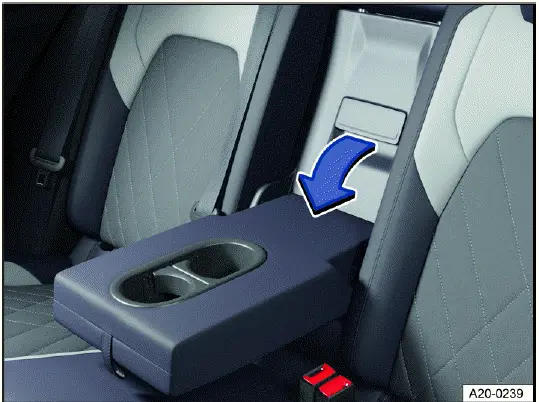
Fig. 140 In the rear seat backrest: luggage compartment pass-through (general example).
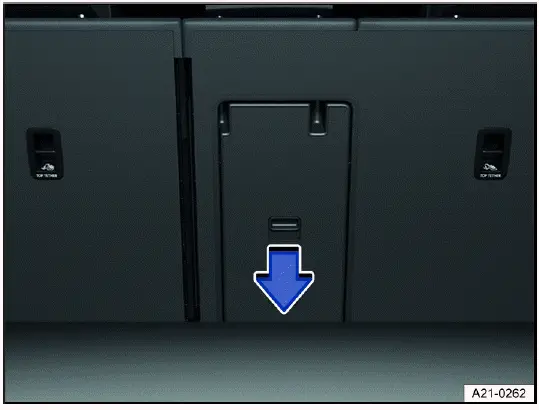
Fig. 141 In the luggage compartment: rear of the luggage compartment pass-through (general example).
Depending on the vehicle equipment, there may be a load-through hatch behind the center armrest in the rear seat backrest. This feature allows long, narrow objects, such as skis or similar items, to be transported inside the vehicle while still keeping the rear seat backrest largely upright.
Before using the pass-through, check that the object is clean, free of sharp edges, and long enough to be supported safely. Long items must not interfere with the driver, the gear selector, seat belts, or safe seating positions.
Opening the pass-through from the vehicle interior
1. Fold the center armrest forward ⇒ Center armrest.
2. Pull the release lever in the direction of the arrow fig. 140 and fold the luggage compartment pass-through cover all the way forward ⇒  .
.
3. Open the trunk lid.
Opening the pass-through from the luggage compartment
1. Press the release lever down in the direction of the arrow fig. 141 and fold the cover forward.
2. Insert long objects from the luggage compartment side and slide them forward through the load-through hatch.
3. Secure objects with a seat belt if necessary.
4. Close the trunk lid.
When transporting long objects, position them so they cannot move sideways or slide forward during braking. If the object has hard edges, wrap or pad the contact areas to help protect interior trim and seat surfaces.
Closing the load-through hatch
1. Fold the flap for load-through hatch backward until it clicks into place.
There may be a red mark on the luggage compartment side. This should not be visible ⇒  .
.
2. Close the trunk lid.
3. If necessary, fold the center armrest backward.
After closing the hatch, check that it is fully engaged. A visible red marking indicates that the pass-through is not locked correctly and must not be used as a seating position until it is secured.
WARNING
Folding and unfolding the load-through hatch in an uncontrolled or careless manner may result in serious injury or death.
- Never fold the luggage compartment pass-through forward or back while driving.
- When folding up the pass-through, make sure that the safety belt does not become trapped or damaged.
- Keep hands, fingers, feet and other body parts away from the pivot range of the pass-through when folding it forward or back.
- Always check that the red mark on the catch indicator is not visible when the pass-through is in the upright position. A red marking indicates that the luggage compartment pass-through is not locked into place.
- If the luggage compartment pass-through is folded down or is not securely engaged, no passengers, especially children, are to be transported on this seat.
The pass-through should be opened and closed only when the vehicle is stationary. Make sure passengers are clear of the moving cover and that the loaded item is secured before driving.
Trailer towing technically not possible
Trailer towing information
The vehicle is not designed for towing a trailer. No trailer hitch may be retrofitted.
For this Volkswagen Taos configuration, trailer towing is technically not supported. Installing towing equipment against the vehicle design can overload components, affect crash safety, interfere with driver assistance systems, and cause structural damage.
WARNING
Mounting a trailer hitch on the vehicle can result in damage to the vehicle, accidents and serious or fatal injuries when operating the vehicle.
- Never mount a trailer hitch on the vehicle.
If additional carrying capacity is needed, use only approved cargo solutions that are intended for the vehicle and follow the load limits in the technical data. Do not attempt to use the rear structure as a towing point unless the Owner's Manual specifically permits it for the situation described.
Roof rack
Introduction
Depending on the model and equipment configuration, the vehicle may be designed to accept a roof rack system.
Large or bulky objects can be transported on the vehicle roof with an approved roof rack. This can be useful for items that do not fit safely inside the luggage compartment, such as skis, roof boxes, sports gear, or other long cargo.
If you are not sure whether your Volkswagen Taos is designed for roof rack installation, check with an authorized Volkswagen dealer or authorized Volkswagen Service Facility. Volkswagen recommends contacting an authorized Volkswagen dealer or authorized Volkswagen Service Facility before purchasing or fitting any roof-mounted carrying system.
Only use roof racks that are approved by Volkswagen for use with your vehicle. A correctly approved rack is designed to match the roof structure, mounting points, load limits, and equipment layout of the vehicle.
Do not use or retrofit a roof rack if this is not approved for your vehicle. An unsuitable roof rack may not attach securely and can damage the roof, roof rails, seals, paintwork, antenna, or other exterior components.
WARNING
When transporting large, heavy, long, or flat loads on the roof rack, the vehicle's driving characteristics and aerodynamics change because of the different center of gravity and increased wind resistance. This may cause accidents and serious or fatal injuries.
- Always secure cargo correctly with suitable and undamaged cords, fixation belts or tensioning straps.
- Avoid abrupt and sudden driving and braking maneuvers.
- Always adapt your speed and driving style to the visibility, weather, road and traffic conditions.
- Check the roof load before driving and again during longer trips to make sure the cargo has not shifted.
A roof load can make the Volkswagen Taos react differently in crosswinds, on curves, during lane changes, or under hard braking. Drive more smoothly and allow extra space because the vehicle may feel less stable with weight positioned high above the cabin.
WARNING
If the use of a roof rack is not approved for your vehicle or a roof rack that is incompatible with the vehicle is fitted, it may detach and fall from the roof of the vehicle while you are driving. This may cause accidents and serious or fatal injuries.
- Only use roof racks that are approved by Volkswagen for the vehicle.
- Do not fit roof racks if they are not approved for your vehicle.
NOTICE
Installing any type of roof rack onto a vehicle that is not approved for use of a roof rack can cause serious damage.
- Do not fit roof racks if they are not approved for your vehicle.
 Driving with a roof rack fitted increases the air resistance of the vehicle and thus also the fuel consumption. This reduces the potential range of the vehicle. This applies to all roof racks and any objects transported on them, such as bicycles and skis.
Remove the roof rack when it is no longer needed. This can reduce wind noise, lower aerodynamic drag, improve fuel efficiency, and help prevent unnecessary wear on the roof-mounted equipment.
Mounting a roof rack
Please read the introductory information and heed the Warnings and Notice ⇒  and
and  Introduction.
For safety reasons, special roof racks are required to transport luggage, bicycles, surfboards, skis, boats, roof boxes, and similar items securely. Roof racks designed for roof rails are often referred to as roof rack bars. These bars act as base supports for attaching approved carrying systems to the vehicle roof.
Only use roof racks intended for the correct vehicle model, model year, roof design, and equipment configuration by the corresponding manufacturer. Even roof racks that look similar may have different mounting dimensions, load ratings, or attachment hardware.
Volkswagen recommends using Volkswagen original parts or Volkswagen original accessories, which are available from an authorized Volkswagen dealer or authorized Volkswagen Service Facility. Original accessories are designed to work with the vehicle structure and are supplied with the correct installation guidance.
Mounting the Roof Rack Bars on the Roof Rail
Mount the roof rack bars in accordance with the supplied installation instructions. Follow the sequence, tightening specifications, positioning marks, and safety checks provided by the roof rack manufacturer.
The respective base can be attached after successfully installing the roof rack bars ⇒  .
.
Before loading cargo, check that the roof rack bars are seated evenly and securely. The load must be centered as much as possible and secured so that it cannot slide, lift, twist, or vibrate during driving.
Remove the roof rack in the following scenarios
- If the roof rack is no longer needed.
- Before driving through an automatic car wash.
- If the height of the vehicle exceeds the maximum height limit, for example in a garage, parking structure, ferry, car elevator, or low entrance.
Removing unused roof rack bars from the Volkswagen Taos also helps reduce wind noise and unnecessary air resistance. It can also prevent damage in places where overhead clearance is limited.
NOTICE
The height of the vehicle changes when a roof rack is installed and when there is cargo secured on it. The vehicle may be badly damaged if you drive into entrances with low heights, for example underpasses and garages.
- Compare the height of the vehicle with the clearance height.
- Remember to include the height of the roof rack, roof box, bicycle, ski carrier, or other mounted cargo when checking clearance.
NOTICE
If parts on the roof of your particular vehicle, depending on the vehicle equipment, for example the roof antenna, and the trunk lid's range of movement are impaired by the roof rack and the luggage, the vehicle may be damaged.
- Ensure that the roof rack is positioned correctly on the roof and that it will not affect any components of the vehicle.
- Open the trunk lid carefully after installing the roof rack or cargo to confirm that it does not contact the load.
Before starting a trip, check the clearance around the roof antenna, trunk lid, roof rails, seals, and any mounted accessory. Cargo that shifts backward or sideways can damage the vehicle or loosen the rack assembly.
WARNING
Securing the roof rack and base incorrectly or using them incorrectly may cause the luggage or the entire assembly to come loose from the vehicle roof. This can result in accidents and serious or fatal injuries.
- Always mount the roof rack and base correctly in accordance with the manufacturer's instructions.
- Secure the roof rack only at the locations intended for this.
- Always mount special rack assemblies for bicycles, skis, surfboards, etc. correctly and in accordance with the manufacturer's installation instructions.
- Only use the roof rack and base if they are undamaged and secured correctly.
- Check the roof rack mounts before starting a journey and, if necessary, retighten them after a short distance.
- On long trips, check the threaded connections and fasteners each time you take a break.
- Do not make any modifications or repairs to the roof rack or base.
After loading the roof rack, drive a short distance and stop in a safe place to inspect the fasteners, straps, and cargo position. If anything has loosened, shifted, or started to vibrate, correct it before continuing.
 A fitted roof rack increases air resistance and therefore may reduce the vehicle's range.
For best results, keep the roof load as low and compact as possible, remove empty carriers after use, and avoid carrying unnecessary weight on the roof. This helps preserve driving stability, comfort, fuel economy, and overall efficiency.
Loading the roof rack
Please read the introductory information and heed the Warnings and Notice ⇒  and
and  Introduction.
Maximum permissible roof weight
The maximum permissible roof load is 75 kg (165 lbs), or 50 kg (110 lbs) for vehicles with a tilting and sliding panoramic sunroof. This limit includes everything carried on the roof, not only the cargo itself.
The roof load consists of the combined weight of the roof rack, roof rack bars, any mounted carrier, and all items secured on the roof rack ⇒  .
.
Always check the weight of the roof rack and the items that will be transported on it. Weigh the items if necessary, especially before carrying bicycles, roof boxes, sports equipment, tools, or other heavy cargo.
When using a roof rack with a lower load limit than the vehicle roof limit, do not load the rack up to the maximum permissible roof load of the vehicle. In this case, the lower load rating in the roof rack installation guide is the limit that must be followed.
For the Volkswagen Taos, the roof load must also be considered together with the overall vehicle load. Passengers, luggage inside the vehicle, accessories, and roof cargo all contribute to the total load that affects handling, braking, and stability.
Distributing the load
Distribute the load evenly and secure it correctly ⇒  .
.
Place the heaviest items as low and centered as possible on the roof rack. Avoid loading one side more heavily than the other, because uneven roof weight can make the vehicle less stable when cornering, changing lanes, or driving in crosswinds.
Checking that everything is secure
Once you have fitted the roof rack, drive a short distance and then check all the fasteners. Keep checking them regularly.
On longer journeys, inspect the roof rack, straps, locks, mounting points, and cargo position at every stop. Wind pressure and road vibration can loosen straps or shift cargo, even when everything appeared secure at the beginning of the trip.
WARNING
Exceeding the maximum permitted roof load can result in accidents, damage to the vehicle and serious or fatal injuries.
- Never exceed the specified roof load, the Gross Axle Weight Rating, and the Gross Vehicle Weight Rating of the vehicle.
- Do not exceed the load limit of the roof rack, even if the roof load is below the vehicle limit.
- Include the weight of the roof rack, carrier, and all securing equipment when calculating the roof load.
WARNING
If loose and incorrectly secured luggage falls off the roof rack, accidents and serious or fatal injuries may occur.
- Use only suitable and undamaged tie-downs, fixing and tensioning straps.
- Check that straps cannot flap, loosen, or contact painted surfaces, glass, the roof antenna, or the trunk lid.
Roof cargo changes how the Volkswagen Taos responds to steering and braking. Drive smoothly, avoid abrupt maneuvers, reduce speed when needed, and be especially careful in strong wind, on highways, and when passing large vehicles.
NOTICE
If the trunk lid hits the roof load, the vehicle may be damaged.
- Make sure the trunk lid does not run into the roof load when opening the lid.
- Open the trunk lid carefully after loading the roof rack to confirm there is enough clearance.
Also check the total vehicle height before entering garages, parking structures, ferries, car washes, or low underpasses. Roof boxes, bicycles, skis, and other mounted equipment can significantly increase the height of the vehicle.