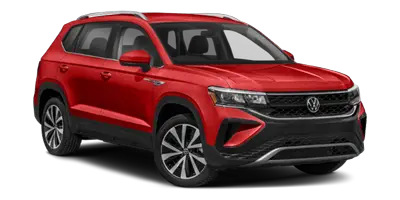
Volkswagen Taos: Opening and Closing
- Vehicle key
- "Keyless Access" with push-button start
- Doors and central locking button
- Anti-theft alarm system
- Trunk lid
- Windows
- Sunroof
Vehicle key
Vehicle key functions
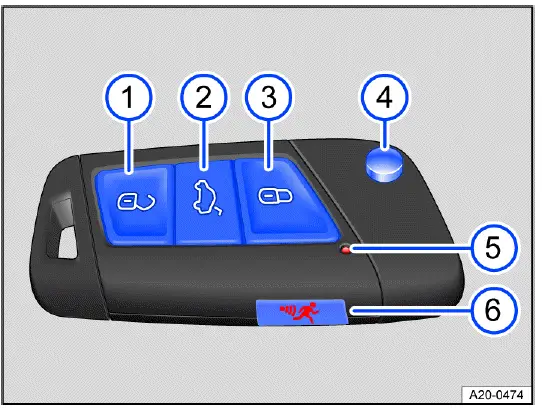
Fig. 44 Vehicle key.
- Unlock the vehicle. All turn signals will flash twice to confirm that the vehicle has received the unlock command.
- Unlock the trunk lid separately. All turn signals will flash twice when the command is accepted.
- Lock the vehicle. All turn signals will flash once to confirm locking.
- Fold the key bit out and in.
- Indicator light: flashes when a button is pressed and the remote control key is transmitting a signal.
- Panic button.
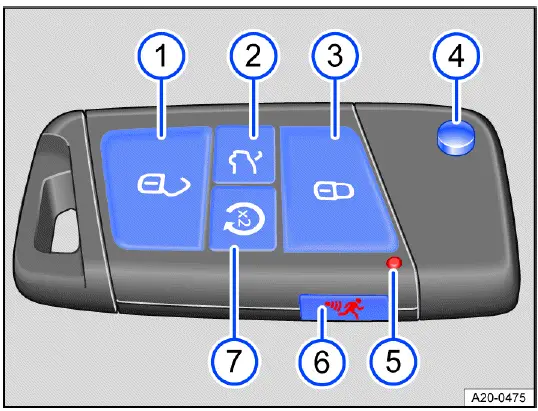
Fig. 45 Vehicle key with remote start relay function.
- Unlock the vehicle. All turn signals will flash twice.
- Unlock the trunk lid separately. All turn signals will flash twice.
- Lock the vehicle. All turn signals will flash once.
- Fold the key bit out and in.
- Indicator light: flashes when a button is pressed.
- Panic button.
- Remote start relay function, depending on the vehicle equipment.
The vehicle key combines several opening, closing, alarm, and convenience functions in one remote control. Depending on equipment, the Volkswagen Taos key may also include a remote start relay function that allows the engine to be started from outside the vehicle under permitted conditions.
Panic button
Only use the panic button  in an emergency or when you need to attract attention to the vehicle. When the panic button is pressed, the horn sounds and the vehicle lights flash. Pressing the panic button again switches the alarm off.
The panic function can help draw attention if you feel unsafe near the vehicle, need to locate the vehicle in a crowded area, or want to warn others around the vehicle. It should not be used casually, because the horn and flashing lights may disturb other people and may be interpreted as a real emergency.
Remote start relay button (depending on vehicle equipment)
1. To carry out the remote start, press button  once and press button
  twice ⇒ Remote start relay function.
During remote start, the parking lights turn on. Pressing the  button switches off the engine.
Remote start is intended to prepare the vehicle before driving, for example by allowing climate control operation depending on settings and equipment. Before using remote start, make sure the Volkswagen Taos is parked safely, the vehicle is not in an enclosed space, and no one is working near the engine compartment or exhaust area.
WARNING
If you leave vehicle keys unattended in the vehicle, children or unauthorized people could lock the doors and/or the trunk lid, start the engine, or switch on the ignition and thereby activate electrical equipment, such as the power windows. This can cause accidents and serious or fatal injuries.
- Always take all vehicle keys with you when leaving the vehicle.
A vehicle key should be treated like an active control device, not just a way to open the doors. Even brief unattended access can allow the ignition, electrical equipment, locking system, windows, or remote features to be operated unintentionally.
WARNING
If you leave children, people requiring assistance or animals unattended in the vehicle, they may accidentally set the vehicle in motion or be subjected to very high or low temperatures. There is a risk of accidents and serious or fatal injuries.
- Never leave children, people requiring assistance or animals unattended in the vehicle.
Interior temperatures can rise or fall quickly even when the outside weather seems mild. Locking the vehicle or taking the key does not make it safe to leave a child, an animal, or a person who needs assistance inside the cabin.
NOTICE
External influences may limit the functionality of the remote control vehicle key and damage it.
- Protect the vehicle key from moisture and strong impacts.
Do not expose the key to water, heavy pressure, high heat, strong impacts, or chemicals. Damage to the housing, buttons, circuit board, or battery contacts may reduce the operating range or prevent the remote control functions from working reliably.
 Regular use of comfort systems and other usage patterns shorten the service life of the button cell in the vehicle key.
If the Volkswagen Taos vehicle key begins to work only at a shorter distance, responds inconsistently, or the indicator light becomes weak, the button cell battery may be nearing the end of its service life.
Emergency key (vehicle key without key bit)
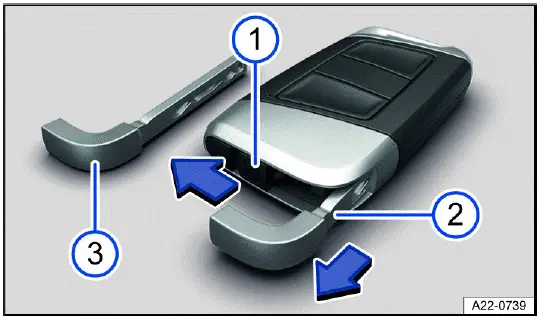
Fig. 46 Vehicle key: Unlocking the emergency key (general example).
- Push the locking mechanism in the direction of the arrow.
- Remove the emergency key in the direction of the arrow.
- Emergency key.
There may be an emergency key fig. 46 (3) located inside the vehicle key. This emergency key can be used to manually unlock and lock certain parts of the vehicle if the remote control function is unavailable, the button cell battery is drained, or a manual operation is required.
Possible functions:
- Unlock and lock the glove compartment.
- Unlock and lock the vehicle manually ⇒ Vehicle key functions.
- Switch the childproof lock on and off ⇒ Child safety lock.
The emergency key is especially useful when the remote control signal is weak, the key battery is empty, or the vehicle must be accessed without using the electronic unlocking function. After using it, store it back inside the key housing so it is available the next time it is needed.
Replacing the button cell battery
Volkswagen recommends having the button cell battery replaced by suitably qualified professionals. Volkswagen recommends contacting an authorized Volkswagen dealer or authorized Volkswagen Service Facility ⇒  .
.
Replacing the battery carefully helps protect the key housing, contacts, and internal electronics. If the cover is forced open, the sealing surface or locking tabs may be damaged, which can allow moisture or dirt to enter the key.
Remote control vehicle key with key bit
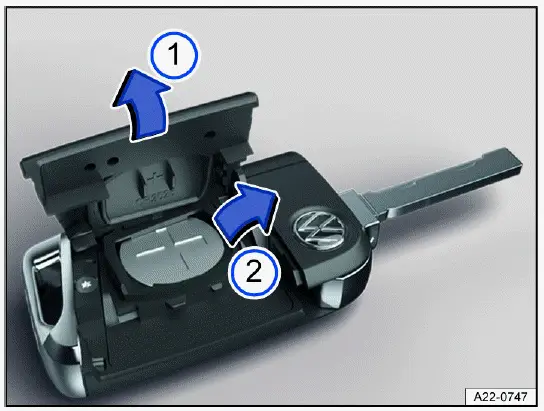
Fig. 47 Vehicle key: Replacing the button cell battery (general example).
- Cover
- Button cell battery
1. Fold the key bit out.
2. Lever off the cover fig. 47.
3. Lift the button cell battery out of the battery compartment fig. 47, ⇒  .
.
4. Press the new button cell battery into the battery compartment.
5. Press the cover onto the housing fig. 47, ⇒  .
.
6. Dispose of the drained battery in a way that will not harm the environment.
After installing the new battery, check that the cover is seated evenly and that all key buttons respond normally. The indicator light should flash when a button is pressed, and the Volkswagen Taos should respond to lock and unlock commands within the normal operating range.
Vehicle key without key bit
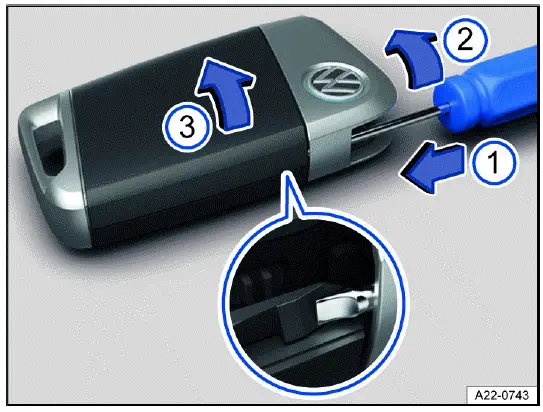
Fig. 48 Remote control vehicle key: opening the battery compartment cover.
- Insertion into the outer guide.
- Direction of rotation of the flat-bladed screwdriver.
- Cover
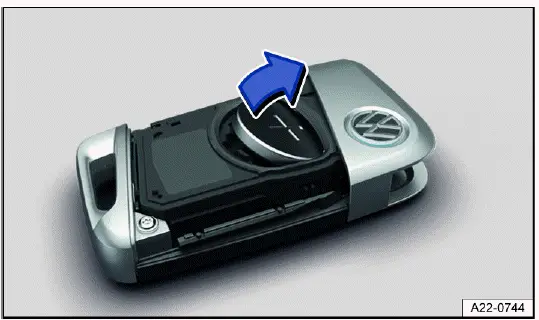
Fig. 49 Vehicle key: replacing the button cell battery
1. Remove the emergency key ⇒ Emergency key (vehicle key without key bit).
2. Slide the blade of the flat-bladed screwdriver in the direction of the arrow approximately 1 cm into the outer guide on the emergency key in the vehicle key fig. 48.
3. Turn the flat-bladed screwdriver clockwise until the cover pops up fig. 48.
4. Push the cover in the direction of the arrow and remove it fig. 48.
5. Lift the button cell battery out of the battery compartment fig. 49, ⇒  .
.
6. Press the new button cell battery into the battery compartment.
7. Press the cover onto the housing fig. 48, ⇒  .
.
8. Store the emergency key ⇒ Emergency key (vehicle key without key bit).
9. Dispose of the drained battery in a way that will not harm the environment.
Use a suitable flat-bladed screwdriver carefully and avoid prying at the wrong edge of the housing. Excessive force can crack the cover, deform the guide, or damage the contacts inside the remote control key. The new battery must sit flat in the compartment before the cover is pressed back into place.
DANGER
If button cell batteries are swallowed or enter the windpipe, serious or fatal injuries will occur within a very short time due to choking or internal burns.
- Seek medical assistance immediately if you suspect that a button cell battery has been swallowed.
- Always keep the remote control vehicle keys and key fob with button cell batteries out of the reach of children.
Button cell batteries are small enough for a child to swallow and can cause life-threatening internal injuries very quickly. Never leave a removed battery, opened key housing, or spare battery on a table, seat, floor, or other place where children can reach it.
NOTICE
If the button cell battery is replaced incorrectly or a battery is unsuitable, it can damage the vehicle key.
- Only replace drained batteries with new batteries in the same voltage, size, and specification.
- Make sure the battery is facing in the right direction when inserting it.
- If the battery cover cannot be closed, do not use the remote control.
Installing the wrong battery type, reversing the polarity, bending the contacts, or forcing the cover closed can damage the key and may prevent remote locking, unlocking, panic alarm, or remote start functions from working correctly. If the cover does not close smoothly, check the battery position and the housing alignment before applying more pressure.
 The type of batteries used in the remote control of your vehicle key can contain perchlorate. This requires special handling. Observe all legal requirements regarding the handling and disposal of these batteries ⇒ Product recycling.
Volkswagen recommends having this service carried out by suitably qualified professionals. Volkswagen recommends contacting an authorized Volkswagen dealer or authorized Volkswagen Service Facility.
For Volkswagen Taos vehicle key service, professional replacement is the safest option if the key housing is difficult to open, the cover is damaged, moisture has entered the key, or the remote control still does not work correctly after a new battery is installed.
Synchronizing a vehicle key
If the vehicle can no longer be unlocked or locked with the remote control, the key may need to be synchronized again, or the button cell battery may be weak and require replacement ⇒ Replacing the button cell battery. This can happen after a battery replacement, after repeated button presses outside the vehicle’s reception range, or when the remote signal has been interrupted.
Synchronizing a vehicle key
1. Fold out the key bit or remove the emergency key.
2. If necessary, remove the cap from the driver's door handle ⇒ Locking the front passenger door and rear doors in an emergency.
3. Press the  button on the vehicle key.
4. Unlock the vehicle using the key bit.
5. Open the driver door.
If the vehicle is equipped with an anti-theft alarm system, the alarm will be triggered immediately ⇒ Anti-theft alarm system. This may happen because the vehicle has been unlocked mechanically before the electronic signal has been recognized.
6. Switch the ignition on.
This completes the synchronization. After the procedure, check the lock and unlock buttons from a short distance to confirm that the Volkswagen Taos responds normally.
Synchronization cannot repair a damaged transmitter or restore a discharged battery. If the remote still does not work afterward, check the button cell battery, the key housing, and possible interference around the vehicle.
Troubleshooting
Vehicle cannot be locked or unlocked
The remote control may be disrupted by nearby objects, poor weather conditions, radio interference, or transmitters operating on a similar frequency band close to the vehicle, such as cell phones. A drained button cell battery can also reduce operating range or prevent the signal from being sent at all.
The central locking system may switch off briefly to protect itself from overload. This can occur after repeated locking or unlocking attempts within a short period of time.
1. Close the driver door.
Or: Synchronize the vehicle key ⇒ Synchronizing a vehicle key.
Or: Change the button cell battery in the vehicle key ⇒ Replacing the button cell battery.
If the Volkswagen Taos still cannot be locked or unlocked, try operating the remote closer to the driver door and remove possible sources of interference from the area. If only one key is affected, the issue is likely related to that specific remote. If all keys fail, the vehicle’s receiver, central locking system, or electrical system may require inspection.
The indicator light is not blinking
If the indicator light in the remote does not blink when one of the buttons is pressed, the button cell battery must be replaced. A weak battery may also cause intermittent operation before the indicator light stops blinking completely.
 You can get an additional or replacement vehicle key from an authorized Volkswagen dealer or authorized Volkswagen Service Facility.
An additional or replacement key must be matched to the vehicle before it can be used. For security reasons, programming should be handled by qualified service personnel with the correct equipment.
"Keyless Access" with push-button start
Introduction
Keyless Access with push-button start makes it possible to unlock and lock the vehicle without actively pressing the buttons on the key. A valid key must be present within the detection range of the vehicle for this function to operate.
In the Volkswagen Taos, Keyless Access is designed for everyday convenience. The system recognizes the authorized key near the vehicle and allows the doors to be unlocked or locked using the door handle button, depending on equipment and selected settings.
Unlocking or locking using Keyless Access
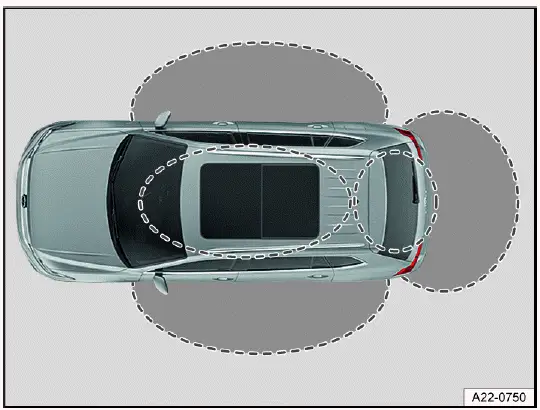
Fig. 50 Keyless Access: Sensor ranges (general example).
Configuring
The behavior of Keyless Access can be adjusted in the Vehicle menu of the Infotainment system ⇒ Introduction to the instrument cluster. The selected Keyless Access settings also apply to the remote control, so the same unlocking behavior is used whether you press a button or use the handle sensor.
Keyless Access can be configured so that pressing the button unlocks only the driver door or unlocks all doors. This lets the driver choose between added security when entering alone and easier access when passengers need to enter at the same time.
The following settings can be applied: single door unlocking
- To unlock: Press the button once, driver door unlocks.
Press the button twice, all doors unlock.
- To lock: press the button once, all doors lock.
All-door opening
- To unlock: press the button once, all doors and the trunk lid are unlocked.
- To lock: press the button once, all doors and the trunk lid are locked.
Choose the setting that best matches how the vehicle is used. Single-door unlocking is useful in parking lots or when driving alone, while all-door opening is more convenient when passengers often enter the Volkswagen Taos together.
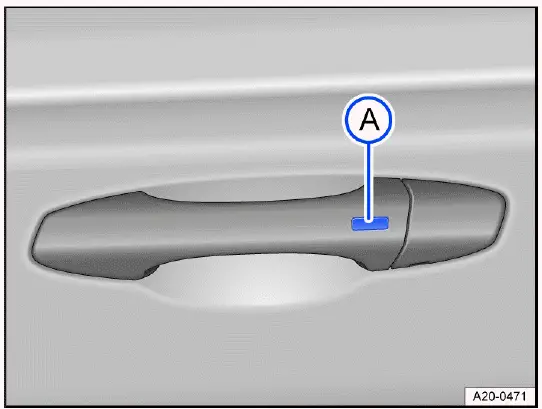
Fig. 51 In door handle: Button to unlock or lock.
- Button on the outside of the door handle.
Unlocking the vehicle
1. Press button fig. 51 on the outside of the door handle.
The vehicle unlocks according to the selected Keyless Access setting. Make sure the valid key is close enough and is not shielded by metal objects, electronic devices, or other items that could weaken signal recognition.
Locking the vehicle
1. Park the vehicle.
2. Press button fig. 51 on the outside of the door handle.
After locking, check the turn signal confirmation or briefly pull the door handle to make sure the vehicle is secured. Avoid leaving the key inside the cabin or luggage compartment, because this may affect locking behavior depending on system status and equipment.
Troubleshooting
If Keyless Access is not working
1. Contact a suitably qualified professional. Volkswagen recommends contacting an authorized Volkswagen dealer or authorized Volkswagen Service Facility.
Keyless Access operation can be affected by a weak battery, radio interference, nearby transmitters, moisture on the door handle sensor area, the key being too far from the vehicle, or the key being carried together with electronic devices. If the system works only sometimes, try using the remote buttons or the mechanical emergency key, then have the system checked if the problem continues.
 Valid vehicle key cannot be detected
The yellow indicator light turns on. A message will also appear in the instrument cluster display.
The vehicle key is no longer in the vehicle or within range of the sensors. This can happen if the key is removed from the cabin while the ignition is on, if the battery is weak, or if the signal is blocked by surrounding objects.
1. Do not switch the ignition off.
2. Bring the vehicle key back into the vehicle or within range of the sensors.
If the problem persists, contact an authorized Volkswagen dealer or authorized Volkswagen Service Facility. Volkswagen recommends contacting an authorized Volkswagen dealer or authorized Volkswagen Service Facility.
When this warning appears, keep the key inside the cabin and avoid placing it in areas where detection may be poor, such as inside metal containers, near strong electronic devices, or deep inside bags with other equipment. For reliable Volkswagen Taos Keyless Access operation, replace the key battery if detection problems become frequent.
Doors and central locking button
Introduction
The doors can be locked manually and, in certain situations, unlocked manually. This may be necessary if the vehicle key is not working, the button cell battery is weak, the central locking system is temporarily unavailable, or an electrical malfunction prevents normal remote operation.
The central locking system allows the doors, trunk lid, and fuel filler flap to be unlocked or locked from one control point. In everyday use, this helps the driver secure the Volkswagen Taos quickly, while still allowing individual emergency procedures when normal locking or unlocking is not possible.
The vehicle can be locked when the ignition has been switched off or after the driver has exited the vehicle when the engine is stopped. Before leaving the vehicle, always make sure that all doors and the trunk lid are fully closed and that no person, animal, or key has been left inside unintentionally.
An image in the instrument cluster display indicates if one or more doors have not opened or closed correctly. This warning should be taken seriously, because a door that only appears closed may still not be latched securely.
 Do not continue driving!
1. Safely park the vehicle, if necessary.
2. Open the respective door and close it again.
The image is also displayed when the ignition is switched off, and it turns off several seconds after the doors are closed and the vehicle has been locked. If the warning remains visible after checking the doors, inspect the trunk lid and all door edges again before driving.
WARNING
If a door is not closed correctly, it can open suddenly while driving and cause serious or fatal injuries.
- Stop immediately and close the door.
- When closing the door, make sure it engages securely and completely. When closed, the door must be flush with the areas of the vehicle body that are around the door.
A properly closed door should sit evenly with the surrounding body panels and should not rattle, move outward, or require unusual force to stay shut. If a door does not close cleanly, check for objects, ice, dirt, seat belts, or clothing caught in the door opening.
WARNING
When the door is being held open by the door arrester, it may close by itself in high winds or on inclines, which can cause serious injuries.
- Always hold the door handle firmly when opening and closing the door.
Wind, slopes, uneven ground, or a vehicle parked at an angle can cause a door to move unexpectedly. Hold the handle when passengers are entering or leaving the Volkswagen Taos, especially when children or people requiring assistance are nearby.
WARNING
Opening and closing the doors and trunk lid without due care can be dangerous and result in serious injuries.
- Do not open or close the doors and trunk lid if anyone is in the way.
Before closing any door or the trunk lid, check the surrounding area for hands, fingers, pets, luggage straps, clothing, or objects in the closing path. A quick visual check can prevent injuries and damage to trim, seals, or locking components.
WARNING
The central locking system locks all the doors. In case of an emergency or accident, locked doors can make it more difficult for first responders to access the vehicle interior. When the vehicle is locked from the outside, the doors and power windows cannot be opened from the inside. There is a risk of serious or fatal injuries.
- Never leave children, people requiring assistance or animals unattended in the vehicle.
Locked doors can protect against unwanted entry, but they can also delay help in an emergency. Never rely on ventilation, climate settings, or a short stop as a reason to leave vulnerable occupants inside a locked vehicle.
WARNING
All doors can be locked from the inside using the central locking button. Otherwise, children, people requiring assistance or animals could be locked inside the vehicle. In an emergency, they may not be able to exit the vehicle without assistance or help themselves. Otherwise, they may be subjected to very high or low temperatures. There is a risk of serious or fatal injuries.
- Never leave children, people requiring assistance or animals unattended in the vehicle.
Interior temperatures can change quickly, even when the weather outside seems moderate. A locked vehicle can become dangerous in a short time, particularly for children, pets, elderly passengers, or anyone unable to open the doors without help.
NOTICE
Removing caps without due care may result in damage to the vehicle.
- When using the emergency locking or emergency unlocking feature, remove and reinstall the parts carefully and correctly.
If a door handle cap or cover must be removed for emergency unlocking, use the correct method and avoid prying against painted surfaces. Incorrect removal can scratch the exterior, damage clips, or prevent the cap from fitting securely afterward.
 When the vehicle is locked from the inside, it reduces the risk of opening the doors unintentionally and of unauthorized people entering the vehicle.
For Volkswagen Taos door locking safety, the system should be used with awareness of the situation. Locking from the inside may be useful while driving or waiting in the vehicle, but occupants must still be able to exit safely when needed.
Indicator light in the driver's door
Please read the introductory information and heed the Warnings and Notice ⇒  and
and  Introduction.
The indicator light for the central locking system is located in the driver's door. It gives a quick visual confirmation of the locking status and can also help identify certain faults in the locking or alarm system.
The indicator light shows the status of the central locking system for around 30 seconds after the vehicle is locked.
The red LED light blinks at short intervals for around 2 seconds.
The status of the central locking system is then displayed for around 28 seconds:
Vehicles without SAFELOCK
- If the red LED light blinks at long intervals, the vehicle will be locked.
After around 30 seconds, the LED light blinks at slow intervals. This slower blinking pattern indicates that the vehicle remains locked and that the system is continuing to show its status in the background.
Special conditions
If the red LED light comes on continuously, there is a fault in the central locking system or the anti-theft alarm system. In this case, the locking system may not be operating normally, and the vehicle should be checked if the condition continues.
Automatic locking and unlocking
Please read the introductory information and heed the Warnings and Notice ⇒  and
and  Introduction.
Depending on how your vehicle is equipped, settings for the central locking system can be configured in the Vehicle settings menu in the Infotainment system. These settings allow the driver to adjust how the vehicle locks and unlocks during normal use.
Automatic locking (Auto Lock)
The vehicle locks automatically at speeds of approx. 15 km/h (approx. 9 mph) or higher. If the vehicle is locked, the  indicator light will turn yellow in the central locking button.
Auto Lock helps reduce the chance of a door being opened unintentionally while driving and can also discourage unauthorized entry when the vehicle is stopped briefly in traffic. This feature is part of the Volkswagen Taos central locking convenience and safety system.
Automatic unlocking (Auto Unlock)
If one of the following conditions apply, all doors and the trunk lid will unlock automatically:
- In vehicles with an automatic transmission: the parking lock
 is engaged and the ignition is switched off.
 - Or: if the door handle has been pulled. This applies at speeds up to approx. 15 km/h (9 mph).
- Or: if airbags have deployed during a collision.
Automatic unlocking is designed to improve access to the vehicle after certain driving or emergency situations. After a collision with airbag deployment, unlocking can help occupants leave the vehicle and may make it easier for first responders to reach the cabin.
 The Auto Unlock function makes it possible for first responders to access the inside of the vehicle.
Central locking button
Please read the introductory information and heed the Warnings and Notice ⇒  and
and  Introduction.
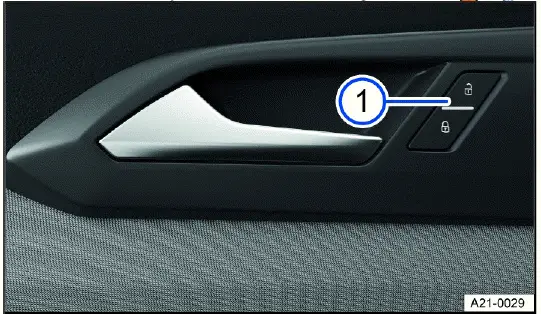
Fig. 52 In the driver's door: Central locking button (general example).
- Central locking button.
 - Unlock the vehicle.
 - Lock the vehicle.
The central locking button functions when the ignition is switched on or off, but only when all doors are closed. If a door is still open, the system may not lock as expected.
If the vehicle is locked from the outside using the vehicle key, the central locking buttons will be disabled. This helps prevent someone inside from unlocking the vehicle after it has been secured from the outside.
If the vehicle is locked from the inside using the central locking button, then:
The indicator light in the button will turn yellow if all doors are closed and locked.
The  anti-theft alarm system will not be activated ⇒ Anti-theft alarm system.
The doors can be opened from the inside by pulling the door handle. The  indicator light in the button turns off. The unopened doors and the trunk lid will remain locked and cannot be opened from the outside.
This behavior allows occupants to exit the Volkswagen Taos from the inside while the remaining doors stay secured from outside access. It is useful in situations where one person leaves the vehicle but the other doors should remain locked.
Opening and closing the driver's door in an emergency
Please read the introductory information and heed the Warnings and Notice ⇒  and
and  Introduction.
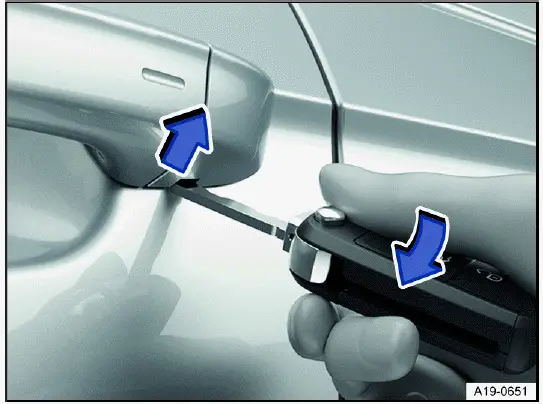
Fig. 53 Driver's door handle: prying off the cap.
In most cases, all doors will lock when the vehicle is locked manually. When the vehicle is unlocked manually, only the driver door unlocks. This emergency procedure is useful if the remote control does not respond, the button cell battery is weak, or the central locking system cannot be operated normally.
Note the information about the anti-theft alarm system ⇒ Anti-theft alarm system. Depending on the situation, opening the driver door mechanically may trigger the alarm until the vehicle recognizes a valid key and the ignition is switched on.
1. Position the key bit or emergency key on the notch in the driver door handle from below.
2. Hold your index finger under the key bit to guide it and help prevent the cap from falling or scratching the door surface.
3. Use the vehicle key to pry the cap off in the direction of the arrow fig. 53.
4. Insert the key bit in the lock cylinder and unlock or lock the vehicle.
5. Pull on the door handle and reinstall the cap. Make sure the cap is seated correctly so it does not loosen while driving.
For Volkswagen Taos emergency door unlocking, work carefully around the painted handle area. Avoid forcing the cap, twisting the key bit too sharply, or using tools that can damage the trim or lock cylinder.
Special considerations for manual unlocking
- An alarm is triggered when the driver's door is opened ⇒ Anti-theft alarm system.
- An emergency start must be performed after unlocking ⇒ Troubleshooting.
- Switch the ignition on to turn off the alarm.
The electronic immobilizer will detect a valid vehicle key. Once the key is recognized, the vehicle can confirm authorization and the alarm condition can be cleared as described in the relevant procedure.
 The anti-theft alarm system is not activated when the vehicle is manually locked using the key bit ⇒ Anti-theft alarm system.
Locking the front passenger door and rear doors in an emergency
Please read the introductory information and heed the Warnings and Notice ⇒  and
and  Introduction.
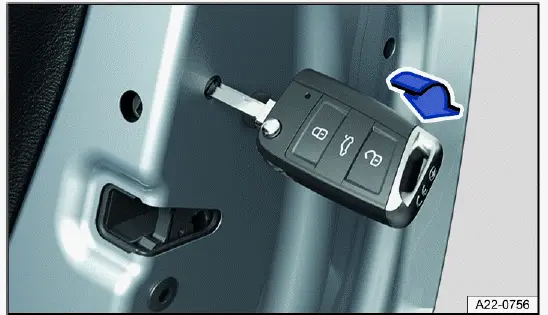
Fig. 54 In the front edge of a door: locking of the vehicle in an emergency with the key bit or emergency key (version 1).
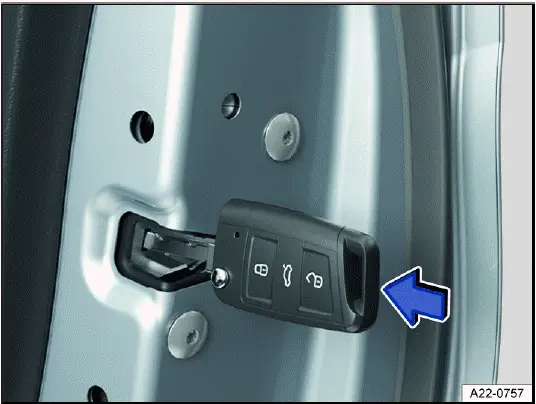
Fig. 55 In the front edge of a door: locking of the vehicle in an emergency with the key bit or emergency key (version 2).
If the door locking mechanism does not work, the front passenger door and the rear doors must each be locked manually. The anti-theft alarm system is not activated when this is done ⇒ Anti-theft alarm system.
1. Open the door.
2. Insert the key bit or emergency key in the vertical slot and turn or press fig. 55.
3. Check that the door is locked. Pull the outside door handle carefully after closing the door to confirm that it cannot be opened from outside.
4. Have the vehicle checked immediately by a suitably qualified professional. Volkswagen recommends contacting an authorized Volkswagen dealer or authorized Volkswagen Service Facility.
If a door is locked manually, it will unlock again when the vehicle is unlocked or if that door is opened from the inside. This means the manual lock is a temporary emergency measure, not a repair for a malfunctioning central locking system.
When several doors are affected, check each door individually. A door that was not locked correctly may still be opened from outside, even if another door was secured successfully.
Child safety lock
Please read the introductory information and heed the Warnings and Notice ⇒ and
and  Introduction.
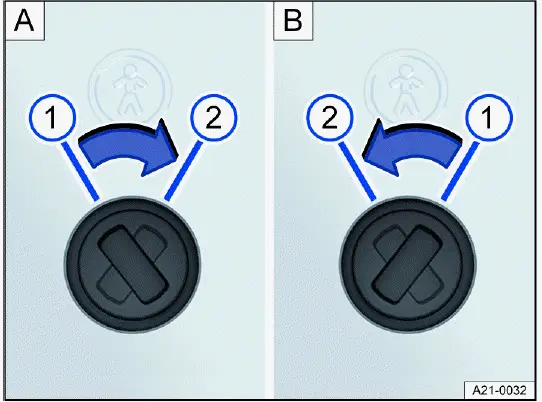
Fig. 56 Child safety lock: A left rear door, B right rear door.
- Child safety lock is switched off.
- Child safety lock is switched on.
The child safety locks are located on the inner door panels of the rear doors. They are intended to prevent rear passengers, especially children, from opening the rear doors from inside the vehicle.
The child safety lock reduces the risk of the rear doors being opened from the inside ⇒  .
.
When the child safety lock is switched on, the door can only be opened from the outside. Before driving with children in the rear seats, confirm that the lock position matches the intended setting on both rear doors.
Switching the child safety lock on or off
1. Unlock the vehicle and open the respective rear door.
2. Bring the slot into the corresponding position fig. 56. Use the emergency key or key bit carefully and make sure the slot is fully turned into the selected position.
After switching the child safety lock on, test the rear door from inside and outside before starting the trip. In the Volkswagen Taos, this simple check helps confirm that the child safety function is active and that the door can still be opened normally from outside when needed.
WARNING
When the child safety lock is switched on, that door cannot be opened from the inside. This can result in people locking themselves inside the vehicle. In an emergency, they may not be able to exit the vehicle without assistance or help themselves.
- Never leave children or people requiring assistance unattended in the vehicle when the doors are locked.
Child safety locks improve rear-seat security during driving, but they also make it harder for rear passengers to exit without help. Always make sure an adult can open the rear doors from outside if children or people requiring assistance are seated in the back.
WARNING
If you leave children, people requiring assistance or animals unattended in the vehicle, they may be subjected to very high or low temperatures. There is a risk of serious or fatal injuries.
- Never leave children, people requiring assistance or animals unattended in the vehicle.
Interior temperatures can become dangerous quickly, even during short stops. Locking the doors, using child safety locks, or leaving a window slightly open does not make the vehicle safe for unattended occupants or animals.
Troubleshooting
Please read the introductory information and heed the Warnings and Notice ⇒  and
and  Introduction
If the indicator light does not turn off
The red LED light in the vehicle door flashes at short intervals and then stays on.
There is a malfunction in the locking system. The vehicle may not be confirming the locking status correctly, or a fault may be present in the central locking or anti-theft alarm system.
1. Contact a suitably qualified professional. Volkswagen recommends contacting an authorized Volkswagen dealer or authorized Volkswagen Service Facility.
If the turn signals are not flashing
The turn signals are not blinking as confirmation when locking the vehicle:
1. Check whether all of the doors, the trunk lid, and the engine hood are closed.
2. Close any doors, trunk lid, or engine hood that are not fully closed.
If the confirmation flash still does not occur, recheck each opening and make sure nothing is caught in the latch area. A door, hood, or trunk lid that is only partially latched can prevent normal locking confirmation.
If the vehicle is locking automatically
The vehicle will lock again automatically after approximately 45 seconds if one of the following conditions apply:
- The vehicle was unlocked using a remote control vehicle key, Keyless Access with push-button start, or a cell phone.
- The trunk lid was not opened.
- No door was opened.
- The ignition was not switched on.
This automatic relocking function helps protect the vehicle if it was unlocked unintentionally and no one enters. If the Volkswagen Taos locks again after a short time, this may be normal behavior rather than a malfunction.
Locking with a second vehicle key
For vehicles with Keyless Access with push-button start: The key inside the vehicle will be blocked from starting the engine if the vehicle is locked from the outside with a different vehicle key. However, an emergency start is possible.
1. To enable the vehicle key inside the vehicle so that it can be used to start the engine as usual, press the  button on the remote control vehicle key inside the vehicle.
This function helps prevent an unintended start with a key that has been left inside after the vehicle was locked from outside. Before locking, always check that the key you need remains with you and that no child, pet, or person requiring assistance is left in the cabin.
Locking the vehicle after an airbag deploys
The entire vehicle unlocks when an airbag deploys in a collision. Depending on the severity of the damage, it may be possible to lock the vehicle as follows after the accident:
1. Switch the ignition off.
2. Open the driver door and shut it again.
3. Lock the vehicle.
After an accident, only attempt to lock the vehicle if it is safe to do so. First move occupants away from traffic or other hazards, contact emergency services if needed, and avoid touching damaged electrical components or leaking fluids.
NOTICE
Strong streams of water or vapor could activate the sensors in the door handles if a valid vehicle key is located near the vehicle. This may cause the windows to open and moisture may enter the vehicle interior. This could lead to damage to the vehicle interior.
- Never direct the jet of a high pressure cleaner or a steam jet directly towards the sensors in the door handles.
When washing the Volkswagen Taos, keep the key away from the sensor range if possible and avoid spraying directly at the handle sensors. This reduces the chance of unintended locking, unlocking, or window movement during cleaning.
 It may not be possible to unlock or lock the vehicle using Keyless Access if the 12 V vehicle battery or button cell battery in the vehicle is weak or drained. The vehicle can be manually unlocked or locked.
 If there is no valid vehicle key in the vehicle or one is not detected, a message will appear in the instrument cluster display.
This can occur if another signal interferes with the remote control vehicle key or if the remote control vehicle key is covered by an object, such as a metal case.
If the key is not detected, move it away from phones, metal cases, laptops, wireless chargers, or other electronic devices. For reliable Volkswagen Taos Keyless Access operation, keep the key in the cabin and replace the button cell battery if detection problems become frequent.
Anti-theft alarm system
The vehicle may be equipped with an anti-theft alarm system. This system is designed to help protect the Volkswagen Taos against unauthorized access by monitoring key access points and reacting when the vehicle is opened or operated without a valid key.
The anti-theft alarm system monitors the doors, the hood, and the trunk lid. If one of these areas is opened improperly while the system is active, the vehicle can respond with warning signals to draw attention to the attempted entry.
The anti-theft alarm system is automatically activated when you lock the vehicle. For normal use, no separate activation step is required, but the system depends on the vehicle being locked correctly and all monitored openings being fully closed.
If an attempt is made to access the vehicle without using the appropriate vehicle key, the anti-theft alarm system is triggered. The system emits audible and visual warning signals for up to five minutes, depending on the situation and vehicle status.
When is the alarm triggered?
- If a door that was unlocked manually using the vehicle key is opened.
- If the hood is opened.
- If the trunk lid is opened.
- If the ignition is switched on with an invalid vehicle key.
- If a device is connected to the diagnostic connection when the anti-theft alarm system is active.
These trigger conditions help protect the vehicle from forced entry, unauthorized starting attempts, and improper access to monitored systems. In the Volkswagen Taos, the alarm should be treated as part of the opening and closing security concept, not as a replacement for careful locking habits.
Switching off the alarm
1. Unlock the vehicle with the  unlock button on the vehicle key.
2. Clasp the door handle and press the button ⇒ "Keyless Access" with push-button start.
3. Switch the ignition on.
If the alarm was triggered after manual unlocking, switching on the ignition with a valid key allows the vehicle to recognize authorization. Once the key is confirmed, the alarm condition can be cleared according to the vehicle’s normal operating logic.
 The anti-theft alarm system will not work correctly if the 12 V vehicle battery is weak or drained.
 Disconnecting the 12 V vehicle battery may set off the anti-theft alarm system.
A weak battery, disconnected battery, or unstable power supply may affect alarm behavior, central locking response, and key recognition. If the system behaves unexpectedly after battery work, check the battery condition and have the vehicle inspected if the warning behavior continues.
Trunk lid
Introduction
The trunk lid is unlocked and locked together with the doors. This allows the luggage compartment to be secured as part of the central locking system and helps prevent unintended access when the vehicle is parked.
On vehicles with Keyless Access, the trunk lid is automatically unlocked when opening ⇒ "Keyless Access" with push-button start. A valid key must be within the required detection range, and the system must be able to recognize the key signal correctly.
In the Volkswagen Taos, the trunk lid should always be checked after loading cargo, closing the luggage compartment, or washing the vehicle. A lid that is not fully latched may appear closed but can still create a safety risk while driving.
WARNING
Uncontrolled or unintentional release: opening and closing the trunk lid can cause accidents and serious injuries.
- Do not open or close the trunk lid if anyone is in the way.
- Always keep the trunk lid closed while driving.
- Close and lock the trunk lid and all doors when the vehicle is not in use.
- Check that, when closed, the trunk lid is flush with the areas of the vehicle body around it.
Before driving, make sure the trunk lid sits evenly with the surrounding body panels and that no cargo, straps, tools, clothing, or debris is caught in the latch area. If the lid does not close cleanly, do not force it; remove the obstruction and close it again.
WARNING
Depending on the season, the temperature inside the vehicle could become very high or low, which can lead to serious injuries, illness or death, especially for very young children.
- Make sure that no one remains in the vehicle.
- Never let children play in or on the vehicle unattended, especially when the trunk lid is open. Children could enter the luggage compartment, close the lid, and then lock themselves in.
The luggage compartment is not a play area or a passenger space. Children can become trapped quickly, especially if the lid is closed or the vehicle is locked. Always supervise children near the rear of the vehicle and keep the key out of reach.
WARNING
The vehicle may not always detect when the trunk lid is not latched if a cargo rack that is carrying cargo is mounted on the trunk lid. If the trunk lid is not latched, it may open suddenly while driving. This may cause serious injuries.
- Check that, when closed, the trunk lid is flush with the areas of the vehicle body around it.
A mounted cargo rack or added load can change how the trunk lid closes and may make it harder to notice an incomplete latch. After attaching accessories or carrying rear-mounted cargo, inspect the lid position manually instead of relying only on the display or locking confirmation.
WARNING
If there is a heavy load of snow or cargo on the trunk lid, the additional weight may cause the lid to lower, which can result in serious injuries.
- Never open the trunk lid if there is a heavy load of snow or cargo such as a cargo rack on it.
- Remove the snow or cargo before opening the trunk lid.
- If necessary, support the trunk lid or remove the cargo and/or snow before opening the trunk lid.
Cold weather, ice, snow, and added cargo weight can reduce the ability of the lift supports to hold the trunk lid open. If the lid does not remain fully raised, guide it carefully and keep your head, hands, and body out of the closing path.
WARNING
Closing the trunk lid incorrectly may lead to the rear window shattering and cause serious injuries.
- Do not push the trunk lid closed with your hand on the rear window.
Always use the proper handle area or the trunk lid structure when closing. Pressing on the glass can damage the rear window, seals, wiper components, or surrounding trim.
NOTICE
Using the opening mechanism incorrectly may damage the component and could prevent the trunk lid from closing.
- Never attach or secure cargo on the opening mechanism.
NOTICE
Using the rear window wiper incorrectly may damage the component or the rear spoiler and result in them breaking off.
- Never use the rear window wiper or rear spoiler to attach or secure cargo.
The rear wiper, spoiler, hinges, and opening mechanism are not designed as tie-down points. Securing luggage, straps, nets, or accessories to these parts can damage the Volkswagen Taos trunk lid area and may prevent proper closing.
Opening and closing the trunk lid
Please read the introductory information and heed the Warnings and Notice ⇒  and
and  Introduction.
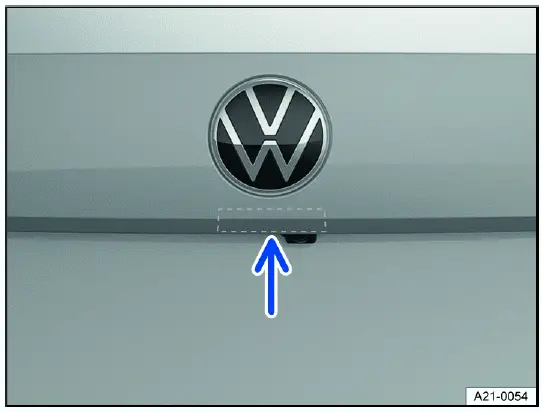
Fig. 57 In the trunk lid: Button to open the trunk lid (general example).
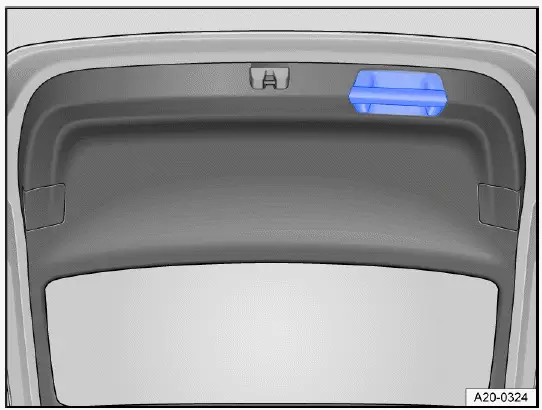
Fig. 58 In the open trunk lid: handle for closing the trunk lid.
Opening the trunk lid
1. To unlock the trunk lid, press the  or
or  button on the vehicle key.
2. Raise the trunk lid using the button fig. 57.
When opening the trunk lid, guide it upward until it is fully open. Make sure there is enough clearance above and behind the vehicle, especially in garages, near walls, under low ceilings, or when a rear cargo accessory is installed.
Closing the trunk lid
1. Pull the trunk lid downward carefully using the handle in the interior trim panel until it latches shut in the lock fig. 58, ⇒ .
.
An image in the Volkswagen Digital Cockpit display indicates if the trunk lid has not opened or closed correctly.
The trunk lid locks automatically while driving.
After closing, check that the lid is flush with the body and that the luggage compartment light turns off as expected. If the display continues to show the trunk lid as open, stop safely and close it again before continuing.
WARNING
Closing the trunk lid incorrectly or carelessly may lead to serious injuries.
- When opening the trunk lid, take care to pull it all the way up.
- When closing the trunk lid, make sure your hands are not within the closing range of the lid.
Keep hands, fingers, arms, pets, and loose items out of the closing area. The trunk lid is heavy enough to cause injury if it drops suddenly or is pulled down without checking the surrounding area.
 If the trunk lid is not opened within several minutes after unlocking, it will lock again automatically.
Mechanically unlocking the trunk lid using the emergency release
Please read the introductory information and heed the Warnings and Notice ⇒  and
and  Introduction.
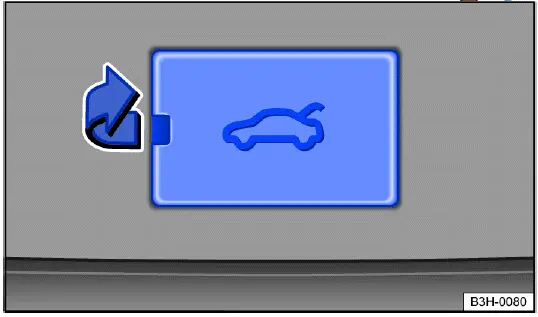
Fig. 59 In the trunk lid: cover for the trunk lid emergency release.
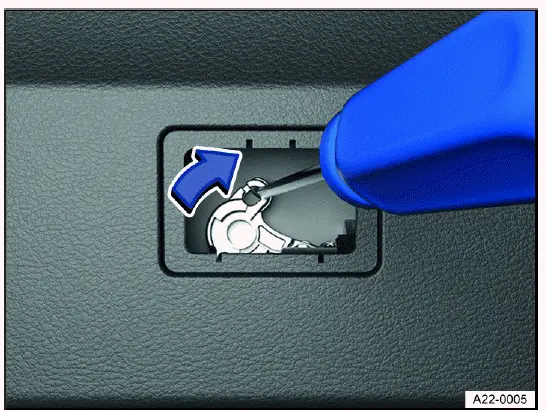
Fig. 60 In the luggage compartment: trunk lid emergency release.
Mechanically unlocking the trunk lid using the emergency release
1. Pry off the square cover in the inner trim panel of the trunk lid using a screwdriver fig. 59.
2. Place a suitable object in the opening for the release lever and press in the direction of the arrow to release the trunk lid fig. 60.
3. You will need to use more force to open the trunk lid.
Use the emergency release only when normal unlocking is not possible. Work carefully when removing the cover so the inner trim panel, release opening, and surrounding plastic parts are not damaged.
Troubleshooting
Please read the introductory information and heed the Warnings and Notice ⇒  and
and  Introduction.
If the trunk lid will not open or close
1. Check if the trunk lid is being blocked by an object.
The trunk lid can be moved by hand. It may be necessary to use more force when doing this.
If the lid resists movement, check for cargo pressing against it, ice around the seal, objects in the latch area, or exterior accessories that may interfere with travel. Do not force the trunk lid if resistance feels abnormal, because this can damage the hinges, latch, trim, or weather seals.
If all turn signals flash four times
The vehicle key that was last used is still in the vehicle.
1. Remove the key and lock the vehicle.
This warning helps prevent the key from being locked inside the vehicle. Before locking the Volkswagen Taos, make sure the key is with you and not inside the luggage compartment, center console, rear seat area, or a bag left in the cabin.
If the trunk lid is difficult to move
The mechanism for opening the trunk lid may not always work automatically when outside temperatures are around the freezing point.
1. Guide the trunk lid farther upward by hand.
Cold temperatures, frost, dirt, or moisture around the hinges and seals can make the trunk lid feel heavier than usual. Move it slowly, support it with one hand, and make sure it stays open before loading or unloading cargo.
Windows
Opening and closing the windows
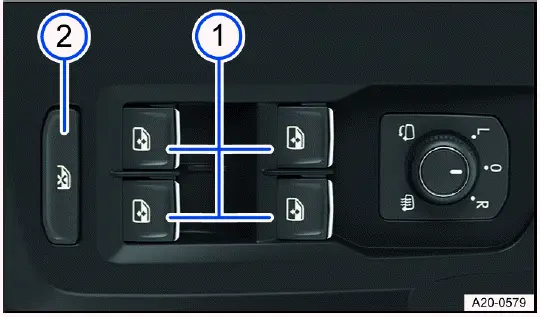
Fig. 61 In the driver door: Power window buttons.
- Opening the window: press the switch.
Closing the window: pull the switch.
- Deactivating the power window buttons in the rear doors: press the switch.
This button is only located in the driver door.
The power window buttons allow the driver and passengers to open and close the windows electrically. The driver door includes the main control panel, so the driver can operate the windows and, when needed, disable the rear window controls for added safety.
The windows can still be opened or closed using the switches in the doors for a brief period after the ignition has been switched off, as long as the driver's or front passenger door is not opened. This short operating period is useful after parking, but the controls should still be used carefully because the windows can continue to move even after the engine is off.
One-touch opening and closing function
The one-touch opening and closing function allows the windows to be completely opened or closed without holding the switch for the entire movement. To use this feature, do not hold the window switch up or down after activating the second switch level.
- To start the one-touch closing function, pull the window switch upward briefly to the second level.
- To start the one-touch opening function, press the window switch downward briefly to the second level.
- To stop the one-touch opening or closing function, pull or press the switch for that window again.
In the Volkswagen Taos, one-touch window operation is designed for convenience, especially when ventilating the cabin or closing the vehicle quickly before leaving. Always watch the window path while using this function, because automatic movement continues until it is stopped, completed, or interrupted by a safety function.
Convenience opening and closing
Opening
The windows can be opened from outside the vehicle using the vehicle key when the ignition is switched off. This feature can help air out the interior before entering the vehicle, especially after it has been parked in warm weather.
1. Press and hold the unlock button on the vehicle key.
2. To stop the function, release the unlock button.
Closing
1. On vehicles with Keyless Access with push-button start: press the sensor surface or locking button on the door handle for a few seconds, until the windows are closed ⇒ "Keyless Access" with push-button start. The vehicle key must be nearby to use this feature.
When all of the windows and the power sunroof are closed, the turn signals will blink once as confirmation.
2. To stop the function, remove your finger from the sensor or switch.
You can select the convenience opening settings in the Vehicle settings menu in the Infotainment system. Depending on equipment and configuration, these settings may allow the driver to adjust how the windows respond when the key or Keyless Access controls are used.
Before using convenience closing, check that no hands, fingers, pets, or objects are in the window openings. This is especially important when closing the windows from outside the Volkswagen Taos, because the driver may not have a full view of every seat and window area.
WARNING
Careless or unintended use of the power windows can cause serious injuries.
- Do not open or close the power windows if anyone is in the way.
- Always take all vehicle keys with you when leaving the vehicle.
- Note that the windows can still be opened or closed using the door buttons for a brief period after the ignition has been switched off, as long as the driver's or front passenger door is not opened.
- When driving with children seated on the rear bench seat, always disable the rear power windows so that the windows cannot be opened or closed.
The rear window lockout button should be used whenever children or passengers who may accidentally operate the switches are seated in the rear. This helps prevent unintended window movement during driving and reduces the risk of pinching or distraction.
WARNING
If the vehicle is locked, the windows can no longer be opened and will prevent people from escaping from the vehicle interior. In an emergency, this could cause serious or fatal injuries.
- Never leave children or people requiring assistance unattended in the vehicle when the vehicle is locked.
A locked vehicle can become dangerous very quickly, especially in hot or cold weather. Windows, climate control settings, or a short stop do not make it safe to leave children, animals, or people requiring assistance inside the cabin.
NOTICE
If the windows are open, precipitation can enter the vehicle and soak the interior equipment, which could restrict the function of the controls or damage them.
- Close all windows if there is precipitation.
Rain, snow, wash water, and moisture can damage switches, upholstery, trim, electronic components, and personal items inside the vehicle. Before leaving the Volkswagen Taos parked outdoors, confirm that all windows and the power sunroof, if equipped, are fully closed.
 If the power windows are malfunctioning, the one-touch opening and closing function and the pinch protection may not function correctly. Contact a suitably qualified professional. Volkswagen recommends contacting an authorized Volkswagen dealer or authorized Volkswagen Service Facility.
 Convenience opening and closing only functions if the one-touch opening and closing function is activated for all the power windows.
If one-touch operation has been lost after a low battery condition, battery replacement, or electrical interruption, convenience opening and closing may not work until the windows are reprogrammed. Check each window after service work or a discharged 12 V battery.
Power window pinch protection
The power window pinch protection can reduce the risk of being pinched and injured when the windows are closing. It is designed to react when the moving window meets resistance, but it cannot prevent every possible injury or replace careful operation.
If the window cannot close due to resistance or an obstacle, then the window will reopen immediately ⇒  .
.
1. Check why the window did not close.
2. Try again to close the window.
If the window will not close again, then the pinch protection will be disabled for several seconds.
If the window still cannot close, then the window will stop at the place where it meets resistance. If you press the switch again within several seconds, the window will close without pinch protection ⇒  .
.
Before trying again, inspect the window opening for ice, dirt, objects, stickers, window shades, fingers, or anything that could block movement. A repeated stop usually means the system is sensing resistance and should not be ignored.
Closing windows without pinch protection
1. Try to close the windows again within a few seconds by holding the switch. This will disable the pinch protection.
If the closing process takes longer than several seconds, then pinch protection will be enabled again. If there is resistance to the window moving or an obstacle is blocking the window, then the window will reopen automatically.
2. If the window still cannot close, then contact a suitably qualified professional. Volkswagen recommends contacting an authorized Volkswagen dealer or authorized Volkswagen Service Facility.
Closing without pinch protection should only be used when you have confirmed that the window path is completely clear. Use this procedure carefully, because the safety reversing function may not respond while the window is being forced closed during this short time.
WARNING
Closing the window when pinch protection is disabled can result in serious injuries.
- Always be careful when closing the windows.
- Do not close windows if anyone is in the way.
- Note that the pinch protection does not prevent fingers or body parts from being trapped against the window frame.
Even with pinch protection active, small body parts can still be trapped near the upper frame, seal area, or window edge. Make sure passengers understand not to lean on the window opening or place hands near the glass while it is moving.
 Pinch protection also occurs when using the convenience closing function with the vehicle key.
Troubleshooting
One-touch up/down feature
If the 12 V vehicle battery is disconnected or drained when the windows are not completely closed, then the one-touch up/down feature will not work. It must be reprogrammed using the following steps:
1. Switch the ignition on.
2. Close all windows and doors.
3. Pull the switch for the desired window and hold it in that position for several seconds.
4. Release the switch, then pull it upward again and hold it.
The one-touch up and down features will then be fully functional.
The automatic power windows can be reprogrammed individually, or multiple windows can be reprogrammed at the same time. After reprogramming, test each window from the driver door controls and, where applicable, from the individual door switch.
For Volkswagen Taos power window troubleshooting, loss of one-touch operation after battery work is usually corrected by reprogramming. If a window still moves unevenly, stops unexpectedly, or does not respond, the switch, motor, regulator, wiring, or window guide may need inspection.
Controls are responding differently than expected
Moisture, dirt and grease may limit the functioning of the controls.
1. Always keep the control panels clean and dry.
Clean the switch area with care and avoid soaking the controls with liquid cleaners. Sticky residue, spilled drinks, dust, or water can affect switch movement and may cause the power windows to respond slowly or unpredictably.
Sunroof
Opening and closing the tilting and sliding panoramic sunroof
The term "sunroof" is used as a synonym for the panoramic sliding/tilting sunroof. Depending on equipment, the Volkswagen Taos may be fitted with a power panoramic sunroof that provides additional light and ventilation while still requiring careful operation.
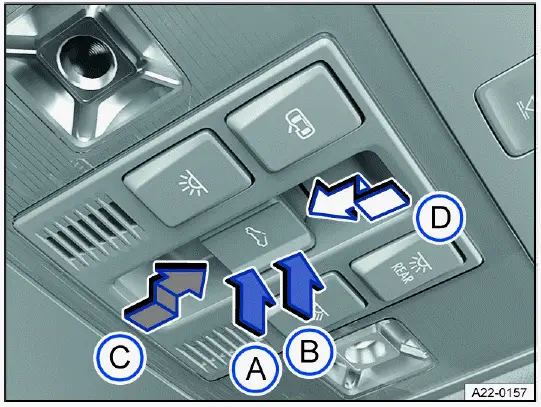
Fig. 62 In the headliner: sunroof button.
- Close the power sunroof when tilted.
- Tilt the power sunroof.
- Open the power sunroof or stop the automatic process.
- Close the power sunroof or stop the automatic process.
The sunroof is a roof opening system consisting of two glass pieces. The rear glass piece is fixed and cannot be opened. The front glass section can be tilted or slid open, depending on the selected button operation.
The  button has two levels.
First level: tilt, open, or close the sunroof completely or partially. This level allows more controlled movement and is useful when you only want a small opening for ventilation.
Second level: automatically open or close the sunroof completely. You can stop the automatic process by pressing the button again. Automatic movement should be monitored until the sunroof reaches the desired position.
Tilting the power sunroof
- Manual process: press the button until the first level is reached fig. 62.
- Automatic process: press the button until the second level is reached fig. 62.
Closing the power sunroof when tilted
- Manual process: press the button until the first level is reached fig. 62.
- Automatic process: press the button until the second level is reached fig. 62.
Opening the power sunroof
- Manual process: press the button until the first level is reached fig. 62.
- Automatic process up to comfort position: press the button until the second level is reached fig. 62.
Closing the power sunroof
- Manual process: press the button until the first level is reached fig. 62.
- Automatic process: press the button until the second level is reached fig. 62.
The comfort position is designed to reduce wind noise compared with a fully open roof position. For Volkswagen Taos panoramic sunroof operation, use the manual setting when precise movement is needed and the automatic setting when the opening path is clear.
Stopping the automatic opening or closing process
1. Press the fig. 62 or fig. 62 button again.
Stopping the automatic process is useful if an object, passenger, sudden weather change, or unexpected noise requires the sunroof to remain in a different position. Always react early rather than waiting for the glass panel to reach the end of travel.
WARNING
Careless or unintended use of the power sunroof may cause serious or fatal injuries.
- Do not open or close the power sunroof if anyone is in its path.
- Note that the power sunroof can still be opened or closed for a brief period after the ignition has been switched off, as long as the driver's or front passenger door has not been opened.
Before operating the sunroof, make sure passengers keep hands, fingers, hair, and loose objects away from the roof opening. Children should not be allowed to play with the sunroof control, even when the vehicle is parked.
WARNING
If you leave vehicle keys unattended in the vehicle, children or unauthorized people may lock the vehicle, start the engine, switch on the ignition or activate the power sunroof. This can cause accidents and serious or fatal injuries.
- Always take all vehicle keys with you when leaving the vehicle.
The vehicle key should always remain with the driver when leaving the Volkswagen Taos. Even a short stop can become dangerous if someone inside the vehicle can operate the ignition, windows, or sunroof without supervision.
NOTICE
Opening or tilting the power sunroof when there is precipitation, particularly snow and ice, may cause damage to the vehicle interior and the electrical system.
- Remove snow and ice from the vehicle roof before using the power sunroof in winter temperatures.
- Always close the power sunroof before leaving the vehicle and when there is precipitation.
Water, snow, ice, and debris can enter the cabin through an open or tilted sunroof and may damage upholstery, controls, headliner materials, and electrical components. After rain, washing, or freezing weather, check the roof area before opening the glass panel.
NOTICE
If you use a power sunroof with a roof rack mounted, the power sunroof may be damaged.
- Keep the power sunroof closed when using a roof rack.
Roof rack crossbars, cargo boxes, straps, or other roof-mounted accessories may interfere with the opening path of the sunroof. Before installing or using roof accessories, confirm that they will not contact the glass panel, seals, or surrounding trim.
 Remove leaves and other loose objects from the power sunroof guide rails regularly, either by hand or with a vacuum cleaner.
Clean guide rails help the sunroof move smoothly and reduce the chance of noise, binding, drainage issues, or premature wear. Do not push sharp tools into the rails, and avoid using excessive force around seals or moving parts.
 The pinch protection will not function correctly if the sunroof is malfunctioning. Contact a suitably qualified professional.
Volkswagen recommends contacting an authorized Volkswagen dealer or authorized Volkswagen Service Facility.
If the Volkswagen Taos sunroof moves unevenly, reverses without a clear reason, makes unusual noises, leaks, or does not close completely, stop using it and have the system inspected. Continued operation with a fault may damage the mechanism or reduce pinch protection performance.
Tilting and sliding panoramic sunroof convenience opening and closing
Convenience opening and closing
The sunroof can be opened and closed from outside the vehicle using the vehicle key. This function is intended to make ventilation and closing easier, especially when the vehicle is parked and the driver wants to control the roof without entering the cabin.
1. Does not apply to the US or Canada: Press and hold the unlock or lock button on the vehicle key.
The sunroof will be tilted or closed.
2. To stop the function, release the unlock or lock button.
When using the convenience closing function, all windows in the doors and the sunroof will be closed. When all of the windows and the power sunroof are closed, the turn signals will blink once as a confirmation.
Settings for the sunroof can be adjusted in the vehicle settings in the Infotainment system. Depending on market, equipment, and configuration, available comfort functions may vary.
When using convenience closing from outside the vehicle, stay close enough to observe the roof and windows. Do not use this feature if passengers, pets, or objects may be in the closing path.
Sunroof pinch protection
The pinch protection reduces the risk of pinching injuries ⇒  . If the sunroof is obstructed while it is closing, it will open again automatically.
1. Check why the sunroof is not closing.
2. Try again to close the sunroof.
3. If the sunroof is still not able to close, close the sunroof without pinch protection.
Before repeating the closing attempt, inspect the roof opening for ice, dirt, leaves, cargo straps, accessories, or any object that could block the glass panel. A repeated reversal usually means the system is detecting resistance.
Closing the sunroof without pinch protection
1. If you still cannot close the tilting and sliding panoramic sunroof, swipe forward over the function key within 5 seconds and hold until the power sunroof is completely closed.
2. If the power sunroof still cannot close, then contact a suitably qualified professional. Volkswagen recommends contacting an authorized Volkswagen dealer or authorized Volkswagen Service Facility.
Depending on the position of the tilting and sliding panoramic sunroof, the power sunroof will stop moving or open completely if the control panel is released prematurely.
Closing without pinch protection should only be used after confirming that the roof opening is completely clear. During this process, the sunroof may not react normally to resistance, so hands, fingers, hair, and loose items must be kept away from the roof frame.
WARNING
Closing the power sunroof without pinch protection may result in serious or fatal injuries.
- Always be careful when closing the power sunroof.
- Do not close the power sunroof if anyone is in its way, especially if it is closing without pinch protection.
- Note that the pinch protection does not prevent fingers or body parts from being trapped against the roof frame.
Even when pinch protection is active, it cannot prevent every injury. Small fingers, hands, or objects can still be trapped near the roof frame, seal area, or glass edge, especially if the sunroof is moving quickly.
 Pinch protection also occurs when convenience closing the windows and sunroof with the vehicle key.
Troubleshooting
If the sunroof is not closing
- The sunroof only works when the ignition is on. The sunroof can still be opened or closed for a brief period after the ignition has been switched off, as long as the driver's or front passenger's door has not been opened.
- If it is not possible to close the sunroof using the power controls, the sunroof must be closed manually. Some vehicle components must be removed in order to close the sunroof manually. Contact an authorized Volkswagen dealer or authorized Volkswagen Service Facility. Volkswagen recommends contacting an authorized Volkswagen dealer or authorized Volkswagen Service Facility.
If the sunroof does not close, first check the ignition status, door status, and whether any object is blocking the opening. If the control reacts but the glass does not move normally, avoid repeated attempts that could strain the motor or mechanism.
Controls are responding differently than expected
Moisture, dirt and grease may limit the functioning of the controls.
1. Always keep the control panels clean and dry.
Clean the roof control area gently and avoid spraying cleaners directly onto the panel. Sticky residue, moisture, dust, or grease can make the sunroof controls respond slowly, inconsistently, or differently than expected.
For Volkswagen Taos panoramic sunroof troubleshooting, unusual movement, repeated reversal, water leaks, wind noise, or control problems should be checked promptly. A small issue in the guide rails, seals, motor, or control panel can become more difficult to repair if the sunroof continues to be forced open or closed.