
Volkswagen Taos: Heating and air conditioning system
- Climatronic
- Manual air conditioning
- Temperature regulation
- Air distribution and blower speed
- Seat heating and seat ventilation
- Steering wheel heating
- Rear window defroster
- Troubleshooting
Climatronic
Overview of the Climatronic
Climatronic is an automatic air conditioning system that warms, cools, and dehumidifies the air inside the vehicle. In automatic mode, Climatronic can regulate the selected air temperature, air distribution, and air volume without constant manual adjustment. In the Volkswagen Taos, this system is designed to keep the cabin comfortable while helping reduce window fogging when the settings are used correctly.
Certain functions of the air conditioner depend on the vehicle equipment. Depending on the version, available controls, comfort settings, automatic profiles, and additional heating features may vary.
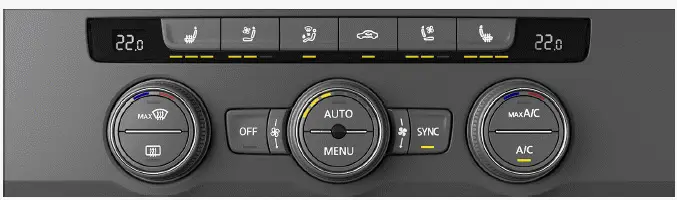
Fig. 88 In the upper section of the center console: Climate control bar for the Climatronic system.
Making Efficient Use of the Air Conditioner
The air conditioner is most effective when the vehicle interior is kept closed. If heat has built up inside the vehicle after parking in the sun, briefly ventilating the cabin by opening the doors or windows can help hot air escape and allow the air conditioner to cool the interior more quickly.
Display of activated functions
Illuminated LEDs on the climate control bar indicate that the function is activated. These visual indicators help the driver quickly confirm which climate features are currently operating.
In the Air conditioner menu in the Infotainment system, function keys highlighted in color indicate that a function is switched on ⇒ Air conditioner menu in the Infotainment system. This gives the driver an additional overview of active climate settings directly on the screen.
WARNING
Icy, snow-covered or foggy door windows restrict visibility very severely. This increases the risk of collisions and accidents, which may result in serious or fatal injuries.
- Keep all windows free of ice, snow and fog.
- Adjust the heating, air conditioner, and rear window defroster to a setting where the windows do not fog up ⇒ Troubleshooting.
- Only start driving when all windows are clear.
- Only use recirculation mode for a short time. Otherwise, the windows could fog up very quickly and greatly reduce visibility.
- Always switch off recirculation mode as soon as it is not necessary.
Clear glass is essential for safe driving. If the windshield or side windows begin to fog while driving the Volkswagen Taos, increase fresh-air intake, direct airflow toward the glass, and use the air conditioner or defrost function as needed to restore visibility.
Air conditioner menu in the Infotainment system
On the climate control bar
 Open the Air conditioner menu in the Infotainment system.
The Air conditioner menu in the Infotainment system is only available via the Climatronic. Certain functions depend on the vehicle equipment, so the menu layout and the number of available settings may differ from one vehicle to another.
In the Air conditioner menu, you can find, for example, the functions for temperature regulation ⇒ Temperature regulation and air distribution ⇒ Air distribution and blower speed. These settings allow the driver to fine-tune comfort more precisely than by using only the physical controls.
The top of the screen shows the current climate control settings, such as the air conditioner profile for automatic mode. This area gives a quick summary of the current climate behavior before changing any setting.
The lower section of the screen shows function keys for frequently used air conditioning functions. These shortcuts help the driver access common features without searching through deeper menus.
Operating status of the air conditioner
The operating status of the air conditioning system is represented by colors:
 Cooling.
 Heating.
Climate control settings submenu
 Depending on the vehicle equipment, you can find additional comfort functions in the Climate control settings submenu:
- Allow automatic supplementary heating ⇒ Automatic supplementary heating function.
Additional comfort functions can help the cabin reach a pleasant temperature more quickly in cold conditions, depending on equipment and outside temperature.
Switching the Climatronic on and off
In the air conditioner menu or on the climate control bar
 Switch off the Climatronic.
 Adjust the blower speed.
1. To switch on Climatronic, turn the center knob clockwise. The system will begin operating according to the current climate settings or the last selected configuration.
2. To switch off the Climatronic, turn the center knob all the way counterclockwise. When the system is switched off, heating, cooling, and active air distribution are reduced or disabled, so use this setting only when climate control is not needed.
Automatic mode of the Climatronic
In the air conditioner menu or on the climate control bar
 The set air temperature is maintained constant. The air volume and air distribution are automatically controlled.
Automatic mode switches off when the blower speed is changed manually.
Automatic mode is useful for everyday driving because it balances airflow, temperature, and air distribution without requiring repeated adjustment. For best comfort in the Volkswagen Taos, select the desired temperature and allow the system time to stabilize the cabin climate.
Selecting the air conditioner profile
The blower power in automatic mode can be controlled via the air conditioning profiles. These profiles influence how gently or strongly the system works to reach and maintain the selected temperature.
1. Open the Air conditioner menu in the Infotainment system.
2. Tap
 .
.
3. To select an air conditioner profile, tap
 at the top of the screen.
4. Select your preferred air conditioner profile in the pop-up window. A lower profile may feel quieter and softer, while a stronger profile can move more air when quicker heating, cooling, or window clearing is desired.
Manual air conditioning
Overview of the manual air conditioner
The manual climate control system warms, cools, and removes humidity from the air. Unlike Climatronic, the driver adjusts the temperature, blower speed, and air distribution manually, making it important to select settings that match the weather and visibility conditions.
Certain functions of the air conditioner depend on the vehicle equipment. Available buttons, symbols, and comfort features may differ depending on the specific Volkswagen Taos configuration.
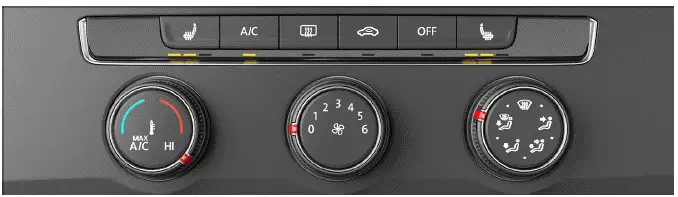
Fig. 89 In the upper section of the center console: Climate control bar for the manual climate control system.
Making Efficient Use of the Air Conditioner
The air conditioner is most effective when the vehicle interior is kept closed. If the cabin has become very hot, ventilating it briefly before switching to stronger cooling can help the system work faster and improve passenger comfort.
Display of activated functions
Illuminated LEDs on the climate control bar indicate that the function is activated. Check these indicators when adjusting the system so that cooling, defrosting, recirculation, or other selected functions are operating as intended.
WARNING
Icy, snow-covered or foggy door windows restrict visibility very severely. This increases the risk of collisions and accidents, which may result in serious or fatal injuries.
- Keep all windows free of ice, snow and fog.
- Adjust the heating, air conditioner, and rear window defroster to a setting where the windows do not fog up ⇒ Troubleshooting.
- Only start driving when all windows are clear.
- Only use recirculation mode for a short time. Otherwise, the windows could fog up very quickly and greatly reduce visibility.
- Always switch off recirculation mode as soon as it is not necessary.
When using manual air conditioning, the driver should actively monitor window clarity. If fog forms, increase airflow, select a suitable air distribution toward the windshield, and reduce or switch off recirculation so moisture can leave the cabin more effectively.
Switching the manual air conditioner on and off
On the climate control bar
 Switch off the air conditioning system.
 Adjust the blower speed.
1. To switch on the manual air conditioner, turn the center knob clockwise. Increase the blower speed if more airflow is needed for cooling, heating, or clearing the windows.
2. To switch off the manual air conditioner, turn the center knob all the way counterclockwise. If the windows begin to fog after switching the system off, turn the blower back on and select a setting that restores clear visibility.
Temperature regulation
In the air conditioner menu or on the climate control bar
 Adjust the temperature.
 The air is cooled and dehumidified in cooling mode.
 Apply temperature settings for the driver side to all seats.
 Switch the maximum cooling output on and off.
Air recirculation is switched on automatically and Climatronic automatically directs air to the upper body. This helps the cabin cool down faster by moving already cooled interior air through the vents instead of constantly drawing in hot outside air.
Setting the temperature on the Climatronic climate control bar
1. Turn the left or right knob to
 or
or
 . On equipped Volkswagen Taos models with Climatronic, the driver and front passenger can adjust comfort separately, depending on the climate system configuration.
The Climatronic displays the set temperatures. After adjustment, allow the system a short time to stabilize the cabin temperature, especially after the vehicle has been parked in strong sun or cold weather.
Setting the temperature on the manual air conditioning climate control bar
1. Turn the left knob to
 or
or
 . With manual air conditioning, the driver controls the temperature directly, so further adjustments may be needed as outside temperature, sunlight, and passenger comfort change.
Maximum cooling output and heating output
1. Turn the left knob as far as it goes to
 or
or
 . Maximum output is useful for quickly warming the cabin in cold weather or rapidly cooling it after heat has built up inside the vehicle.
Or: to switch on the maximum cooling output of the Climatronic, press
 on the climate control bar or tap in the Air conditioner menu. In the Volkswagen Taos, this setting is best used briefly until the cabin reaches a comfortable temperature, after which a normal temperature setting can help maintain comfort more smoothly.
Air distribution and blower speed
Vents
Vents are located in the following places in the vehicle:
- Driver's side.
- Passenger's side.
- Front center console.
- Rear center console.
The vents direct heated, cooled, or dehumidified air into different areas of the cabin. For the best comfort, keep the vents open and unobstructed, then adjust the airflow direction so it does not blow directly into the eyes or onto temperature-sensitive items.
NOTICE
Food, medication, and objects that are sensitive to heat or cold can become damaged or unusable from the air coming out of the vents.
- Do not place any food, medication, or other objects that are sensitive to temperature in front of the vents.
Air distribution functions in the Air conditioner menu on the climate control bar
 Adjust the blower speed.
 Direct air to the upper body.
 Direct air into the footwell.
 Direct air to the upper body and into the footwell.
 Direct air onto the windshield and into the footwell.
 Direct air onto the windshield.
Choose the air distribution setting according to comfort and visibility. Air to the upper body is useful for quick cooling, airflow to the footwell improves warmth in cold weather, and windshield airflow helps remove fog or condensation from the glass.
Defrost function
 The Climatronic defrost function clears fog and ice from the windshield.
The air is dehumidified and the blower is set to a higher speed. This combination helps remove moisture from the windshield surface more quickly and improves forward visibility before and during driving.
 The air conditioning system's defrost function clears the windshield of fog and ice.
The air must be dehumidified when the defrost function is switched on. Therefore when the defrost function is switched on, you cannot switch air recirculation on or cooling mode off. This operating logic helps bring drier air to the glass, reducing the chance of the windshield fogging again immediately.
Air recirculation
No fresh air will enter the vehicle interior when recirculation mode is switched on ⇒
 . Recirculation can be helpful for briefly keeping dust, exhaust odor, smoke, or strong outside smells from entering the cabin, but it should not be used for long periods.
 Switch air recirculation on and off in the Air conditioner menu or climate control bar.
1. Press
 on the climate control bar. When recirculation is active in the Volkswagen Taos, monitor the windows closely because humidity from passengers can build up inside the cabin.
When does recirculation mode switch off?
Recirculation mode will switch off in the following situations:
- If the defrost function is switched on.
- If a sensor detects that the door windows could fog up.
This automatic switch-off is intended to protect visibility. When the system detects a risk of fogging, it allows fresh air and dehumidified airflow to help clear the glass more effectively.
WARNING
A lack of fresh air supply may result in reduced visibility due to fogged up windows and rapid driver fatigue due to stale air.
This can result in collisions, accidents and serious or fatal injuries.
- Only use recirculation mode for a short time.
- Always switch off recirculation mode as soon as it is not necessary.
For everyday driving, use recirculation briefly and return to fresh-air mode when the outside odor, dust, or heat condition has passed. Fresh air helps keep the cabin more comfortable and reduces the likelihood of fogged windows.
NOTICE
Tobacco smoke can settle on the refrigerant system evaporator and the active combination filter and cause permanent odors.
- To prevent permanent odors, do not smoke in the vehicle when air recirculation is switched on.
Smoke and strong odors can remain trapped in the ventilation system and may be difficult to remove later. Keeping the air intake and cabin filter clean also helps maintain better air quality inside the Volkswagen Taos.
 Climatronic: When reverse gear is engaged or while the automatic wash and wipe system is on, recirculation mode switches on automatically so that no odors will enter the vehicle interior.
This automatic behavior can help prevent exhaust gases, washer fluid smell, or outside odors from being drawn into the cabin during short operating moments.
 Manual air conditioning system: At very high outside temperatures, air recirculation helps to briefly cool down the vehicle interior faster.
After the cabin has cooled, switch recirculation off or use it only as needed so fresh air can enter the vehicle and window fogging is less likely to occur.
Seat heating and seat ventilation
Overview of Seat Heating and Seat Ventilation
The seat heating and seat ventilation functions operate when the engine is running. Depending on equipment, the front seats and the outer rear seats can be heated in three stages ⇒
 . The front seats may also be ventilated from inside in three stages, helping improve comfort during warm weather or after the vehicle has been parked in the sun.
The seat ventilation function ventilates the seat using air from the vehicle interior. This airflow helps remove moisture from the body and makes the seat feel more comfortable, but the seat itself is not cooled directly like an air conditioner outlet. In the Volkswagen Taos, seat ventilation is intended to support comfort, not to replace normal cabin cooling.
 Switch the seat heating on and off in the Air conditioner menu or climate control bar.
 Switch the seat ventilation on and off in the Air conditioner menu or climate control bar.
Heating and ventilation levels
The seat heating and seat ventilation levels are shown by colored indicators. At the highest heating or ventilation level, all three LEDs light up. Pressing the relevant button repeatedly lets the driver or passenger reduce the level step by step until the function is switched off.
When should the seat heating and seat ventilation be switched off?
Switch off the seat heating and seat ventilation under any of the following conditions. These precautions help prevent discomfort, overheating, undercooling, damage to the seat surface, or unnecessary electrical load:
- The seat is occupied by a person with a limited perception of pain or temperature ⇒
 .
. - The seat is not occupied.
- A child restraint is installed on the seat.
- Objects are covering the seat, e.g. protective covers, jackets, blankets or bags.
- The seat is damp or wet.
- Seat heating only: The interior or exterior temperature is higher than +25 ºC (+77 ºF).
Do not use seat heating or ventilation as a way to dry clothing, seat covers, towels, or other damp items. Moisture and insulating materials can interfere with normal operation and may increase the risk of damage or injury.
WARNING
Magnetic fields are generated when the seat heating is operated. In individual cases, these magnetic fields can affect active medical implants (e.g. pacemakers).
- If you wear an active medical implant, you should consult your doctor or the manufacturer of your implant before operating the seat heating.
- Make your vehicle occupants aware of this as well.
WARNING
People who cannot perceive pain or temperature or who have a limited perception of these due to medication, paralysis, or chronic illnesses such as diabetes could develop burns or undercooling on the back, buttocks, and legs when using seat heating or seat ventilation. Such injuries could take a very long time to heal or may never heal completely.
- If you have a limited perception of pain and/or temperature, never use the seat heating and seat ventilation.
- Contact a medical doctor for questions about personal health conditions.
Passengers who fall asleep, have reduced sensitivity, or cannot clearly communicate discomfort should not use these functions for long periods. Even a moderate heating or ventilation level can become uncomfortable or unsafe if the person cannot react normally to temperature changes.
WARNING
If the seat cover is soaked through, this can cause the seat heating to malfunction and increase the risk of burns.
- Make sure the seat surface is dry before using the seat heating function.
- Never sit on the seat while wearing damp or wet clothing.
- Do not place any damp or wet objects and clothing on the seat.
- Do not pour any fluids on the seat.
If liquid is spilled on a seat in the Volkswagen Taos, switch off the seat heating and seat ventilation and allow the seat to dry properly before using the functions again. If an odor, unusual heat, or irregular operation appears afterward, have the system checked by a qualified professional.
NOTICE
The heating elements of the seat heating may be damaged by loads concentrated in a single place and insulating materials.
- Do not kneel on the seats and do not exert pressure on the seat cushion and backrest with sharp or pointed objects.
- Do not exert pressure on the seat cushion and backrest with pointed objects.
- Switch the seat heating off if insulating materials are installed on the seat, e.g. a protective cover or a child restraint.
- Only use the seat heating if the seat is equipped with the original seat covers.
- If any odor starts to develop, turn off the seat heating immediately and have it checked by suitably qualified professionals. Volkswagen recommends contacting an authorized Volkswagen dealer or authorized Volkswagen Service Facility.
Sharp objects, heavy bags, toolboxes, hard-edged cargo, or concentrated pressure can damage the internal heating elements or affect the airflow path of ventilated seats. Keep the seat surface clear and use only suitable accessories that do not block the system.
Using Seat Heating and Seat Ventilation
Please read the introductory information and heed the Warnings and Notice ⇒
 and
and
 Overview of Seat Heating and Seat Ventilation.
Using the seat heating function
1. In order to switch on the seat heating at the highest heating level, press the
 or
or
 button in the climate control bar. The highest level is useful for initial warm-up, but it should normally be reduced once the seat feels comfortable.
2. To set the heating level, press the
 button or the
 button repeatedly. Each press changes the heating level, allowing a lower, more comfortable setting for longer drives.
3. To turn off the seat heating, press the
 or
or
 button repeatedly until the LED turns off. In the Volkswagen Taos, switching the function off when it is no longer needed helps reduce unnecessary energy use.
Using the seat ventilation function
1. In order to switch on the seat ventilation at the highest ventilation level, press the
 or
or
 button in the climate control bar. The highest level provides the strongest airflow through the seat surface.
2. To set the ventilation level, press the
 or
or
 button repeatedly. Select a lower level if the airflow feels too strong or if the cabin temperature has already become comfortable.
3. To turn off the seat ventilation, press the
 or
or
 button repeatedly until the LED turns off. Ventilation should be switched off when the seat is no longer occupied or when the airflow is not needed.
 In order to save fuel, switch off the seat heating and seat ventilation as soon as possible. Using only the level that is needed helps maintain comfort without placing unnecessary demand on the vehicle electrical system.
The seat heating and seat ventilation switch on and off automatically
If you switch off the ignition, the seat heating and seat ventilation are also switched off. If you switch on the ignition again within ten minutes, the last heating level or ventilation level selected for the driver seat is also automatically activated. This convenience feature can restore the previous comfort setting after a short stop, but the driver should still check that the selected level is appropriate for the current conditions.
Steering wheel heating
The steering wheel heating only works when the engine is running. In the Volkswagen Taos, this comfort function warms the steering wheel rim and can make cold-weather driving more pleasant, especially during the first minutes after starting the vehicle.
 Switch steering wheel heating on and off via the multi-function steering wheel.
Heating levels for the steering wheel heating
When you switch on the steering wheel heating, the current heating level is constantly displayed in the instrument cluster as a bar display. At the highest heating level, all three bars are filled. This makes it easy to check the selected level without taking attention away from normal driving for longer than necessary.
Operating steering wheel heating
1. To switch on steering wheel heating at the highest heating level, press the
 button. The highest level is useful for quickly warming the steering wheel when the cabin is still cold.
2. To adjust the heating level, press the
 button repeatedly. Each press changes the heating level so the driver can reduce the warmth once the steering wheel feels comfortable.
3. To switch off steering wheel heating, press the
 button repeatedly until the bar display in the instrument cluster display turns off. Switching it off when it is no longer needed helps reduce unnecessary electrical demand.
Steering wheel heating switches on automatically
If you start the engine again within approximately ten minutes, the last heating level set is automatically switched on. This is useful after a short stop because the Volkswagen Taos can restore the previous comfort setting without requiring the driver to select it again.
Saving the heating level
1. Switch on the steering wheel heating and set the desired heating level.
2. To save the current heating level, press and hold the
 button for approximately one second.
The heating level is saved and the steering wheel heating is switched off. The saved level can then be used again without cycling through every setting.
3. To switch the steering wheel heating back on at the most recently saved heating level, press and hold the
 button for approximately one second.
Steering wheel heating switches off automatically
If one of the following conditions applies, the steering wheel heating switches off automatically:
- If the energy use is too high.
- If the steering wheel heating system is malfunctioning.
If the function switches off unexpectedly or does not heat evenly, avoid repeated operation and have the system checked if the issue continues. A fault in the heating circuit or control logic should be inspected by a qualified professional.
Rear window defroster
The rear window defroster works when the engine is running. It helps remove fog, frost, and light ice from the rear window so the driver can maintain a clearer view through the interior rearview mirror.
 Switch the rear window defroster on and off in the Air conditioner menu or climate control bar.
The rear window defroster switches off automatically after a maximum of around ten minutes. This automatic shutoff helps protect the electrical system and prevents the function from remaining on longer than necessary.
NOTICE
Stickers that are placed on the inside of the rear window over the heating wires of the rear window defroster, or objects that rest against the inside of the rear window may damage the rear window defroster.
- Do not affix any labels over the heating wires of the rear window defroster.
- Do not load the luggage compartment to a height where objects rest against the rear window.
Be careful when cleaning the inside of the rear glass. Use gentle pressure around the heating wires and avoid scraping tools or hard-edged objects that could damage the defroster elements.
 In order to save fuel, switch off the rear window defroster as soon as possible. Once the rear window is clear, continued operation is usually unnecessary.
Automatic supplementary heating function
Switching the automatic supplementary heater function on and off
The availability of the automatic supplementary heater function depends on the vehicle equipment. An additional heating component can help heat the vehicle interior more quickly, especially in cold weather before the engine heat alone is sufficient for cabin comfort.
1. Open the Air conditioner menu in the Infotainment system.
2. To open the Climate control settings submenu, tap
 .
.
3. Tap Automatic supplementary heater.
The heating component will switch on automatically depending on the outside temperature and will switch off again automatically after a while. On equipped Volkswagen Taos models, this function can shorten the time needed to warm the cabin during cold starts.
Troubleshooting
The cooling mode
 or heating cannot be switched on or the function is limited
The
 cooling mode only works when the engine is running and at ambient temperatures above +3 ºC (+38 ºF). Below this temperature, cooling operation may be restricted because the system is designed to protect itself and maintain suitable climate performance.
If the engine is very hot or if the outside temperature is extremely high, the function of the cooling mode
 , the heating and the defrost may be restricted. In these situations, the system may temporarily reduce output until operating conditions return to a normal range.
- Switch on the fan.
- Check the safeguard on the air conditioning system ⇒ Replacing fuses.
- Change active combination filters ⇒ Service.
- If the malfunction persists, contact a suitably qualified professional. Volkswagen recommends contacting an authorized Volkswagen dealer or authorized Volkswagen Service Facility.
Restricted airflow, a clogged cabin filter, a blown fuse, or a system fault can all reduce climate performance. If the Volkswagen Taos does not cool, heat, or defrost as expected after the basic checks, professional diagnosis is recommended.
NOTICE
If the air conditioner is not working and is operated further, that can cause subsequent damage.
- If the air conditioner is not cooling or warming the air, switch it off immediately.
- Have the air conditioner checked by suitably qualified professionals. Volkswagen recommends contacting an authorized Volkswagen dealer or authorized Volkswagen Service Facility.
The windows are fogged up
The door windows fog up if they are colder than the ambient temperature and the air is damp. Cold air does not absorb as much moisture as warm air, which is why windows fog up more frequently during cold seasons, rainy weather, or when wet clothing and passengers add humidity to the cabin.
1. To improve the heating and cooling output, keep the air intake in front of the windshield free of ice, snow, and leaves ⇒ Vehicle care. Blocked air intake can reduce airflow and slow down window clearing.
2. Leave the air duct in the rear section of the luggage compartment uncovered so that air can flow through the vehicle from front to back. Proper airflow helps moisture leave the cabin more effectively.
3. Switch on the defrost function ⇒ Defrost function. Use fresh air and dehumidified airflow when possible to clear the windshield and side windows more quickly.
The temperature unit has changed
You can change the temperature units for all temperature displays in the vehicle using the Infotainment system. This allows the driver to select the preferred unit for climate and temperature information.
1. Open the Settings menu.
2. Select the Units menu item.
Water or water vapor under the vehicle
In the case of high outside humidity and temperatures, condensation can drip from the air conditioning system evaporator and pool under the vehicle. This is normal and does not mean there is a leak in the system. After using the air conditioner in the Volkswagen Taos, a small puddle of clear water under the vehicle is usually only condensed moisture draining from the climate system.