
Volkswagen Taos: Safety
- General information
- Seating position
- Safety belts
- Airbag system
- Transporting children safely
- In case of an emergency
General information
Driving preparations and driving safety
Observe the following points before and during every trip, for your own safety, for the safety of your passengers, and for the safety of others on the road ⇒
 :
:
- Make sure the vehicle lighting and turn signals are functioning correctly. Check the headlights, brake lights, rear lights, hazard lights, and turn signals before driving, especially before night trips or poor-weather driving.
- Check the tire pressure and fuel level ⇒ Checking the tire pressure, ⇒ Fuel gauge. Low tire pressure or insufficient fuel can affect safety, handling, range, and the ability to complete the trip without interruption.
- Check the washer fluid level ⇒ Washer fluid. A clear windshield is essential for visibility, particularly in rain, snow, dust, insects, or road spray.
- Ensure that the windows are clear and provide good visibility ⇒ Exterior care and cleaning. Remove ice, fog, dirt, stickers, or objects that could block the driver’s view.
- The air intake for the engine must not be blocked. The engine must not be covered with covers or insulation ⇒ Safety precautions for working in the engine compartment. Restricted airflow can lead to overheating or improper engine operation.
- Secure all objects and luggage in the storage compartments and the luggage compartment ⇒ Transporting. Loose items may move during braking, cornering, or a collision and can injure occupants.
- It must be possible to press the pedals without interference. Make sure no objects, cables, bottles, bags, or floor mats can slide into the pedal area.
- Secure children with child restraint systems that are appropriate for their weight and height ⇒ Transporting children safely. Child seats must be installed according to the child restraint manufacturer’s instructions and the vehicle instructions.
- Adjust the front seats, head restraints, and mirrors according to the size of the occupants ⇒ Seating position, ⇒ Mirrors. A correct seating position improves comfort, visibility, airbag protection, and control of the Volkswagen Taos.
- Wear shoes that give your feet good grip for operating the pedals. Avoid footwear that can slip, catch on the pedals, or reduce pedal feel.
- The floormat in the driver side footwell must be kept clear from the pedal area and be secured. Use only floor mats that fit correctly and can be fastened to the provided retainers.
- Assume the correct seating position before driving and remain that way while driving. This also applies to all passengers ⇒ Seating position.
- Fasten the safety belt correctly before you begin driving and keep it fastened while driving. This also applies to all passengers ⇒ Safety belts.
- The number of passengers must not exceed the number of seats and safety belts. Every occupant must have a proper seating position and a correctly fastened safety belt.
- Never drive when impaired, for example by medication, alcohol, or drugs. Impairment reduces reaction time, judgment, coordination, and awareness of traffic conditions.
- Never allow yourself to be distracted from traffic, such as by adjusting settings, by opening menus, by passengers, or by phone calls. Set navigation, climate, phone, and Infotainment functions before driving whenever possible.
- Always adapt your speed and driving style to the current visual, weather, road, and traffic conditions. Wet roads, darkness, fog, snow, gravel, heavy traffic, and construction zones require extra caution.
- Follow driving rules and posted speed limits. Local traffic signs and regulations always take priority over vehicle displays or driver assistance suggestions.
- Take regular breaks on long trips. You should take a break at least every two hours. Fatigue can reduce attention even if the driver does not feel sleepy.
- Secure animals in the vehicle restraint systems that are appropriate for their weight and size. An unsecured animal can distract the driver or become a hazard during sudden braking.
Driving in other countries
Some countries have special safety standards, traffic regulations, equipment requirements, fuel standards, and technical rules that may differ from the original vehicle configuration. Before taking the Volkswagen Taos into another country, check the legal requirements and practical service conditions for the route and destination. For detailed guidance, consult a qualified service professional or an authorized Volkswagen dealer or Service Facility before travel.
- Do technical modifications need to be made to the vehicle before driving in other countries, such as covering or adjusting the headlights?
- Are the tools, diagnostic equipment, and replacement parts that are needed for maintenance and repair work available?
- Is there an authorized Volkswagen dealer or authorized Volkswagen Service Facility in the country where you will be driving?
- Are fluids that meet Volkswagen specifications available in the country where you will be driving ⇒ Operating fluids and operating equipment?
- Will the navigation function in the factory-installed Infotainment system work with the existing navigation data in the country where you will be driving?
- Are special tires needed in the country where you will be driving? This may include winter tires, all-season tires, or tires that meet local load and speed-rating requirements.
- Is a fire extinguisher required in the country where you will be driving? Some countries require specific emergency equipment to be carried in the vehicle.
- What are the requirements for a safety vest? Check whether one vest is enough or whether every occupant must have one available.
- Is fuel with sufficient quality available ⇒ Fuel and emissions control system ? Poor fuel quality can affect engine operation, emissions components, and starting behavior.
Checks when refueling
Only perform work on the engine and in the engine compartment if you are familiar with the required procedures, understand the general safety precautions, and have the correct equipment, fluids, and suitable tools available ⇒ Safety precautions for working in the engine compartment! If you are unsure, have the work performed by qualified professionals. Regular checks help maintain safe operation, reduce the chance of breakdowns, and support long-term reliability.
- Washer fluid level ⇒ Washer fluid. Refill with suitable washer fluid so the windshield can be cleaned effectively.
- Engine oil level ⇒ Engine oil. Too little or too much oil can affect engine lubrication and may cause damage.
- Engine coolant level ⇒ Engine coolant. The coolant level should be checked only when it is safe to do so and according to the instructions for the cooling system.
- Brake fluid level ⇒ Brake fluid specifications. Low brake fluid can indicate wear or a leak and must be taken seriously.
- Tire inflation pressure ⇒ Checking the tire pressure. Check pressure when the tires are cold and adjust it to the recommended value for the load condition.
- Vehicle lighting ⇒ Exterior lighting which is necessary for traffic safety:
Information on changing bulbs ⇒ Exterior lighting.
DANGER
Read and heed the important safety instructions for the front passenger's front airbag ⇒ Safety notes on using child restraints. Incorrect use of a child restraint on the front passenger seat can result in life-threatening injuries if the airbag deploys.
WARNING
Alcohol, drugs, medication, and prescription narcotics can considerably impair perception, reaction times, and driving safety, which can result in loss of vehicle control. This can cause accidents and serious or fatal injuries.
- Do not drive under the influence of alcohol, drugs, medication or prescription narcotics.
WARNING
Not paying attention to road traffic can cause accidents and serious or fatal injuries. Safe driving requires continuous attention, early recognition of hazards, and enough time to react.
- Always comply with the applicable driving regulations and speed limits and think ahead while driving.
- Take regular breaks on long drives. You should take a break at least every two hours.
NOTICE
Volkswagen is not responsible for damage to the vehicle caused by substandard fuel, insufficient maintenance, or unsuitable replacement parts. Using incorrect fluids, low-quality fuel, or incompatible parts can affect performance, reliability, emissions systems, and warranty-related service decisions.
- Only use fuel that is approved for your vehicle. The factory has placed a fuel information label on the fuel filler flap, which specifies the fuel type to be used for the vehicle.
- Use approved replacement parts and accessories that meet the required specifications for the Volkswagen Taos. Correct parts help preserve fit, safety, durability, and compatibility with vehicle systems.
 Having the vehicle serviced
regularly not only maintains the value of the vehicle, but also contributes to operational safety
and roadworthiness. Therefore, have maintenance procedures performed according to Volkswagen instructions. Under
extreme operating conditions, some work may need to be performed before the next service is due. Extreme operating
conditions can include frequent "stop-and-go" driving, repeated short trips, heavy traffic, towing, high dust exposure, very hot or cold climates, or driving on poor road surfaces. For further information, contact a qualified service professional or an authorized service facility.
Having the vehicle serviced
regularly not only maintains the value of the vehicle, but also contributes to operational safety
and roadworthiness. Therefore, have maintenance procedures performed according to Volkswagen instructions. Under
extreme operating conditions, some work may need to be performed before the next service is due. Extreme operating
conditions can include frequent "stop-and-go" driving, repeated short trips, heavy traffic, towing, high dust exposure, very hot or cold climates, or driving on poor road surfaces. For further information, contact a qualified service professional or an authorized service facility.
Seating position
Introduction
Number of seats
The vehicle has a total of five seats: two seats in the front and three seats in the back. Each seating position in the Volkswagen Taos is designed to work together with the safety belt, head restraint, seat structure, and airbag system.
Every seat is equipped with a safety belt. All occupants must use their own safety belt correctly whenever the vehicle is moving, even on short trips.
WARNING
Sitting incorrectly in the vehicle can increase the risk of serious or fatal injuries during sudden driving or braking maneuvers, in the event of a collision or accident, and if the airbags are deployed. The protection provided by the safety belts, airbags, head restraints, and seats depends greatly on the occupant sitting correctly.
- Before the vehicle starts to move, all vehicle occupants must always be in the correct seating position and maintain it while driving. Safety belts must also be fastened and remain fastened.
- The number of persons in the vehicle must not exceed the number of seats with safety belts. Never allow anyone to sit on another passenger’s lap or ride in an area not designed for occupants.
- Always secure children in the vehicle with an approved and suitable child restraint system according to the child's body size and weight ⇒ Transporting children safely and ⇒ Airbag system.
- Always keep feet in the footwell while driving. For example, never rest feet on the seat or on the instrument panel and never hold feet out of the window. Otherwise, if the airbag and the safety belt deploy, they could increase the risk of injury in the event of an accident instead of providing protection.
Risk of injury due to an incorrect seating position
Please read the introductory information and heed the Warnings and
Notice ⇒
 Introduction.
The risk of serious or fatal injuries increases if safety belts are not worn or are incorrectly fastened. Safety belts can only provide the best possible protection when they are routed close to the body and the occupant is seated in the correct position. An incorrect seating position can reduce the protective function of the safety belt and may cause the belt to press against vulnerable parts of the body during a crash. The risk becomes even greater if a deployed airbag strikes an occupant who is leaning forward, sitting sideways, lying down, or otherwise positioned outside the intended seating area. The driver is responsible for making sure all occupants, especially children, are transported safely before the trip begins.
The following list includes examples of seating positions that could be dangerous for all vehicle occupants. These positions may prevent the safety belt, head restraint, and airbags from working as designed.
The following points always apply when the vehicle is in motion:
- Never stand inside the vehicle.
- Never stand on the seats.
- Never kneel on the seats.
- Never tilt your seat backrest too far back, because the safety belt may no longer sit correctly on the body.
- Never lean against the instrument panel.
- Never lay down in the seats in the vehicle interior or on the rear bench seat.
- Never sit only on the front section of the seat.
- Never sit sideways on the seat.
- Never lean against the window.
- Never place your feet out of the window.
- Never place your feet on the instrument panel.
- Never place your feet on the seat cushion or on the seat backrest.
- Never ride in the footwell.
- Never sit on the armrests.
- Never drive or ride in a seat without fastening your safety belt.
- Never ride in the trunk. The luggage compartment is not designed or equipped to protect occupants.
WARNING
Incorrect seating positions in the vehicle increase the risk of serious or fatal injuries in the event of an accident or sudden driving and braking maneuvers, especially if the airbags are deployed and exert force on a vehicle occupant who is not sitting correctly.
- All vehicle occupants must always sit in the correct seating position and have their own safety belts correctly fastened while driving.
Correct seating position
Please read the introductory information and heed the Warnings and
Notice ⇒
 Introduction.
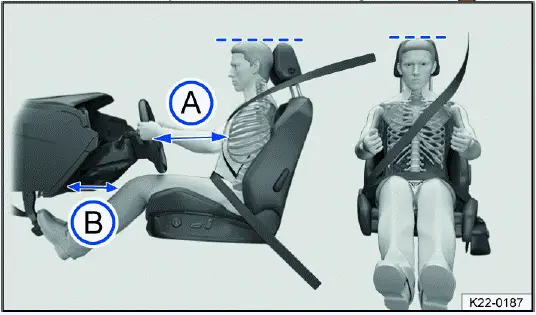
Fig. 21 Correct distance between the driver and the steering wheel, correct
safety belt position and correct head restraint adjustment (general example).
The correct seating positions for the driver and passengers are specified in the information that follows. Safety belts and airbags provide the best protection only when vehicle occupants sit upright, keep their feet in the footwell, and maintain the correct distance from the steering wheel, instrument panel, and airbags. In the Volkswagen Taos, adjusting the seat, head restraint, mirrors, and steering wheel before driving helps improve both safety and vehicle control.
If you have a physical impairment that prevents you from sitting correctly on the driver seat with a correctly worn safety belt and reaching the pedals, special modifications to your vehicle may be necessary. For information about possible vehicle modifications, contact a qualified mobility equipment specialist or an authorized service facility familiar with the required safety standards. Alternatively, contact the Volkswagen Customer CARE Center at +00 (1) 800 822 8987.
For your safety and to reduce the risk of injuries in the event of a sudden braking maneuver or accident, the following seating positions are recommended:
The following applies to all vehicle occupants:
- Adjust the head restraint so that the upper edge of the head restraint is in line with the upper portion of the head as much as possible, but not lower than eye level. Position the back of the head as close as possible to the head restraint fig. 21.
- For shorter individuals, slide the head restraint all the way downward, even if the head is then below the upper edge of the head restraint.
- For taller individuals, move the head restraint upward all the way.
- Keep both feet in the footwell while driving. This helps occupants remain in the intended seating position and allows the restraint systems to work more effectively.
- Adjust and fasten the safety belts correctly ⇒ Safety belts. The lap belt should sit low across the pelvis, and the shoulder belt should lie across the center of the shoulder and chest.
The following additional points apply to the driver:
- Adjust the forward/back position of the driver seat so that you can press the pedals while your legs are slightly bent and there is at least 10 cm (around 4 inches) of space between the instrument panel and your knees fig. 21.
- Adjust the driver seat so that the top point of the steering wheel can be reached without leaning forward or lifting your shoulders from the seat backrest.
- Position the seat backrest in an upright position, so that your back rests completely on the seat backrest.
- Adjust the steering wheel so that the distance between the steering wheel and your chest is at least 25 cm (around 10 inches) fig. 21 and you can hold the steering wheel firmly at the sides with both hands and your elbows slightly bent.
- When adjusted, the steering wheel must always face your chest and not be directed toward your face. This helps the driver airbag deploy toward the upper body as intended.
- In vehicles with head restraints that can be moved forward or back, position the head restraint so that it is as close as possible to the back of the head.
- Always keep both feet in the footwell to keep control of the vehicle at all times. The driver must be able to operate the accelerator, brake pedal, and footrest without obstruction.
The following additional points apply to the front passenger:
- In vehicles with head restraints that can be moved forward or back, position the head restraint so that it is as close as possible to the back of the head.
- Position the seat backrest in an upright position, so that your back rests completely on the seat backrest. Avoid reclining the seat too far, because this can reduce safety belt protection.
- Push the front passenger seat back into the rear half of the adjustable range so that the airbag can provide optimum protection if it deploys. The passenger should remain seated upright, with feet in the footwell and the safety belt correctly positioned.
Safety belts
Introduction
Check the condition of all safety belts regularly. Inspect the belt webbing, belt connections, automatic safety belt retractors, buckles, buckle tongues, and visible anchorage areas for damage, wear, fraying, deformation, or contamination. If the belt fabric, the belt connections, the automatic safety belt retractor, or the buckle is damaged, have the affected safety belt replaced immediately by suitably qualified professionals ⇒
 . The correct safety belt parts must match the vehicle equipment, seating position, and model year. For the Volkswagen Taos, using the proper components is important because the belts, retractors, buckles, belt tensioners, and airbag system are designed to work together as one safety system.
WARNING
The risk of serious and fatal injuries increases if the safety belts are not worn or are worn incorrectly. A safety belt can only provide effective protection when the occupant is seated correctly, the belt is routed properly, and the buckle tongue is latched into the correct buckle.
- Safety belts are the most effective way to reduce the risk of serious and fatal injuries in a collision. Before every trip, vehicle occupants must therefore seat themselves correctly, fasten the safety belt that belongs to the seat they are using, and keep it fastened while the vehicle is in motion. This applies to all passengers and at all times, including during city driving, short trips, and low-speed travel.
- Secure only one person with a safety belt. A single safety belt must never be used for two occupants at the same time.
- Secure children in the vehicle with a child restraint that is appropriate for their weight and height and with the safety belt used correctly ⇒ Transporting children safely. The child restraint must be installed according to the restraint manufacturer’s instructions and the vehicle instructions.
- Never allow children or infants to ride on anyone's lap and never strap children or infants to another person with the same safety belt. In a collision or sudden braking maneuver, the forces can be too great for an adult to hold a child safely.
- Only ever insert and latch the buckle tongue in the belt buckle for the corresponding seat. Using a buckle from another seat reduces the protection provided by the safety belt and can cause serious injuries.
- Do not wear extremely bulky, loose clothing in the vehicle, such as a coat over a sports jacket, because this could impair the fit and function of the safety belt. The belt should lie close to the body and should not be twisted, loose, or routed over hard objects in clothing.
WARNING
If the belt webbing or other parts of the safety belts are damaged, the safety belts could tear during a collision or sudden braking maneuver and cause serious or fatal injuries. Even minor-looking damage can reduce the strength and reliability of the restraint system.
- Never damage the safety belts by trapping them in doors, folding mechanisms, or seat hardware, and never allow them to chafe on sharp edges. Make sure the belt retracts smoothly and does not become twisted or pinched.
- Have damaged safety belts replaced immediately with new safety belts that are approved for the vehicle. Safety belts that were stretched during a collision must be replaced by a qualified service facility, even if no damage is visible. The anchorage points, belt buckles, retractors, and related restraint components should also be checked because they may have been exposed to high forces.
- Never try to repair, modify, sew, dye, clean with aggressive chemicals, or remove the safety belts yourself. Have all repairs on safety belts, automatic safety belt retractors, buckle parts, and related restraint components performed only by qualified professionals using parts approved for the Volkswagen Taos.
Fasten seat belts reminder and seat belt safety indicator
Please read the introductory information and heed the Warnings and
Notice ⇒
 Introduction.
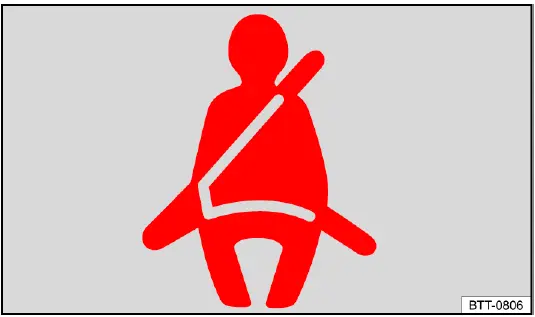
Fig. 22 In the instrument cluster display: warning light for the fasten seat
belts reminder.
 The driver or front passenger
has not fastened their safety belt. Fasten all safety belts before the vehicle begins moving and make sure every occupant remains properly buckled throughout the trip.
The driver or front passenger
has not fastened their safety belt. Fasten all safety belts before the vehicle begins moving and make sure every occupant remains properly buckled throughout the trip.
When the ignition is switched on, several warning and indicator lamps light up temporarily as a function check. They then turn off after a few seconds. This brief check confirms that the instrument cluster can display the required warning symbols.
A chime also sounds. The audible warning is intended to draw the driver’s attention to an unfastened safety belt before driving starts.
When the ignition is switched on, the red
 warning light comes on for six
seconds. A chime also sounds for up to six seconds
if the driver safety belt is not fastened. The chime ends when the driver
fastens their safety belt. The warning lamps and chime
go off when the driver and front passenger have fastened their safety belts. In the Volkswagen Taos, this reminder helps reinforce correct belt use before the vehicle is driven.
warning light comes on for six
seconds. A chime also sounds for up to six seconds
if the driver safety belt is not fastened. The chime ends when the driver
fastens their safety belt. The warning lamps and chime
go off when the driver and front passenger have fastened their safety belts. In the Volkswagen Taos, this reminder helps reinforce correct belt use before the vehicle is driven.
If the driver and front passenger do not both fasten their safety belts within 10 seconds after the warning chime has ended and the vehicle is driving at a speed above approx. 25 km/h (approx. 15 mph), the chime sounds again for approx. 6 seconds, then stops for approx. 24 seconds, and then sounds again for approx. 6 seconds. The same sequence occurs if one of the safety belts is released while driving. The red
 warning light comes on. A warning chime also sounds for up to two minutes at 24-second intervals. The chime does not sound at speeds below approx. 8 km/h (approx. 5 mph), but the safety belt should still be fastened correctly whenever the vehicle is occupied.
When the ignition is switched on, the red
 warning light comes on until the
driver and front passenger have both fastened
their safety belts. The display is a safety reminder, not a substitute for checking that all occupants are seated correctly and properly restrained.
warning light comes on until the
driver and front passenger have both fastened
their safety belts. The display is a safety reminder, not a substitute for checking that all occupants are seated correctly and properly restrained.
WARNING
The risk of serious and fatal injuries increases if the safety belts are not worn or are worn incorrectly. A safety belt can only protect effectively when it is fastened, routed close to the body, and used by the occupant in the correct seating position.
- Fasten the safety belts and use them correctly to ensure that they provide optimum protection. The belt must not be twisted, loose, routed under the arm, placed behind the back, or positioned over hard objects in clothing.
Using safety belts
Please read the introductory information and heed the Warnings and
Notice ⇒
 Introduction.
Checklist
Using safety belts ⇒
 :
:
- Check the condition of all of the safety belts regularly. Look for fraying, cuts, pulled threads, stiffness, deformation, or damage to the buckle, latch plate, retractor, and belt anchorage points.
- Keep safety belts clean. Dirt, sticky residue, or foreign material can affect how smoothly the belt retracts and how well the buckle latches.
- Always keep foreign objects and fluids far away from the safety belt, the safety belt buckle, and the slot in the safety belt buckle. Coins, crumbs, liquids, or small objects can interfere with proper locking.
- Do not pinch or damage the safety belt and/or belt buckle, for example closing it in a door. A belt that has been trapped or sharply bent may be weakened even if the damage is not immediately obvious.
- Never remove, modify, or repair the safety belt and belt fastening elements. These parts are safety components and must remain in their original approved condition.
- Always fasten the safety belt correctly before you begin driving and keep it fastened while driving. This applies to the driver and every passenger, even during short local trips.
Twisted safety belt
If the safety belt is difficult to pull out of the belt guide, the safety belt may have been pulled out too quickly when positioning the belt and may have become twisted within the side trim panel. A twisted belt may not sit flat against the body and can reduce comfort and protection.
1. Slowly and carefully pull the safety belt out completely by the belt buckle. Avoid jerking the belt, because sudden movement may activate the locking mechanism.
2. Untwist the safety belt and guide the safety belt back slowly by hand. Make sure the webbing lies flat and retracts evenly into the guide.
If you cannot untwist the safety belt, fasten the safety belt anyway. The twist must not be in a belt area that lies directly against the body. Have the problem corrected as soon as possible by a qualified service professional. For the Volkswagen Taos, the belt, retractor, and guide path should be checked so the restraint system continues to operate correctly.
Lockable safety belt
The safety belts on the rear seats and the safety belt on the front passenger seat are lockable and have an emergency locking function. With the locking function, you can adjust the safety belt so that a child restraint is properly installed ⇒ Securing a child restraint with a safety belt.
Safety belts may only be locked for certain child restraint systems ⇒ Child restraints - overview. Do not activate the locking function unnecessarily for normal adult passengers, because the belt must be able to move and retract normally during regular use.
An activated locking mechanism must be released when a vehicle occupant fastens their safety belt. To release the lock, push the red button in the belt buckle and guide the seat belt back fully by hand. Once the belt has retracted completely, pull it out again normally and check that it moves smoothly.
WARNING
Incorrect handling of the safety belts increases the risk of severe or fatal injuries. Damaged, dirty, modified, or incorrectly latched belts may not provide the intended restraint in a collision or sudden braking maneuver.
- Check the safety belts and associated components regularly to ensure they function correctly.
- Never attempt to repair safety belts. Have damaged safety belts replaced with approved components.
- Always keep the safety belts clean. Use only suitable cleaning methods that do not weaken the belt webbing.
- Never damage the safety belts by trapping them or chafing them on sharp edges.
- Always keep the belt buckle and insertion guide for the belt buckle free of foreign objects and fluids.
Fastening and unfastening the safety belts
Please read the introductory information and heed the Warnings and
Notice ⇒
 Introduction.
Safety belts that are fastened correctly help hold vehicle occupants in the correct seating position during braking maneuvers, sudden steering movements, or a collision. They are designed to reduce occupant movement and help the airbags and other restraint systems provide their intended protection ⇒
 . In the Volkswagen Taos, every occupant should fasten the safety belt before the vehicle begins moving, even for short trips.
Fastening the safety belt
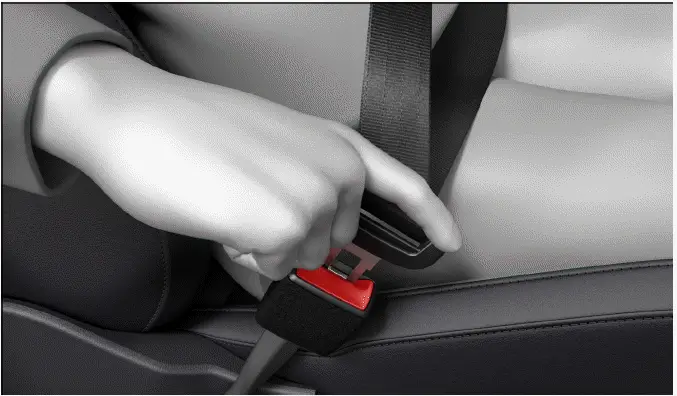
Fig. 23 Inserting the buckle tongue into the safety belt buckle (general
example).
Always fasten the safety belts before driving. A correctly fastened belt should lie flat against the body, without twists, slack, or incorrect routing.
1. Adjust the front seat and head restraint correctly ⇒ Seating position. The seat backrest should be upright, and the occupant should sit fully against the backrest.
2. Have the rear seat backrest locked into place in an upright position ⇒
 . A rear backrest that is not fully latched can reduce passenger protection and may allow luggage to move forward during sudden braking.
3. Grab the belt and pull it evenly over the chest and pelvis. Do not twist the belt while doing this ⇒
 . The shoulder section should run across the center of the shoulder, and the lap section should sit low across the pelvis.
4. Insert the buckle tongue securely in the safety belt buckle for that seat fig. 23. Use only the buckle that belongs to the seating position being used.
5. Pull on the safety belt to make sure the buckle tongue is latched correctly in the safety belt buckle. If it is not latched securely, release it and insert the buckle tongue again until it locks into place.
Unfastening the safety belt
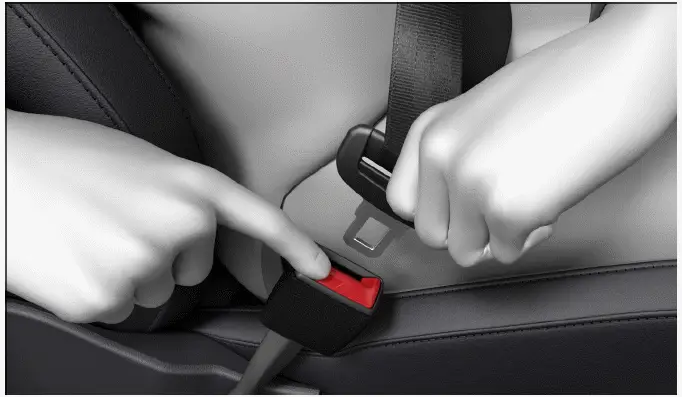
Fig. 24 Releasing the buckle tongue from the safety belt buckle (general
example).
Only unfasten the safety belt while the vehicle is stationary ⇒
 . Releasing the belt while driving removes a key part of occupant protection.
1. Press the red button in the safety belt buckle fig. 24.
The buckle tongue will pop out.
2. Guide the belt back by hand so that the belt rolls up easily, the belt does not twist, and the trim panel is not damaged. Do not let the buckle tongue strike the window, door trim, or interior panels while the belt retracts.
WARNING
Incorrect safety belt positioning or unfastening the safety belt while the vehicle is in motion can lead to serious or fatal injuries in the event of an accident, sudden braking maneuver, or evasive steering movement. A safety belt can only provide its intended protection when the occupant is seated correctly and the belt remains fastened.
- Place the backrest in an upright position and position your safety belt correctly for your size to maximize the protective function of the safety belt.
- Never unfasten the safety belt while the vehicle is in motion.
Safety belt positioning
Please read the introductory information and heed the Warnings and
Notice ⇒
 Introduction.
Safety belts offer the best protection during a collision and help reduce the risk of serious injury or death only when they are fastened and positioned correctly. Correct belt positioning also helps hold the occupant in the proper location so the airbags can provide their intended protection if they deploy. For this reason, every occupant in the Volkswagen Taos should fasten their own safety belt and check that it is routed correctly before the vehicle starts moving fig. 25.
An incorrect seating position can cause severe or fatal injuries ⇒ Seating position. Leaning too far back, sitting sideways, placing the belt under the arm, or allowing the lap belt to rest over the stomach can greatly reduce protection.
Correct safety belt positioning
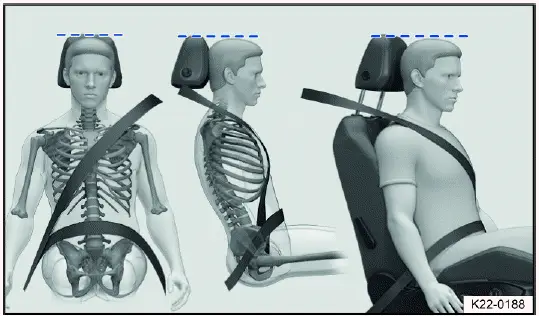
Fig. 25 Correct safety belt positioning and correct head restraint adjustment
(general example).
- The shoulder belt section of the safety belt must always be positioned over the center of the shoulder and never across the neck, above the arm, under the arm, or behind the back. The belt should lie flat against the upper body.
- The lap section of the safety belt must always lie across the lap and never over the stomach. It should sit as low as possible across the pelvis, where the body can better absorb restraint forces.
- The safety belt must always rest flat and securely on the body. Retighten the belt if necessary, and make sure it is not twisted, loose, or caught on clothing or objects.
Correct safety belt positioning for pregnant women
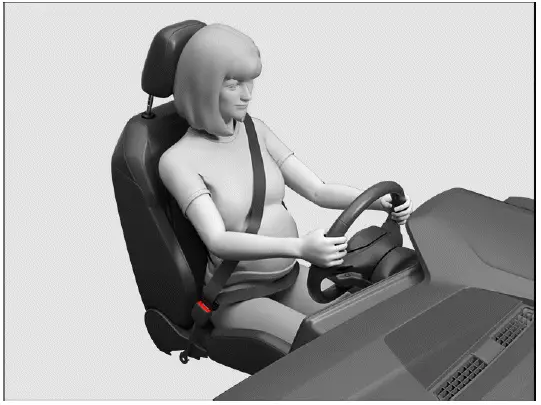
Fig. 26 Correct safety belt positioning for pregnant women (general example).
For pregnant women, the safety belt must rest evenly across the chest and as low and flat as possible on the lap, so that no pressure is applied to the lower abdomen. This routing should be maintained throughout the entire pregnancy fig. 26. The belt should remain snug without pressing across the stomach.
Adjusting the safety belt position to body size
The belt positioning can be adjusted with the following equipment. Adjusting the seating position and belt height helps the belt lie correctly across the shoulder, chest, and pelvis.
- Belt height adjusters for the front seats ⇒ Safety belt height adjuster.
- Height-adjustable front seats ⇒ Seating position.
WARNING
Incorrect safety belt positioning can cause serious injuries in the event of an accident or during sudden braking or driving maneuvers. If the belt is routed incorrectly, the restraint force may be applied to the neck, stomach, or other vulnerable parts of the body.
- Ensure your safety belt is positioned correctly.
- Place the backrest in an upright position and position your safety belt correctly for your size to maximize the protective function of the safety belt.
- Place the shoulder portion of the safety belt over the center of your shoulder, and never under your arm or across your neck.
- Lay the safety belt flat and securely on the upper part of the body and pelvis. Retighten the belt if necessary.
- Ensure the lap section of the safety belt lies across your lap and never over your stomach.
- Throughout your pregnancy, ensure the safety belt rests evenly across your chest and as low and flat as possible on your lap. This will prevent pressure being applied to your lower abdomen.
- Do not twist the safety belt while wearing it.
- Never hold the safety belt away from the body with your hand.
- Do not guide the safety belt over hard or breakable objects, such as eyeglasses, pens, or keys. These objects can increase the risk of injury if the belt tightens suddenly.
- Do not modify how the safety belt is routed using belt clips, retaining loops, or similar objects. Unauthorized routing changes can prevent the belt from working as designed.
 Persons who cannot achieve
the optimum belt routing due to physical conditions should ask a qualified service professional about possible special modifications that may help improve protection with the safety belt and airbags. Any change must be suitable for the vehicle restraint system and should preserve the intended safety function of the Volkswagen Taos.
Persons who cannot achieve
the optimum belt routing due to physical conditions should ask a qualified service professional about possible special modifications that may help improve protection with the safety belt and airbags. Any change must be suitable for the vehicle restraint system and should preserve the intended safety function of the Volkswagen Taos.
Safety belt height adjuster
Please read the introductory information and heed the Warnings and
Notice ⇒
 Introduction.
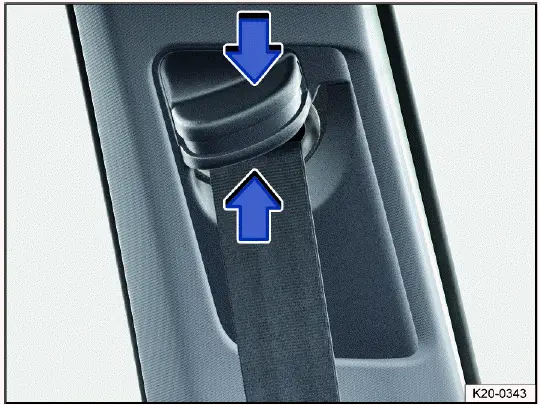
Fig. 27 Next to the front seats: safety belt height adjuster.
You can use the safety belt height adjuster to fine-tune the shoulder belt routing according to body size. Correct adjustment helps the belt lie across the center of the shoulder instead of against the neck or too far toward the outside of the arm. In the Volkswagen Taos, this adjustment is especially important because the safety belt, seat position, head restraint, and airbag system are designed to work together.
1. Push down and hold the safety belt height adjustment button in the direction of the arrows fig. 27. Keep the button pressed while moving the adjuster.
2. Slide the safety belt height adjuster upward or downward until the safety belt lies over the center of the shoulder ⇒ Safety belt positioning. The belt should rest flat against the body without twisting or cutting into the neck.
3. Release the safety belt height adjustment button. Make sure the adjuster does not remain between two locking positions.
4. Pull hard on the safety belt to check that the safety belt height adjuster is engaged. If it moves unexpectedly, adjust it again before driving.
WARNING
Changing the safety belt height while driving may cause serious or fatal injuries. Adjusting the belt while the vehicle is moving can distract the driver or leave the belt incorrectly positioned during a sudden braking maneuver or collision.
- Never adjust the safety belt height while driving.
Automatic safety belt retractor, safety belt pretensioner, safety belt load limiter
Please read the introductory information and heed the Warnings and
Notice ⇒
 Introduction.
The vehicle seat belts are part of the vehicle safety concept⇒ Airbag system. These components help keep occupants in the correct position and support the protective effect of the airbags during severe collisions. The vehicle safety concept has the following key functions:
Automatic safety belt retractor
Every safety belt is equipped with an automatic safety belt retractor on the shoulder belt section. If the safety belt is pulled out slowly or while driving normally, the shoulder belt can move freely so the occupant can sit comfortably and make normal movements. The automatic safety belt retractor blocks the belt if it is pulled out quickly, such as during sudden braking, strong acceleration, driving on hills, cornering, or a collision. This locking action helps hold the occupant closer to the seat at the moment protection is needed.
Safety belt pretensioners
The safety belts for the driver and front seat passenger are equipped with safety belt pretensioners. These are restraint system components designed to tighten the belt in certain severe crash situations.
Safety belt pretensioners are activated by sensors and tighten the safety belts in the event of severe front-on, side and rear collisions or if the vehicle rolls over. If the safety belt is loose, it retracts. This can reduce the forward movement of the vehicle occupants and movement of the vehicle occupants in the direction of the collision. The safety belt pretensioner works together with the airbag system. The safety belt pretensioner is only activated during a rollover accident if the Side Curtain Protection airbags are deployed. In the Volkswagen Taos, this coordination helps the restraint system react as one integrated safety structure.
Fine dust may appear if airbags deploy. This is completely normal and does not indicate a fire in the vehicle. The dust may come from airbag deployment materials or pyrotechnic restraint components.
WARNING
The safety belt pretensioners only provide protection for one deployment. If the safety belt pretensioners deploy, the system must be replaced. Reusing deployed restraint components can prevent the safety system from working correctly in another accident.
- Have deployed safety belt pretensioners and affected system components replaced immediately with new parts that are approved for the vehicle.
- Only have suitably qualified professionals make repairs or modifications to a vehicle. Correct work on restraint systems requires proper tools, diagnostic equipment, repair information, and trained personnel.
- Never install safety belt pretensioner components removed from scrap vehicles or from recycling. Used components may have hidden damage or may no longer meet the required safety standard.
- Never modify any components of the safety belt pretensioners. Changes to wiring, mounting points, belt components, or control units can affect deployment behavior.
Safety belt load limiter
Safety belt load limiters reduce the force placed on the body by the safety belts during a collision. By allowing controlled belt force management, the load limiter helps reduce stress on the chest while still helping to restrain the occupant.
 When disposing of the vehicle
or of individual system components, all safety precautions must be observed. Restraint system parts may contain pyrotechnic elements and must be handled according to the required service and disposal procedures ⇒ Safety belt
pretensioner servicing and disposal. A qualified service facility will be familiar with these provisions.
When disposing of the vehicle
or of individual system components, all safety precautions must be observed. Restraint system parts may contain pyrotechnic elements and must be handled according to the required service and disposal procedures ⇒ Safety belt
pretensioner servicing and disposal. A qualified service facility will be familiar with these provisions.
Safety belt pretensioner servicing and disposal
Please read the introductory information and heed the Warnings and
Notice ⇒
 Introduction.
When working on safety belt pretensioners, as well as when removing and installing other vehicle components as part of repair work, the safety belts can become damaged without you noticing. Hidden damage may affect the way the safety belt pretensioner works or may prevent it from working in the event of an accident.
The instructions must be followed so that the effectiveness of the safety belt pretensioner is not impaired and removed components do not cause injuries or environmental pollution. These parts are not ordinary trim pieces; they are safety-related components and must be handled with the correct procedure. For the Volkswagen Taos, restraint system service should be carried out by professionals who understand the required repair information and disposal rules.
WARNING
Repairs that you perform yourself or that are performed incorrectly on the safety belts, automatic safety belt retractors, and safety belt pretensioners can increase the risk of severe or fatal injuries. The safety belt pretensioner may not deploy when it should, or it may deploy unexpectedly.
- Never perform repairs, adjustments, or removal and installation of components of the safety belt pretensioners or safety belts yourself. Only have these procedures performed by suitably qualified professionals ⇒ Accessories, replacement parts, repairs, and modifications.
- Safety belts, safety belt pretensioners and automatic safety belt retractors cannot be repaired. These components must be replaced if damaged, deployed, or no longer functioning correctly.
 Some parts of the vehicle, such
as the airbag module and safety belt pretensioners, may contain perchlorate.
Special
handling may be required. For further information, visit https://dtsc.ca.gov/perchlorate.
Some parts of the vehicle, such
as the airbag module and safety belt pretensioners, may contain perchlorate.
Special
handling may be required. For further information, visit https://dtsc.ca.gov/perchlorate.
Airbag system
Introduction
The vehicle is equipped with a front airbag for the driver and a front airbag for the front passenger. These airbags can provide additional protection for the chest and head when the seat, safety belt, head restraint, and steering wheel are adjusted and used correctly. In the Volkswagen Taos, the airbag system is designed as a supplemental restraint system, which means it supports the safety belts but does not replace them. Safety belts must always be worn correctly, even when the front seats are equipped with front airbags.
WARNING
Relying only on the airbag system for protection may result in serious injury or death. Airbags are designed to provide a supporting safety function, not complete occupant protection by themselves. The airbag system can only offer its intended protection when the safety belt is worn correctly and the occupant is sitting in the correct seating position.
- Before every trip, everyone in the vehicle must sit correctly, fasten the safety belt that belongs to the seat they are using, and keep it fastened while the vehicle is in motion. This applies to all passengers, on every trip, including short city driving.
- Never rely solely on the airbag system. A safety belt remains the primary restraint and must always be used correctly.
WARNING
An incorrect seating position may prevent the front airbag from providing proper protection and can cause serious injuries. If an occupant is too close to an airbag, leaning forward, sitting sideways, or not wearing a safety belt correctly, the force of deployment can be dangerous.
- Always hold the steering wheel with both hands on the sides of the outer edge, in the nine o'clock and three o'clock position. This helps keep your arms out of the driver airbag deployment area.
- Adjust the driver seat so that there is a distance of at least 25 cm (10 inches) between your chest and the center of the steering wheel. If this seating position cannot be reached because of body size or physical condition, ask a qualified service professional about possible approved solutions.
- Adjust the front passenger seat so that there is the greatest possible distance between the front passenger and the instrument panel, while still allowing a correct seating position and proper safety belt routing.
WARNING
Incorrect seating positions in the vehicle increase the risk of serious or fatal injuries in the event of an accident or sudden driving and braking maneuvers, especially if the airbags are deployed and exert force on a vehicle occupant who is not sitting correctly.
- All vehicle occupants must always sit in the correct seating position and have their own safety belts correctly fastened while driving.
WARNING
The risk of serious and fatal injuries may increase if the safety belts are not worn or are worn incorrectly. The airbag and safety belt are designed to work together, and the airbag alone cannot hold an occupant in the safest position during a crash.
- Before every trip, everyone in the vehicle must seat themselves correctly, fasten the safety belt that belongs to the seat they are using, and keep it fastened while the vehicle is in motion.
- Secure children before and during every journey in the vehicle with a child restraint system that is appropriate for their weight and height and with the safety belt used correctly ⇒ Transporting children safely.
- Always insert the buckle tongue into the belt buckle that belongs to that seat and let it engage securely. Using a buckle from another seat reduces the protection provided by the safety belt and can cause serious injuries.
- Never unfasten the safety belt while the vehicle is in motion.
- Secure only one person with a safety belt.
- Never allow children or infants to ride on anyone's lap and never strap children or infants to another person with the same safety belt.
- Do not wear extremely bulky, loose clothing in the vehicle, such as a coat over a sports jacket, because this could impair the fit and function of the safety belt.
WARNING
An incorrect seating position reduces the effectiveness of the airbags and increases the risk of injury in the event of a collision. Airbags deploy very quickly, and they are designed to work with occupants seated upright, belted correctly, and positioned at a safe distance from the deployment zone.
- Always fasten your safety belt correctly to reduce the risk of injury if an airbag deploys.
- Adjust the front seats correctly before driving or riding in the vehicle.
- Position the seat backrest in an upright position, so that your back rests completely on the seat backrest.
WARNING
The risk of injury if the airbag deploys increases if there are objects located between vehicle occupants and the airbag deployment zone. These objects could change the deployment path of the airbag or could be thrown toward vehicle occupants with significant force.
- Never hold objects in your hands or on your lap while driving. This includes phones, tablets, bags, bottles, tools, and other loose items.
- Never transport objects on the front passenger's seat. During sudden braking or driving maneuvers, the objects could move into the airbag deployment zone and then be thrown through the vehicle interior if the airbag deploys.
- There should be no people, animals, or objects between the vehicle occupants and the airbag deployment zone.
Make sure that children and other passengers also follow this instruction.
WARNING
Once the airbags have deployed, they lose their protective function and must be replaced. If deployed or damaged airbag components remain in the vehicle, the restraint system may not protect occupants correctly in a later accident, sudden braking maneuver, or emergency driving situation.
- Have any deployed safety airbags and affected system components replaced immediately with new parts that are approved for the vehicle.
- Only have suitably qualified professionals make repairs or modifications to the vehicle. Work on the airbag system requires the correct tools, diagnostic equipment, repair information, and trained personnel.
- Never install airbag components removed from scrap vehicles or from recycling. Used airbag parts may have hidden damage, unknown history, or incompatible specifications.
- Never modify components of the airbag system. Changes to wiring, covers, sensors, control units, trim panels, or mounting points can affect deployment behavior.
WARNING
Fine dust and water vapor can develop when the airbags deploy. This is normal and does not indicate a fire in the vehicle.
The fine dust can irritate the skin and mucous membranes in the eyes and can cause breathing problems, particularly for individuals who have asthma or other respiratory conditions. After an airbag deployment in the Volkswagen Taos, leave the vehicle when it is safe to do so and allow fresh air into the cabin.
- To reduce the risk of breathing problems, exit the vehicle or open the windows or doors for fresh air.
- If you come into contact with the dust, wash your hands and face with mild soap and water before eating anything.
- Flush your eyes and any open wounds with water if dust enters them.
WARNING
Cleaners that contain solvents can make the surface around the airbag installation locations porous or weak. If the surface is damaged, plastic pieces could come loose and be thrown through the vehicle interior during a collision with airbag deployment, causing serious injuries.
- Never treat the instrument panel and the surfaces around the airbag installation locations with cleaners that contain solvents.
- Use only cleaning products and methods suitable for interior surfaces near airbag covers. Do not attach stickers, covers, trim pieces, or accessories over airbag installation areas.
Advanced Airbag System
Please read the introductory information and heed the Warnings and
Notice ⇒
 Introduction.
Read and follow the introductory information and safety precautions ⇒ Safety notes on using child restraints. The Advanced Airbag System is part of the occupant protection concept in the Volkswagen Taos, but it can only support safety when seats, safety belts, child restraints, and passenger positioning are used correctly.
An active passenger's front airbag presents serious dangers for a child ⇒
 . For
this reason, all children under the age of
twelve must be secured in the rear seats while the vehicle is in motion. The rear seating area is generally the safer location for children because it places them farther away from the front passenger airbag deployment zone.
. For
this reason, all children under the age of
twelve must be secured in the rear seats while the vehicle is in motion. The rear seating area is generally the safer location for children because it places them farther away from the front passenger airbag deployment zone.
The Advanced Airbag System, together with the side and Side Curtain Protection airbags, is checked every time the ignition is switched on. The yellow airbag indicator light
 comes on briefly and turns off after
several seconds. This short illumination is a normal function check and helps confirm that the warning light can operate.
comes on briefly and turns off after
several seconds. This short illumination is a normal function check and helps confirm that the warning light can operate.
Features of the Advanced Airbag System:
- Front passenger's front airbag in the instrument panel. This airbag is designed to provide supplemental protection for the front passenger when deployment conditions are met.
- Yellow indicator light
 in
the instrument cluster display.
in
the instrument cluster display. - Yellow PASSENGER AIR BAG indicator light
 .
. - Yellow PASSENGER AIR BAG indicator light
 .
.
If the status of the
 indicator light is one of the following, the Advanced Airbag System must be
checked by a qualified service professional:
indicator light is one of the following, the Advanced Airbag System must be
checked by a qualified service professional:
- The indicator light does not come on for several seconds when the ignition is switched on. This may mean the system check did not display correctly.
- The indicator light stays on after the ignition is switched on. A persistent warning can indicate a fault that needs diagnosis.
- The indicator light comes on or flashes again after it is turned off. Intermittent airbag warnings should not be ignored.
- The indicator light comes on while driving. If this happens, the airbag system may not provide its intended protection in a collision.
Advanced Airbag System, small children, child restraints and children on the front passenger seat
The Advanced Airbag System in your vehicle has been certified and complies with the regulations of the United States Federal Motor Vehicle Safety Standard (FMVSS) 208 and the Canada Motor Vehicle Safety Standard (CMVSS) 208 at the time of vehicle manufacture. In accordance with these requirements, the system on the passenger side has been designed to inhibit deployment for small children of up to 12 months of age and to provide low-risk deployment for children between three and six years of age under defined test conditions.
The airbag on the passenger side is a potential danger for children when it deploys. The front passenger seat is not the safest place for a child in a forward-facing child restraint and is an extremely dangerous place for an infant or child in a rear-facing child restraint. Whenever possible, children should ride properly restrained in the rear seats.
The Advanced Airbag System has a capacitive detection system in the seat cushion of the front passenger seat. This system is designed to help detect whether a baby, small child, or child restraint is present on the front passenger seat.
The capacitive detection system measures the electrical capacity of a child, the child restraint, and a child's blanket on the front passenger seat. This measurement helps the system evaluate the occupant situation, but it does not remove the need to follow child restraint instructions and airbag warnings.
The electrical capacity of a child restraint depends on the child restraint type. Together with the average capacity values of small children and one-year-old children, the capacity values of all child restraints specified in accordance with FMVSS 213 and CMVSS 213 are stored in the Advanced Airbag System control module. These stored values are compared with the values detected on the front passenger seat.
Only use child restraints that are specified according to these standards and have been approved by the child restraint manufacturer for use with airbag systems. The U.S. National Highway Traffic Safety Administration (NHTSA) has published a list of certified child restraint models for use with the Advanced Airbag System in accordance with FMVSS 208.
Only install child restraints on the front passenger seat under exceptional circumstances. Carefully read all information about child restraints and the Advanced Airbag System beforehand, and follow every instruction and warning. Before driving, make sure that the system has correctly detected the child restraint on the front passenger seat and that the front passenger's front airbag has been switched off. The yellow
 PASSENGER AIR BAG indicator light will come on. In the Volkswagen Taos, this indicator must always be checked when a child restraint is used on the front passenger seat.
DANGER
The front passenger seat of a vehicle is a potential danger to children, even in vehicles with advanced airbags. If the front passenger airbag deploys, a child who is unsecured, incorrectly secured, placed in an unsecured child restraint, or seated in a rear-facing child restraint on the front passenger seat can suffer serious or fatal injuries.
- Even if your vehicle is equipped with an Advanced Airbag System, make sure that children, particularly children younger than 12 years of age, are always transported in such a way that they are secured to the rear seats according to their age and size.
Indicator light for front passenger's front airbag
Please read the introductory information and heed the Warnings and
Notice ⇒
 Introduction.
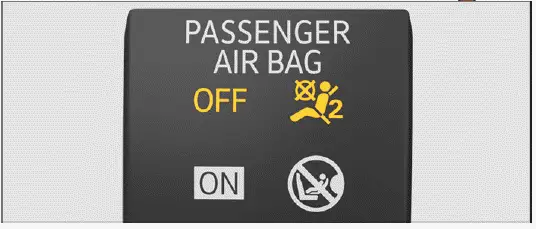
Fig. 28 In the center console: indicator light for the switched off front
passenger's front airbag.
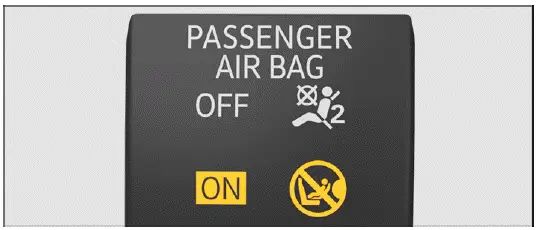
Fig. 29 In the center console: indicator light for the activated passenger's
front airbag.
The yellow PASSENGER AIR BAG indicator light
 fig. 28 comes on as soon as the
Advanced Airbag System has
deactivated the front passenger airbag. This display is especially important when checking whether the system has recognized a child restraint, an unoccupied front passenger seat, or another condition that causes the passenger front airbag to remain off.
fig. 28 comes on as soon as the
Advanced Airbag System has
deactivated the front passenger airbag. This display is especially important when checking whether the system has recognized a child restraint, an unoccupied front passenger seat, or another condition that causes the passenger front airbag to remain off.
The yellow PASSENGER AIR BAG indicator light
 fig. 29 comes on as soon as the
Advanced Airbag System has
activated the front passenger airbag. When this indicator shows the airbag is active, the front passenger seat must not be used for a rear-facing child restraint.
fig. 29 comes on as soon as the
Advanced Airbag System has
activated the front passenger airbag. When this indicator shows the airbag is active, the front passenger seat must not be used for a rear-facing child restraint.
If the yellow PASSENGER AIR BAG indicator light
 malfunctions, the yellow indicator
light
malfunctions, the yellow indicator
light
 appears in the
instrument cluster to indicate a malfunction. A faulty indicator light does not
affect the function of the front passenger's front
airbag, but the yellow PASSENGER AIR BAG indicator light
appears in the
instrument cluster to indicate a malfunction. A faulty indicator light does not
affect the function of the front passenger's front
airbag, but the yellow PASSENGER AIR BAG indicator light
 can no longer be used to display
the status of the front
passenger's front airbag. Get professional assistance immediately to have the
system checked. Until the fault is corrected, do not rely on the center console indicator alone to confirm the front passenger airbag status.
can no longer be used to display
the status of the front
passenger's front airbag. Get professional assistance immediately to have the
system checked. Until the fault is corrected, do not rely on the center console indicator alone to confirm the front passenger airbag status.
The yellow
 PASSENGER AIR BAG
indicator light blinks for around five seconds in the following situations:
PASSENGER AIR BAG
indicator light blinks for around five seconds in the following situations:
- The capacitive passenger detection system detects that the front passenger seat is not occupied. In this case, the front passenger airbag may be deactivated because no passenger is recognized on the seat.
- The capacitive passenger detection system detects a child restraint according to FMVSS 208 or CMVSS 208 ⇒ Airbag system. The indicator behavior helps show that the system has evaluated the load on the seat.
The yellow
 PASSENGER AIR BAG
indicator light blinks for around five seconds when the capacitive passenger
detection system has detected an adult occupying the seat. The yellow PASSENGER
AIR BAG indicator light
PASSENGER AIR BAG
indicator light blinks for around five seconds when the capacitive passenger
detection system has detected an adult occupying the seat. The yellow PASSENGER
AIR BAG indicator light
 then
lights up for about 60 seconds and goes out. This sequence confirms that the system has evaluated the front passenger seat load and detected an occupant condition that allows the airbag status to change accordingly.
then
lights up for about 60 seconds and goes out. This sequence confirms that the system has evaluated the front passenger seat load and detected an occupant condition that allows the airbag status to change accordingly.
Ensure that the status of the airbag, either on or off, is shown correctly by the indicator light according to the load on the seat. In the Volkswagen Taos, this check is especially important before driving with a passenger or when a child restraint has been placed on the front passenger seat under exceptional circumstances.
The yellow PASSENGER AIR BAG indicator light
 must come on when the ignition is
switched on and an infant carrier
or child restraint is installed on the front passenger seat and the measured
capacity is less than or equal to the capacity of an
average one-year old child in a child restraint system as per FMVSS 208 or CMVSS
208. This confirms that the system has detected a condition where the front passenger airbag should remain switched off.
must come on when the ignition is
switched on and an infant carrier
or child restraint is installed on the front passenger seat and the measured
capacity is less than or equal to the capacity of an
average one-year old child in a child restraint system as per FMVSS 208 or CMVSS
208. This confirms that the system has detected a condition where the front passenger airbag should remain switched off.
If the front passenger seat is not occupied, the front passenger's front airbag is also deactivated and the indicator light remains on. Do not place heavy objects, electronic devices, wet items, or pressure-producing loads on the seat if they could interfere with correct detection.
Never install a rear-facing child restraint on the front passenger seat. The safest place for a child restraint is on the rear seat. Children should be secured according to their age, height, weight, and the child restraint manufacturer’s instructions.
Under these conditions, the yellow PASSENGER AIR BAG indicator light
 must come on permanently whenever
the
ignition is on. If this is not the case, stop the vehicle as soon as it is safe
to do so and follow these instructions:
must come on permanently whenever
the
ignition is on. If this is not the case, stop the vehicle as soon as it is safe
to do so and follow these instructions:
- Switch the ignition off for at least 4 seconds and then on again. This allows the system to perform a new check of the front passenger seat condition.
- Remove the child restraint from the front passenger seat and install it again according to the manufacturer's instructions. Make sure the restraint sits flat on the seat, is not pressing incorrectly against the backrest, and is not affected by blankets, cushions, seat covers, or objects placed underneath.
- Check the PASSENGER AIR BAG indicator light again before driving. If the indicator does not show the expected airbag status, do not transport the child on the front passenger seat.
- Move the child restraint to a rear seat whenever possible. The rear seat remains the preferred and safer location for children in the Volkswagen Taos.
- When doing so, ensure that the child restraint is installed correctly. The restraint must sit firmly on the seat, follow the child restraint manufacturer’s instructions, and not be affected by objects placed under or behind it.
- Ensure that the safety belt has been guided around the child restraint correctly and that it is secure. The belt must not be twisted, loose, routed incorrectly, or caught on the child restraint frame.
- Ensure that there are no electronic devices on the front passenger seat. Phones, tablets, chargers, laptops, or other electronic items can affect seat detection or create incorrect pressure on the cushion.
- Ensure that the safety belt and belt buckle are working correctly and not blocked. The buckle must latch securely, and the belt must retract and lock as designed.
- Ensure that no seat heating or similar systems have been retrofitted. Non-original heating pads, covers, or wiring may interfere with the front passenger detection system.
- Ensure that there are no damp objects on the front passenger seat. Wet clothing, towels, bags, blankets, or moisture on the seat cushion may affect the capacitive passenger detection system.
If the yellow PASSENGER AIR BAG indicator light
 still does not come on, remove the
child restraint immediately and
install it on the rear seat. The rear seat is the safer location for a child restraint in the Volkswagen Taos. Have the airbag system checked by a qualified service professional as soon as possible, especially if the indicator behavior remains inconsistent after the child restraint has been reinstalled correctly.
still does not come on, remove the
child restraint immediately and
install it on the rear seat. The rear seat is the safer location for a child restraint in the Volkswagen Taos. Have the airbag system checked by a qualified service professional as soon as possible, especially if the indicator behavior remains inconsistent after the child restraint has been reinstalled correctly.
The yellow PASSENGER AIR BAG indicator light
 must not come on if the front
passenger seat is occupied by an
adult. However, if this happens, stop the vehicle as soon as it is safe to do so and check the following points before continuing:
must not come on if the front
passenger seat is occupied by an
adult. However, if this happens, stop the vehicle as soon as it is safe to do so and check the following points before continuing:
- Ensure that the passenger is sitting in the middle of the seat and that the backrest is upright. The passenger should sit fully against the seat backrest and should not lean against the door, center console, or instrument panel.
- Ensure that the belt is correctly positioned and tight. The shoulder belt should lie across the center of the shoulder, and the lap belt should sit low across the pelvis.
- Ensure that there are no other objects on the seat cushion, such as blankets or booster seats, that could affect the system's ability to detect a passenger. Remove bags, cushions, thick covers, electronic devices, or anything that changes the load on the seat.
If the yellow PASSENGER AIR BAG indicator light
 is still permanently on, the
passenger must move to the rear seat. Do not allow an adult passenger to continue riding in the front passenger seat if the system continues to show that the passenger front airbag is switched off.
is still permanently on, the
passenger must move to the rear seat. Do not allow an adult passenger to continue riding in the front passenger seat if the system continues to show that the passenger front airbag is switched off.
Have the airbag system checked by a qualified service professional as soon as possible. Until the issue is corrected, use the rear seat for the passenger and do not rely on the front passenger airbag status display if it does not match the actual seat occupant.
If the status of the Advanced Airbag System changes when you are driving, the relevant yellow indicator light blinks for around five seconds. Stop the vehicle as soon as it is safe to do so and follow the instructions specified here. In the Volkswagen Taos, a change in airbag status should always be treated seriously, because it may indicate that the seat load, occupant position, child restraint installation, or detection condition has changed.
If the system recognizes an unoccupied front passenger seat or child restraint according to FMVSS 208 or CMVSS 208, the front passenger airbag remains deactivated and the yellow PASSENGER AIR BAG indicator light
 comes on
permanently. If the front passenger seat is unoccupied and the passenger's
safety belt is fastened, the yellow
PASSENGER AIR BAG indicator light
comes on
permanently. If the front passenger seat is unoccupied and the passenger's
safety belt is fastened, the yellow
PASSENGER AIR BAG indicator light
 also comes on permanently. This can happen because the system detects no adult occupant even though the belt is latched.
If the front passenger seat is occupied by an adult, the front passenger airbag is activated and the yellow PASSENGER AIR BAG indicator light

 blinks for around five seconds when the capacitive passenger detection
system has detected an adult occupying the seat. The yellow PASSENGER AIR BAG
indicator light
blinks for around five seconds when the capacitive passenger detection
system has detected an adult occupying the seat. The yellow PASSENGER AIR BAG
indicator light
 then lights up for
about 60 seconds and goes out. This sequence indicates that the system has evaluated the front passenger seat and recognized an adult occupant condition.
then lights up for
about 60 seconds and goes out. This sequence indicates that the system has evaluated the front passenger seat and recognized an adult occupant condition.
Troubleshooting
Please read the introductory information and observe all Warnings and Notices ⇒  Introduction.
 Airbag system or safety belt pretensioners malfunction
The yellow warning indicator remains illuminated. In many cases, the instrument cluster may also show a related message, helping the driver understand that the restraint system requires attention.
A fault has been detected in at least one part of the airbag system or in one of the safety belt pretensioners. On the Volkswagen Taos, this warning should not be ignored, because these components are part of the vehicle’s passive safety system and may affect occupant protection during a collision.
1. Have the airbag system and safety belt pretensioners inspected by an authorized Volkswagen dealer or an authorized Volkswagen Service Facility as soon as possible. The system should be checked with suitable diagnostic equipment, and any stored fault must be evaluated according to the proper service procedure rather than simply cleared from memory.
 Airbag system or safety belt pretensioners deactivated with diagnostic device
After the ignition is switched on, the yellow indicator light comes on for approximately four seconds and then flashes for approximately twelve seconds. A message may also appear in the instrument cluster display.
At least one airbag or safety belt pretensioner has been intentionally switched off using a diagnostic device. This condition may appear after service work, diagnostic testing, collision-related inspection, or a repair where a restraint component was disabled for a specific technical reason.
1. Have a suitably qualified professional verify whether the airbag system or safety belt pretensioners must remain switched off. If the vehicle was recently repaired or diagnosed, the reason for the deactivation should be documented and confirmed before the vehicle is returned to regular use.
 Front passenger's front airbag switched off
The yellow indicator light remains continuously illuminated.
The front passenger's front airbag is switched off. Depending on the seating condition, the passenger detection system may disable the airbag when the seat is empty, when a small child restraint is detected, or when the system determines that deployment would not be appropriate.
1. Check whether the front passenger's front airbag should be switched off for the current seating situation.
2. If the front passenger's front airbag is switched off when it should be active, there may be a malfunction in the airbag system or in the passenger detection system. Contact an authorized Volkswagen dealer or authorized Volkswagen Service Facility so the cause can be diagnosed correctly before the warning is dismissed.
 Front passenger's front airbag enabled
The yellow indicator light flashes for approximately five seconds when the capacitive passenger detection system identifies an adult occupying the front passenger seat. The indicator light then remains on for approximately 60 seconds and goes out.
The front passenger's front airbag is switched on. This means the system has detected a seating condition in which the airbag is expected to be available if deployment criteria are met.
1. Make sure that the displayed airbag status, on or off, matches the actual load and occupant position on the front passenger seat. In the Volkswagen Taos, objects placed on the seat, unusual seating posture, wet seat surfaces, or incorrectly positioned child restraints may affect how the system interprets the seat condition.
Airbag description and function
Please read the introductory information and observe all Warnings and Notices ⇒  Introduction.
The airbag system is designed to help protect vehicle occupants during certain collisions by reducing occupant movement toward the direction of impact. It supports the protection provided by correctly fastened safety belts, especially in frontal and side impacts where crash forces meet the required deployment threshold.
When an airbag deploys, a gas generator inflates it very quickly. The airbag covers open, and the airbags unfold with considerable force into their deployment zones within milliseconds. As occupants wearing safety belts move into the inflated airbags, the gas inside the airbags is released in a controlled way. This helps cushion the body and slow forward or sideways movement, which can reduce the risk of severe or fatal injury.
Even when the system operates as designed, airbags cannot prevent every injury. Swelling, bruising, abrasions, burns, and friction-related marks may still occur because deployment happens rapidly and with high energy. Airbags also do not provide meaningful protection for the arms or the lower part of the body.
The most important factors for airbag deployment include the type of collision, the angle of impact, vehicle speed, and the characteristics of the object struck by the vehicle. For this reason, airbags do not deploy in every crash, even when visible body damage appears serious.
The airbag system relies on an electronic control module that evaluates the deceleration rate produced by the impact. If the measured deceleration is below the programmed threshold, the airbags will not deploy, even if bumpers, lights, body panels, or other exterior parts are damaged. Repair cost, visible damage, or the absence of damage cannot be used as proof that the airbag system should or should not have deployed.
Because real-world collisions vary widely, no single vehicle speed or simple damage pattern can describe every airbag deployment scenario. The hardness or softness of the object, the direction of the crash force, the impact angle, and the speed of the vehicle all influence how the control module evaluates the event. This is why Volkswagen Taos airbag warning light troubleshooting should always focus on diagnostic data, warning behavior, and system status rather than visual damage alone.
Airbags are supplemental restraints. They work together with three-point safety belts in certain collisions when vehicle deceleration is strong enough to trigger deployment. Airbags can deploy only once and only under specific conditions. Safety belts remain the primary restraint system because they protect occupants in crashes where airbags do not deploy, in secondary impacts after a first collision, and during driving situations where no airbag deployment occurs.
The airbag system is one part of the complete passive safety concept of the vehicle. It can provide the best possible protection only when occupants sit correctly, wear safety belts properly, and keep all airbag deployment zones clear. Correct seating position and correctly fastened safety belts are essential for the system to work as intended ⇒ Seating position, ⇒ Safety belts.
Components of the vehicle safety concept
The vehicle safety concept includes multiple safety features designed to reduce the risk of serious or fatal injury. Depending on market, model year, trim level, and equipment, some features may not be installed in the vehicle or may not be available in every country.
- Optimized safety belts in all seating positions.
- Safety belt pretensioners for the driver and front passenger.
- Safety belt load limiters for the driver and front passenger.
- Belt height adjusters for the front seats.
- Red warning light
 .
. - Front airbags for the driver and front passenger.
- Advanced Airbag System for the driver and front passenger.
- Capacitive passenger detection system for the front passenger's airbag.
- Side airbags for the driver and front passenger.
- Side Curtain Protection for outer seats.
- Yellow airbag indicator light
 .
. - Yellow PASSENGER AIR BAG indicator light
 in the center console.
 - Yellow PASSENGER AIR BAG indicator light
 in the center console.
 - Control modules and sensors that monitor collision forces and restraint system status.
- Safety-optimized and height-adjustable head restraints.
- Adjustable steering column.
- Anchorage points for child restraints on the rear seats.
- Anchorage points for the top tether strap for child restraints.
How the components of the Advanced Airbag System work together:
On the passenger side, the front passenger's front airbag may be switched off regardless of whether the safety belt is fastened. The capacitive passenger detection system measures electrical capacity at the front passenger seat and compares that value with information stored in the control module.
If the measured capacity is lower than the stored activation value, the system switches off the front passenger's front airbag. The airbag is also switched off when the measured capacity corresponds to the value associated with an infant of approximately one year old in a child restraint certified according to Federal Motor Vehicle Safety Standard 208.
The indicator light for the front passenger's front airbag remains illuminated continuously to show that the Advanced Airbag System on the front passenger side has been deactivated. This visual confirmation matters because the driver should verify the displayed airbag status before driving, especially when carrying a child restraint, changing front-seat occupants, or seeing an unexpected passenger airbag indicator.
Situations where front airbags, side airbags or Side Curtain Protection airbags do not deploy:
- If the ignition is switched off during a collision.
- If the deceleration measured at the front of the vehicle during the collision is too low for the control module to trigger deployment.
- In minor side collisions where the force does not reach the programmed deployment threshold.
- If the rollover dynamics measured by the control module are too low.
- In rear collisions, where front airbag deployment is generally not required.
- If the collision speed is lower than the required reference value stored in the control module.
These conditions do not automatically mean that the restraint system is defective. They reflect how the system evaluates crash severity, direction, and occupant protection needs. If warning indicators remain on, flash unusually, or appear together with messages in the instrument cluster, the restraint system should be checked before the vehicle is used normally again.
Components of the Advanced Airbag System
Please read the introductory information and heed the Warnings and Notice ⇒  Introduction.
The following components are essential parts of the Advanced Airbag System. Together, they help the vehicle recognize front passenger seat conditions, monitor restraint system status, and support occupant protection when a crash reaches the required deployment threshold:
- Capacitive passenger detection system in the front passenger seat.
- Optimized safety belts with safety belt pretensioners and safety belt load limiters.
- Front airbags for the driver and front passenger.
- Airbag indicator light
 .
. - PASSENGER AIR BAG
 indicator light
 - PASSENGER AIR BAG
 indicator light
 - Control modules and sensors.
In the Volkswagen Taos, these parts are not separate stand-alone safety items. They work as a coordinated restraint system, using sensor information, seat detection values, safety belt status, and programmed control logic to decide how the system should react in specific driving and collision conditions.
WARNING
Airbags and safety belt pretensioners that do not function properly can cause serious or fatal injuries in the event of an accident.
- If the airbag indicator light turns on, have the system inspected by an authorized Volkswagen dealer or authorized Volkswagen Service Facility as soon as possible. Volkswagen recommends contacting an authorized Volkswagen dealer or authorized Volkswagen Service Facility.
- Ensure that installation is only carried out by certified specialists and only with original Volkswagen replacement parts.
- Never use used or recycled airbags or parts in the Advanced Airbag System. Only use new parts.
The airbag indicator is not only a reminder light. If it stays on, flashes unexpectedly, or appears together with a message in the instrument cluster, it may indicate a stored fault in a control module, sensor circuit, seat detection component, pretensioner circuit, or another part of the restraint system. Clearing a warning without correcting the cause can leave the system unable to protect occupants as designed.
WARNING
Damage to the front passenger seat may affect the function of the Advanced Airbag System and cause severe or fatal injuries.
- Have damaged components in the front passenger seat and the capacitive detection system replaced by authorized specialists as soon as possible.
- Never remove the front passenger seat or components of the front passenger seat, such as seat surfaces, wires, lines or seat covers.
- Never damage the seat covers or the seat surface of the front passenger seat.
- Never use protective covers or seat surfaces on the front passenger seat as these affect the capacitive detection system.
- Never transport electronic or electrical objects on or under the front passenger seat as these affect the capacitive detection system.
- Never use protective covers, cushions or similar items on the front passenger seat as these affect the capacitive detection system.
- Never install seat heating on the front passenger seat.
- Never replace the seat cover on the front passenger seat.
The front passenger seat is part of the airbag control strategy, not just a seat cushion. The capacitive detection system can be affected by seat covers, added padding, electrical devices, moisture, damaged wiring, pressure on the seat surface, or modifications made under the seat. For this reason, even small changes to the seat structure or trim may interfere with the way the system identifies whether the passenger airbag should be enabled or disabled.
For Volkswagen Taos airbag service, the front passenger seat should remain in its original configuration. Aftermarket covers, additional heaters, non-factory upholstery work, and electrical accessories routed near the seat can create incorrect detection values. If the seat has been removed for interior repair, cleaning, wiring work, or body repair, the restraint system should be checked before the vehicle is returned to normal use.
WARNING
If the front passenger seat becomes wet or damp, this can cause the Advanced Airbag System to malfunction.
- Allow the seat to dry as soon as possible and have it checked for damage by an authorized Volkswagen dealer or authorized Volkswagen Service Facility. Volkswagen recommends contacting an authorized Volkswagen dealer or authorized Volkswagen Service Facility.
Moisture can change the electrical characteristics measured by the capacitive passenger detection system. If liquid is spilled on the seat, if the upholstery becomes damp after cleaning, or if water reaches the seat electronics, the displayed passenger airbag status may no longer match the actual seating condition. The seat should be dried carefully, and the system should be inspected if the warning light remains on or behaves unusually.
Front airbags
Please read the introductory information and heed the Warnings and Notice ⇒  Introduction.
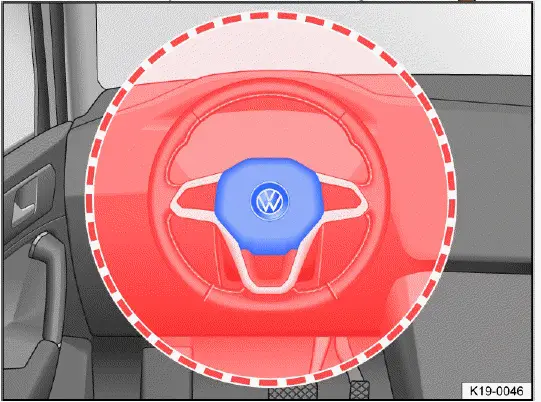
Fig. 30 On the driver's side: Installation location and deployment zone of the driver's front airbag.
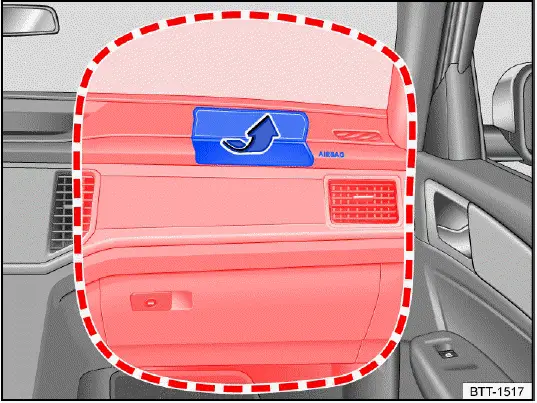
Fig. 31 On the passenger's side: Installation location and deployment zone of the front passenger's front airbag.
As a supplement to the safety belts, the front airbag system provides additional protection for the head and chest areas of the driver and front passenger during frontal collisions with higher impact severity. In certain head-on collisions, the Side Curtain Protection airbags may also deploy on both sides to help reduce the risk of injury from side movement or secondary contact inside the vehicle.
Always maintain as much distance as possible from the front airbag ⇒ Seating position. This space allows the front airbags to open fully during a collision and gives the restraint system enough room to cushion the occupant more effectively.
The driver front airbag is located in the steering wheel fig. 30, and the front passenger front airbag is located in the instrument panel fig. 31. The airbag installation locations are marked with the lettering "AIRBAG".
The area outlined in red shows where the front airbags deploy. These are the deployment zones, so objects must never be placed, mounted, taped, clipped, or stored in these areas ⇒  . Factory-installed attachments are designed so they will not interfere with the deployment of the driver and front passenger front airbags.
In the Volkswagen Taos, correct seating position is especially important because the front airbags deploy very quickly and with considerable force. A driver sitting too close to the steering wheel or a passenger leaning toward the instrument panel may be exposed to a higher injury risk during deployment. The safety belt, seat position, head restraint, and clear airbag zone all work together as one protection concept.
The front airbags do not deploy in the following situations:
- In case of crashes when the ignition is switched off.
- In side-on collisions.
- In case of a rear-end collision.
- If the vehicle rolls over.
- If the impact speed is too low.
These situations do not automatically mean that the front airbag system has failed. Airbag deployment depends on impact direction, crash severity, vehicle deceleration, and the values measured by the control modules. A collision can cause visible exterior damage without reaching the threshold required for front airbag deployment.
The front passenger's front airbags do not deploy in the following situations:
- If the front passenger seat is not occupied.
- If the passenger seat recognition system recognizes that the front passenger seat is unoccupied and the PASSENGER AIR BAG
 indicator light comes on.
The passenger airbag indicator should always be checked before driving, especially when the seating situation changes. If the front passenger seat is occupied but the indicator suggests that the airbag is off, the seat position, objects on the seat, moisture, seat covers, and passenger posture should be reviewed. If the status still appears incorrect, the system should be inspected.
WARNING
An airbag deploys within a few milliseconds and at a very high speed. This could result in objects being thrown through the vehicle interior. This may cause serious injuries.
- Always keep the deployment zones of the airbags clear.
- Never attach objects to the covers or in the deployment zones of airbags.
- There should be no people, animals, or objects between the vehicle occupants and the airbag deployment zone.
Make sure that children and other passengers also follow this instruction.
- Do not attach any objects, such as mobile navigation systems, to the windshield above the front airbag on the passenger's side.
- Do not tape over or cover the installation locations of the airbags or the surfaces in the deployment zones of the airbags, or modify them in any other way.
Items placed in the airbag path can become dangerous projectiles during deployment. Phones, mounts, decorations, documents, tools, small bags, accessories, or loose electronic devices may be thrown toward occupants if they are positioned on or near an airbag cover. The safest approach is to keep the dashboard, steering wheel area, and windshield area near the passenger airbag free of added equipment.
WARNING
An incorrect seating position may prevent the front airbag from functioning properly and cause serious injuries.
- Always hold the steering wheel with both hands on the sides of the outer edge, in the nine o'clock and three o'clock position.
- Adjust the driver seat so that there is a distance of at least 25 cm (10 inches) between your chest and the center of the steering wheel. If body characteristics mean that this is not possible, you must contact an authorized Volkswagen dealer or authorized Volkswagen Service Facility. Volkswagen recommends contacting an authorized Volkswagen dealer or authorized Volkswagen Service Facility.
- Adjust the front passenger seat so that there is the greatest possible distance between the front passenger and the instrument panel.
For everyday driving, the seat should be adjusted so the driver can reach the pedals and steering wheel comfortably while still keeping the recommended distance from the airbag. The front passenger should sit upright, keep feet in the footwell, and avoid leaning against the instrument panel, door, or windshield area. This position helps the safety belt and front airbag work together as intended during a serious frontal collision.
Side airbags
Please read the introductory information and heed the Warnings and Notice ⇒  Introduction.
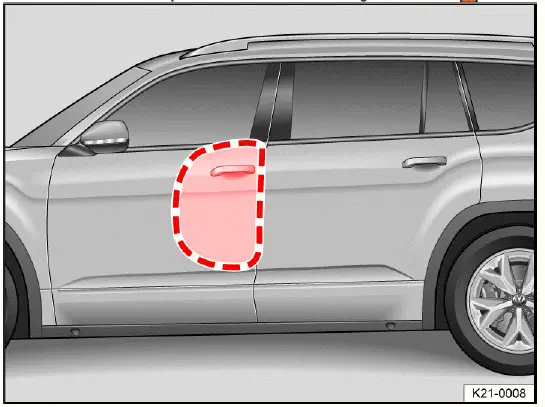
Fig. 32 In the vehicle interior on both sides of the vehicle: deployment zone of the front side airbag.
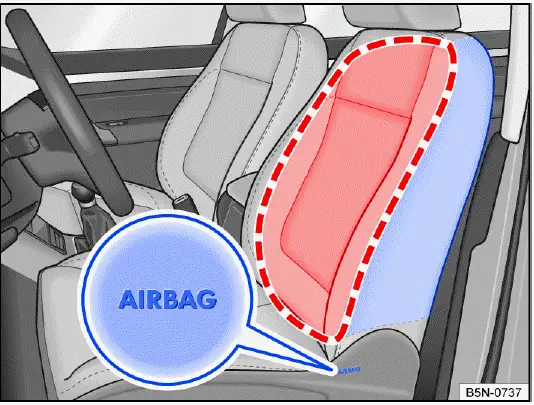
Fig. 33 On the side of the front seat: Side airbag installation location and deployment zone
The installation locations of the side airbags are marked with the word "AIRBAG". These markings show where the restraint components are built into the seat structure and help identify the areas that must not be covered, modified, or blocked.
The area outlined in red defines where the side airbags will deploy (deployment zones) fig. 33, fig. 32. Therefore, never place or attach objects in these areas ⇒  .
.
In the event of a side impact collision, the side airbags help reduce the risk of injury to vehicle occupants on the side of impact. They are designed to deploy between the occupant and the door area, adding protection for the upper body when the crash forces are strong enough to trigger the system.
The Side Curtain Protection airbags will deploy on both sides. In the Volkswagen Taos, the side airbags and curtain airbags work together as part of the passive safety concept, helping manage occupant movement during certain side impacts and selected severe collision events.
WARNING
An airbag deploys within a few milliseconds and at a very high speed. This could result in objects being thrown through the vehicle interior. This may cause serious injuries.
- Always keep the deployment zones of the airbags clear.
- Only hang lightweight clothing from the garment hooks in the vehicle.
- Never store heavy or sharp-edged objects in pockets.
- Do not attach any accessories to the doors.
- Only use seat covers or protective covers that are specifically approved for use in your vehicle.
Objects near the side airbag path can become dangerous during deployment. Heavy clothing, hard objects inside pockets, door-mounted accessories, or loose items between the seat and door may interfere with the airbag as it opens and may be thrown toward occupants. For this reason, the area around the seat bolsters, door trim, and side airbag deployment zone should remain clear during normal use.
WARNING
Incorrect handling and use of the seats can inhibit the airbags from functioning correctly and cause serious injuries.
- Never remove the front seats from the vehicle or modify parts of them.
- Do not apply excessive force to the backrest bolsters.
- Only use seat covers or protective covers that are specifically approved for use in your vehicle.
- Have any damage to the seat covers or the seam in the airbag areas repaired immediately by suitably qualified professionals. Volkswagen recommends contacting an authorized Volkswagen dealer or authorized Volkswagen Service Facility.
The side airbag is integrated into the seat area, so the condition of the seat cover, seams, wiring, backrest bolsters, and trim is directly related to system performance. Seat covers that are too tight, incorrectly shaped, or not approved for the vehicle may prevent the airbag from opening through the intended seam. If the seat has been damaged, repaired, removed, or exposed to heavy pressure near the bolster, the side airbag area should be inspected before the vehicle is used normally again.
For Volkswagen Taos side airbag service, any repair around the front seats should be handled carefully. Upholstery work, seat frame repair, wiring work, interior detailing with excessive moisture, or installation of aftermarket accessories can affect how the side airbag deploys. The safest approach is to keep the seat structure original and repair damaged airbag-area seams without delay.
Side Curtain Protection
Please read the introductory information and heed the Warnings and Notice ⇒  Introduction.
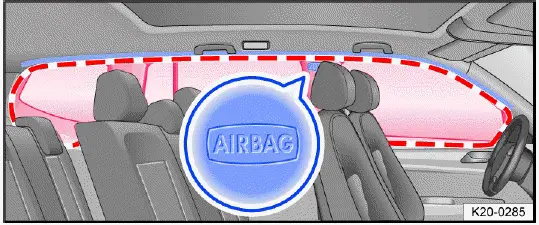
Fig. 34 On the left side of the vehicle: installation location and deployment zone of the Side Curtain Protection.
Side Curtain Protection airbags are located on the driver's and passenger's side in the vehicle interior above the doors fig. 34. Their position allows them to cover the side window area during certain collisions and help protect occupants in the front and outer rear seating positions.
The installation locations of the Side Curtain Protection are marked with the word "AIRBAG". These markings identify the areas where the curtain airbag system is installed behind the interior trim.
The area outlined in red defines where the Side Curtain Protection airbags will deploy (deployment zone) fig. 34. Therefore, never place or attach objects in this area ⇒  .
.
In side collisions and certain head-on collisions, the Side Curtain Protection airbags will also deploy on both sides. Deployment depends on crash direction, measured forces, sensor input, and the control module’s evaluation of the event.
Side Curtain Protection airbags offer the "ejection mitigation" function, which helps protect vehicle occupants and body parts from being completely or partially ejected from the vehicle in the event of a side impact collision or if the vehicle rolls over. This function is especially important near the side windows, where occupant movement can be severe during a hard side impact.
The Side Curtain Protection airbags reduce the risk of injury to vehicle occupants in the front and outer rear seats during a side collision and certain head-on collisions. In the Volkswagen Taos, this system is designed to supplement the safety belts, side airbags, head restraints, and correct seating position, not replace them.
Side Curtain Protection airbags are composed of the following components:
- Control module and sensors.
- Side Curtain Protection airbags.
- Airbag indicator light ⇒ Indicator light for front passenger's front airbag.
The control module and sensors monitor collision forces and determine whether the Side Curtain Protection airbags should deploy. The airbag indicator light helps alert the driver if the system detects a fault that may affect operation. If the warning remains illuminated, the system should be inspected before relying on normal restraint performance.
The Side Curtain Protection airbags do not deploy in the following situations:
- In case of crashes when the ignition is switched off.
- In certain side collisions with a low force that does not trigger the sensor.
- In case of a rear-end collision.
- In the case of certain head-on collisions.
- In certain rollovers with a low momentum that do not trigger the sensor.
- If the impact speed is too low.
These non-deployment situations do not automatically indicate a malfunction. Airbag deployment is based on measured crash severity, impact angle, rollover dynamics, and programmed thresholds. A vehicle may show visible exterior damage while the sensor data remains below the level required to deploy the curtain airbags.
WARNING
An airbag deploys within a few milliseconds and at a very high speed. This could result in objects being thrown through the vehicle interior. This may cause serious injuries.
- Always keep the deployment zones of the airbags clear.
- Never attach objects to the covers or in the deployment zones of airbags.
- There should be no people, animals, or objects between the vehicle occupants and the airbag deployment zone.
Make sure that children and other passengers also follow this instruction.
- Only hang lightweight clothing from the garment hooks in the vehicle. Never store heavy or sharp-edged objects in pockets.
- Do not attach any accessories to the doors.
- Do not attach any sunshades to the side windows that are not specifically approved for use in the vehicle.
- Only pivot sunshades toward the side windows if no objects such as pens or garage door openers are attached to the visor.
Because the curtain airbag deploys downward from the roof area, the upper door frames, side windows, grab-handle area, coat hooks, and roof trim must remain free of hard or heavy objects. Accessories attached near the side glass or roof trim may interfere with airbag movement or be thrown into the cabin. This is why approved accessories and careful placement of everyday items are important for Volkswagen Taos Side Curtain Protection safety.
Transporting children safely
Introduction
The physical forces that occur in an accident affect every occupant in the vehicle, but children are exposed to a much higher risk because of their smaller size, developing body structure, and different body proportions. A child’s head, neck, chest, and spine are more vulnerable to crash forces than those of an adult, so ordinary safety belt use alone is not enough for most children.
Children and babies must always be transported in child restraint systems that are suitable for their age, height, weight, and body structure. In the USA and Canada, using tested and certified child restraint systems is required by law. In the Volkswagen Taos, the rear seats are the preferred location for child restraints because they provide better separation from the front airbags and are designed to work with approved child safety systems.
In a head-on collision at speeds between 30 and 55 km/h (approx. 20-35 mph), a small child weighing 6 kg (13 lbs) may be subjected to forces greater than 20 times their body weight. In practical terms, the child’s effective weight can suddenly increase to as much as 120 kg (260 lbs). Under these conditions, only a properly selected and correctly installed child restraint can reduce the risk of injury. A child restraint that is loose, incorrectly positioned, facing the wrong direction, or not matched to the child’s size can increase the danger instead of providing protection.
All children, especially children under 12 years of age, should always be transported on the rear seats in appropriate child restraint systems. If, in an exceptional situation, a child restraint must be used on the front passenger seat, all instructions and warnings must be followed carefully, including the information provided at ⇒  Introduction. The front passenger airbag status must also be checked before driving, because incorrect seating position or incorrect child restraint placement can create a serious risk.
You can find more information on this subject at:
National Highway Traffic Safety Administration (NHTSA) (USA): http://www.safercar.gov
Transport Canada Information Centre (Canada): http://www.tc.gc.ca
Always read and follow the child seat manufacturer’s instructions before installing or using the seat. The child restraint must be appropriate for the child’s weight, height, and age group, and it must be compatible with the vehicle seating position where it is installed. Also read and follow all information and warnings about child restraint systems in this manual, because the safest installation depends on both the child seat instructions and the vehicle’s restraint system design.
Before driving, check that the child restraint is firmly secured, that the child is correctly strapped in, and that the harness or safety belt is not twisted. The restraint should not move excessively at the belt path, and the child should sit in the position intended by the child seat manufacturer. In the Volkswagen Taos, the correct use of rear seat anchorage points, top tether straps, and safety belts is essential for reliable child passenger protection.
WARNING
Even though the Advanced Airbag System is designed to detect child restraint systems on the front passenger seat and to switch off the front passenger's front airbag, it is not possible to guarantee that the system will perform correctly under all circumstances and over the vehicle's service life. In the event of an accident, people sitting on the front passenger seat, particularly children and small children, may suffer serious injuries or death if there is insufficient distance between them and the airbag when it is deployed, even with the Advanced Airbag System.
- Always place children on the rear seats. This is the safest place for a child. A suitable child restraint that is installed on the rear seat in accordance with regulations provides the highest level of protection for children and small children in most accidents.
- In compliance with the "low risk" option for children of 3-6 years of age according to the U.S. Federal Standard, the Advanced Airbag System may be deployed if the electrical capacity of a typical one-year-old child combined with a child restraint system on the front passenger seat is exceeded and the criteria for deployment of the Advanced Airbag System are met.
The Advanced Airbag System can help reduce risk, but it should not be treated as a substitute for correct child restraint placement. Sensor readings can be affected by the child restraint type, seat position, weight distribution, objects on the seat, or the way the restraint is installed. For this reason, the safest and most consistent choice is to transport children in the rear seats whenever possible.
WARNING
Accident statistics have shown that the rear seats offer greater safety than the front seats for children in general.
- Always transport children under 12 years of age on the rear seats.
- A child who is not secured or is not secured properly can be injured through sliding around in the vehicle interior or through being ejected from the vehicle during a sudden maneuver or collision. Secure children in the vehicle with a child restraint that is appropriate for their weight and height and with the safety belt used correctly ⇒ Transporting children safely.
- A child who is not secured or not properly secured is exposed to an increased risk of injury or death through collision with an airbag. Make sure that children are not within the deployment zone of the airbag.
- A child restraint system corresponding to body weight and body size that is installed and used on the rear seats offers maximum protection for infants and small children in most accident situations.
Children should never be held on an adult’s lap, allowed to stand, kneel on the seat, lean against a door, or ride with the shoulder belt behind the back or under the arm. In a sudden stop or collision, even a low-speed impact can create forces too strong for an adult to hold a child securely. A correctly installed child restraint in the rear seat of the Volkswagen Taos gives the child a controlled seating position and helps the vehicle’s safety systems work as intended.
Child restraints - overview
Please read the introductory information and heed the Warnings and Notice ⇒  Introduction.
All children, especially infants and small children, must be transported in child restraints that match their age, height, weight, and body structure. A child restraint can only provide its intended protection when it is the correct type for the child and is installed exactly as required. The information below helps identify whether a child restraint is suitable and whether it has been positioned correctly in the vehicle.
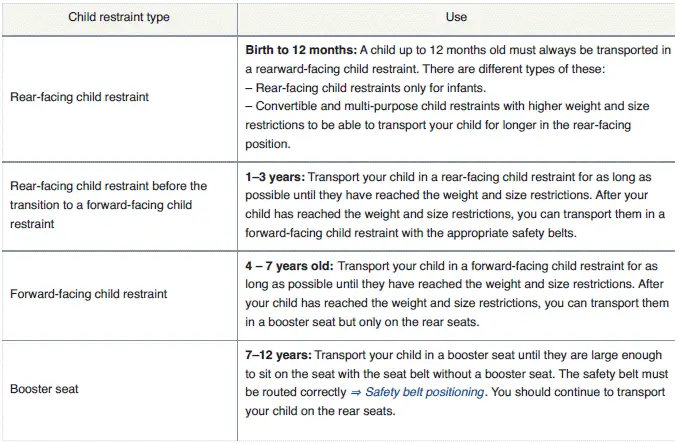
Child restraints can be secured with a three-point safety belt or with an ISOFIX/lower LATCH fastening system, depending on the design of the child seat and the seating position being used. Many child restraints also require a top tether system to limit forward movement during a collision. In some countries, states, or provinces, the use of Top Tether may be required by law. In the Volkswagen Taos, the safest installation depends on using the correct anchorage method and following both the child restraint instructions and the vehicle manual.
How to determine whether a child restraint is installed correctly
- The child restraint sits flush with the seat cushion and the backrest, unless the child restraint manufacturer specifically permits a gap between the vehicle seat and the child restraint.
- The overhang of the child restraint on the seat cushion is not longer than 20% of the child restraint. Always follow the manufacturer’s instructions for permitted overhang and seat contact.
- The child restraint should always be positioned centrally on the selected seat so it is stable and aligned with the seating position.
- The child restraint does not move forward or sideways by more than approximately 2.5 cm (1 inch) when checked at the belt path or attachment point.
- The child restraint must not rest on the belt buckles of the seats, because the buckles may be damaged or may prevent the restraint from sitting securely.
- When installing multiple child restraints, they must not press against each other, block access to buckles, or rely on another restraint for support. Each child restraint must remain free-standing, stable, and accessible.
- The child restraint has been secured correctly using the three-point safety belt or the ISOFIX/lower LATCH anchorage point.
The top tether system of the child restraint has also been used correctly when required by the manufacturer or by law.
- The child restraint has been secured correctly using the three-point safety belt or the ISOFIX/lower LATCH anchorage point.
The top tether system of the child restraint has also been used correctly when required by the manufacturer or by law.
After installation, check the restraint with firm pressure near the belt path, not by pulling from the top of the seat shell. A properly installed child restraint should feel solid at its mounting point, while some movement at the upper portion may still be normal depending on the child seat design. For Volkswagen Taos child restraint installation, the top tether, lower anchors, belt routing, buckle position, and seat angle should all be checked before placing the child in the seat.
DANGER
Children sitting on the front seats may suffer severe or fatal injuries in the event of airbag deployment, even if advanced airbags are used. Not using the child restraint, using it incorrectly, or using the wrong child restraint increases the risk of severe injury or death in the event of an accident.
- Always install child restraints on the rear seats.
- If, in exceptional circumstances, you nevertheless install a child restraint on the front passenger seat and the yellow
 PASSENGER AIR BAG indicator light does not come on and stay on, remove the seat immediately and have the airbag system checked by an authorized Volkswagen dealer or authorized Volkswagen Service Facility. Volkswagen recommends contacting an authorized Volkswagen dealer or authorized Volkswagen Service Facility.
The rear seats should be used whenever possible because they keep children farther away from the front airbag deployment zone. A front passenger airbag can deploy with extreme speed and force, and even an Advanced Airbag System cannot guarantee safe protection for every child restraint, every child size, and every seating condition. If the front passenger seat must be used in an exceptional case, the airbag indicator status must be checked carefully before driving.
WARNING
If the airbag is deployed, a child restraint on the front passenger seat may collide with the airbag and the child in the child restraint may suffer severe or even fatal injuries, even if advanced airbags are used.
- If you nevertheless install a child restraint on the front passenger seat in exceptional circumstances, always ensure that the child restraint in use has been approved by the manufacturer for use on the front passenger seat.
- Read and always follow the child seat manufacturer's instructions.
- Never install a child restraint without the top tether safety belt if the use of a top tether safety belt is prescribed by the child restraint manufacturer or legally required for the child restraint.
- Never position a forward-facing child restraint directly against the instrument panel.
- Adjust the seat belt adjuster so that the seat can be installed correctly.
- Position the front passenger seat as high as possible and move it as far back as possible in order to obtain the largest possible distance to the instrument panel.
- Make sure that the upper anchorage of the safety belt is behind the child restraint to ensure that the safety belt is routed correctly.
- Make sure that the backrest is in the upright position.
If the front passenger seat is used for a child restraint in an exceptional situation, the installation must be checked with extra care. The seat should be moved as far back as possible, the backrest should remain upright, and the belt routing must follow the child seat manufacturer’s instructions. A forward-facing child restraint should never be pressed against the instrument panel, because this reduces the space needed between the child restraint and the airbag area.
For a Volkswagen Taos child seat setup, the restraint must also remain compatible with the vehicle seat shape, belt buckle position, and anchorage layout. If the seat tilts, rests on the buckle, blocks another seat belt, or cannot be tightened securely, another seating position or another approved child restraint should be used. A correct installation is more important than convenience, because poor belt routing or loose attachment can greatly reduce protection in a sudden stop or collision.
WARNING
A child that is in a child restraint that has been secured with the anchor points or with a safety belt may play with any unused safety belts on the rear seat and get tangled up, which could result in serious or even fatal injuries.
- Always secure unused safety belts to the rear seat. You can do this by putting them around the head restraints which are furthest away from the installed child restraint and properly securing the safety belt.
Unused rear safety belts should be kept away from children seated in child restraints. A child may pull out a belt, wrap it around the neck or body, or activate the locking mechanism unintentionally. Before every trip, make sure unused belts are routed safely, buckled or secured as recommended, and not within easy reach of a child who may play with them.
NOTICE
Improper use of the lockable safety belt can cause damage to the safety belt.
- Make sure that you do not activate the lockable belt system when you secure the safety belts that are not being used.
- Always ensure that you correctly and carefully install a child restraint with the safety belt.
The lockable safety belt system must be used only as intended during child restraint installation. Pulling the belt out unnecessarily, forcing the belt into the wrong path, or locking an unused belt incorrectly can damage the belt or make later installation more difficult. When installing a child restraint in the Volkswagen Taos, take time to check the belt path, latch plate, buckle, retractor function, and top tether connection before driving.
Safety notes on using child restraints
Please read the introductory information and heed the Warnings and Notice ⇒  Introduction.
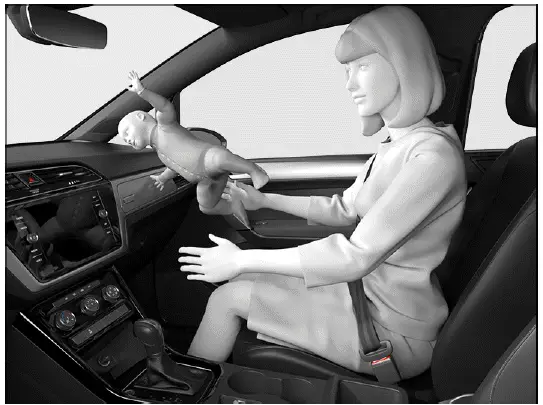
Fig. 35 Danger to infants not wearing safety belts.
The correct use of child restraints significantly reduces the risk of injury in the event of an accident or collision!
All children, especially children under 12 years of age, must always travel in a suitable child restraint on the rear seat. The rear seating positions keep children farther away from the front airbag deployment zone and usually provide the safest arrangement for installing approved child restraint systems.
Only use child restraints that are suitable for the child’s height and weight. The restraint should also match the child’s age, body structure, and seating needs, because a seat that is too small, too large, or installed in the wrong direction may not control the child’s movement correctly during a sudden stop or collision.
ISOFIX/lower LATCH anchorage points can be used to secure child restraints to the vehicle seats without using the vehicle's safety belts. If you choose to install a child restraint with the safety belts instead of ISOFIX/lower LATCH anchorage points, follow every instruction from the child restraint manufacturer for belt routing, locking, tightening, and securing the child in the restraint. After installation, the child restraint must not move forward or sideways by more than 2.5 cm (1 inch) when checked at the belt path.
When installing a child restraint with the safety belt, you must activate the lockable belt system. This helps hold the child restraint firmly in position and prevents the belt from loosening while the vehicle is being driven.
Never activate the lockable belt system when installing a booster seat or when a child is traveling without a child restraint. Booster seats are designed to position the vehicle safety belt correctly on the child, and locking the belt unnecessarily can affect comfort, belt fit, and proper belt movement.
Once the child restraint is correctly installed, the settings for that seat must no longer be changed. If the seat position, backrest angle, head restraint, belt height, or other seat settings are adjusted after installation, the child restraint must be checked again and, if necessary, reinstalled or tightened.
If a child restraint is installed on a seat, comfort functions such as the massage function or seat heating ⇒ Using Seat Heating and Seat Ventilation must not be used on that seat. Heat, movement, or seat surface changes may affect how the restraint sits on the cushion or how the child is positioned inside the seat.
For Volkswagen Taos child restraint safety, every installation should be checked before driving, not only the first time the seat is installed. Make sure the restraint is tight at the belt path or lower anchors, the harness is snug on the child, the chest clip is positioned correctly if equipped, and the top tether is attached when required by the child seat manufacturer.
Important additional information for installing child restraints on the front passenger seat
If, under exceptional circumstances, you need to install a child restraint on the front passenger seat, read and follow all warnings and instructions here ⇒  Introduction.
You can find additional information on the selection and use of child restraints here:
Transport Canada Information Centre Tel.: 1-800-333-0371 Tel.: 1-613-998-8616 (Ottawa) http://www.tc.gc.ca/roadsafety
National Highway Traffic Safety Administration Tel.: 1-888-327-4236 (TTY: 1-800-424-9153) http://www.nhtsa.gov http://www.safercar.gov
National SAFE KIDS Campaign Tel.: 1-202-662-0600 http://www.safekids.org
SafetyBeltSafe U.S.A. Tel.: 1-800-745-SAFE or 1-800-745-7233 (English) Tel.: 1-800-747-SANO or 1-800-747-7266 (Spanish) http://www.carseat.org
Volkswagen Customer CARE Tel.: 1-800-822-8987
These resources can help with child restraint selection, correct installation, inspection locations, and regional legal requirements. Laws and recommendations may differ by country, state, or province, so always follow local regulations in addition to the child seat manufacturer’s instructions and the vehicle manual.
DANGER
The use of rear-facing child restraints or infant carriers on the front passenger seat can cause serious or fatal injury.
- Rear-facing child restraints or infant carriers must always be installed on the rear seats.
A rear-facing child restraint places the child close to the front passenger airbag deployment zone if it is installed in the front seat. If the airbag deploys, it can strike the child restraint with extreme force. For this reason, rear-facing restraints and infant carriers belong on the rear seats, where the child is better protected from frontal airbag deployment.
WARNING
Transporting children without a child restraint or with an unsuitable child restraint, or incorrectly installing a child restraint, increases the risk of severe injury or death in the event of an accident.
- Only use child restraints that are suitable for the child and that comply with the regulations set out by FMVSS 213 (CMVSS 213 in Canada).
- Only use child restraints that sit on the seat cushion of the vehicle.
- When installing the child restraint, follow the instructions given by the manufacturer of the child restraint.
- Always observe all legal requirements regarding the installation and use of child restraints.
- Children under 145 cm (around 4 ft, 9 in) may only be secured and transported in the vehicle with an appropriate child restraint.
- Only one child must be allowed to travel in a child restraint.
- Never drive with children, toddlers or babies on your own lap or another passenger's lap.
A child must never share a safety belt with another passenger, ride on someone’s lap, stand in the cabin, kneel on the seat, or sit with the belt under the arm or behind the back. In a collision, even at moderate speed, an adult cannot hold a child securely. A correctly selected and firmly installed child restraint in the Volkswagen Taos gives the child a controlled seating position and allows the vehicle’s safety systems to work as intended.
WARNING
Forward-facing child restraints on the front passenger seat may collide with the airbag if it is triggered, which can lead to severe injury or death.
- Always install child restraints on the rear seat.
If a forward-facing child restraint is placed on the front passenger seat in an exceptional situation, the distance to the instrument panel and airbag area becomes critical. The front passenger seat should be moved as far back as possible, the backrest should remain upright, and the PASSENGER AIR BAG status must be checked before driving. However, the safer and preferred position for Volkswagen Taos child restraint installation remains the rear seat.
Securing systems
Please read the introductory information and heed the Warnings and Notice ⇒  Introduction.
Different securing systems are used for safe child restraint installation depending on the country, legal requirements, child seat design, and the seating position in the vehicle. The purpose of these systems is to hold the child restraint firmly in place so it can help control the child’s movement during sudden braking, evasive maneuvers, or a collision.
Only use the securing systems described here to fasten child restraints in the vehicle. Improvised attachment methods, incorrect belt routing, unapproved anchor points, or added hardware can prevent the child restraint from working as intended and may increase the risk of injury.
In the Volkswagen Taos, child restraints may be secured using ISOFIX/lower LATCH anchorage points, a three-point safety belt, and, where required, additional systems such as Top Tether or a support base. The correct choice depends on the child restraint manufacturer’s instructions and the seating position being used.
Overview of securing systems
- ISOFIX/lower LATCH anchorage points: ISOFIX/lower LATCH anchorage points are attachment systems designed for quick, repeatable, and secure installation of child restraints in the vehicle. Attachment using ISOFIX/lower LATCH anchorage points creates a fixed connection between the child restraint and the vehicle structure, reducing the chance of incorrect safety belt routing.
The child restraint may have two fixed or flexible attachment arms. These arms snap into the ISOFIX/lower LATCH anchorage points located between the seat cushion and the rear seat backrest ⇒ Fastening a Child Restraint with ISOFIX or Lower LATCH Anchorage Point. When required by the child restraint manufacturer, the ISOFIX/lower LATCH installation must be reinforced with a top tether safety belt or a support bracket to reduce forward rotation during a crash.
- Three-point safety belt: Child restraints can also be fastened with a three-point safety belt ⇒ Securing a child restraint with a safety belt. This method is used when the child restraint is designed for belt installation, when ISOFIX/lower LATCH is not available for the selected seating position, or when the child seat manufacturer specifies belt installation for that configuration.
When using the safety belt, the belt must follow the correct belt path on the child restraint and must be tightened according to the child seat manufacturer’s instructions. The child restraint should not tilt, slide, rest on the buckle, or move more than the permitted amount at the belt path after installation.
Additional fasteners:
- Top Tether: the upper belt is guided over the rear seat backrest and secured to the anchorage point on the rear side of the rear seats using a hook ⇒ Securing the child restraint with the upper strap (top tether). Top tether anchorages are labeled with an anchor symbol.
- Support base: some child restraints are supported with a support base on the vehicle floor. The support base reduces the risk of the child restraint tipping forward in the event of a collision. Only use child restraints with a support foot on the front passenger seat and the outer seats in the second row of seats ⇒
 .
.
The Top Tether and support base are not optional if the child restraint manufacturer requires them. These additional fasteners help control rotation and movement of the child restraint, especially in a frontal impact. For Volkswagen Taos child seat installation, always check whether the restraint requires lower anchors only, safety belt installation, Top Tether use, a support foot, or a combination of these systems.
WARNING
Incorrect use of the support base can cause severe or fatal injuries.
- Make sure the support base is installed correctly and securely.
- Always refer to and follow the installation instructions and warnings from the child restraint manufacturer.
A support base or support foot must stand firmly on the vehicle floor at the angle and position specified by the child restraint manufacturer. If it is too loose, positioned on an uneven surface, placed over a storage area not approved for support foot use, or adjusted to the wrong length, the child restraint may rotate or shift during a collision.
Fastening a Child Restraint with ISOFIX or Lower LATCH Anchorage Point
Please read the introductory information and heed the Warnings and Notice ⇒  Introduction.
Installing child restraints with ISOFIX/lower LATCH anchorage point
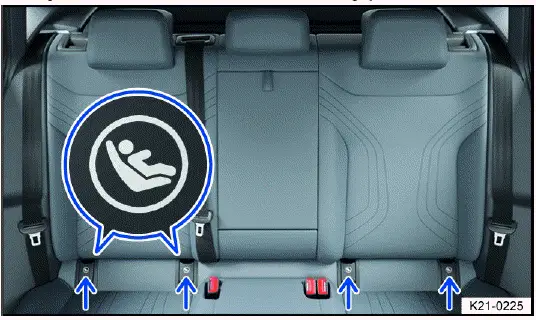
Fig. 36 On the outer seats in the rear bench seat: Designation of the ISOFIX/lower LATCH anchorage points for child restraints.
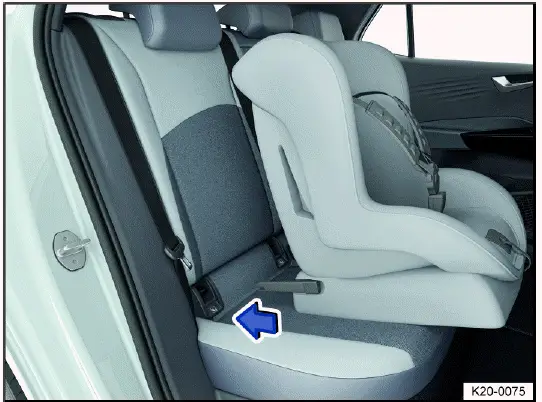
Fig. 37 Fitting a child restraint with arms (general example).
The installation location of the ISOFIX/lower LATCH anchorage points is indicated by a symbol fig. 36. These symbols help identify the correct anchor positions between the seat cushion and backrest, so the child restraint arms can be connected directly to the vehicle anchorage points.
1. Pay attention to and follow the information → page, Safety notes on using child restraints.
2. If necessary, fold down the protective caps of the ISOFIX/lower LATCH anchorage points.
3. Push the attachment arms of the child restraint in the direction of the arrow onto the ISOFIX/lower LATCH anchorage points fig. 37. The child restraint must engage securely and audibly. A clear click from both sides usually indicates that the attachment arms have locked into the anchors, but the connection must still be checked by pulling on the restraint.
4. Pull on both sides of the child restraint to check that the child restraint is securely locked in place. The restraint should remain firmly attached and should not release from either anchorage point.
If the child restraint is equipped with a support foot, this support foot must be positioned securely on the vehicle floor. Make sure it is adjusted according to the child seat manufacturer’s instructions and that it does not lift the child restraint away from the seat cushion or change the intended installation angle.
After installing the child restraint in the Volkswagen Taos, check the complete setup before placing the child in the seat. Confirm that both lower anchors are engaged, the restraint does not move excessively at the attachment point, the Top Tether is connected when required, and the child seat angle indicator, if equipped, shows the approved position. A secure installation should feel stable at the base without relying on pressure from another seat, a door, or an adjacent child restraint.
Securing the child restraint with the upper strap (top tether)
Please read the introductory information and heed the Warnings and Notice ⇒  Introduction.
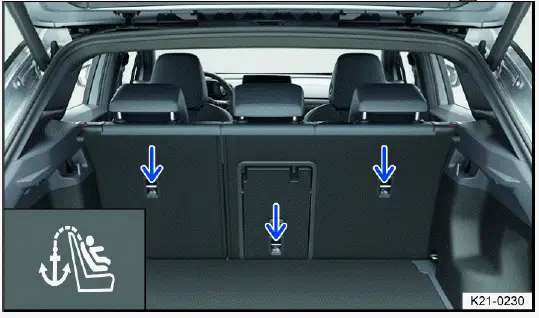
Fig. 38 On the rear side of the rear bench seat: Top tether anchorages for the top tether safety belt.
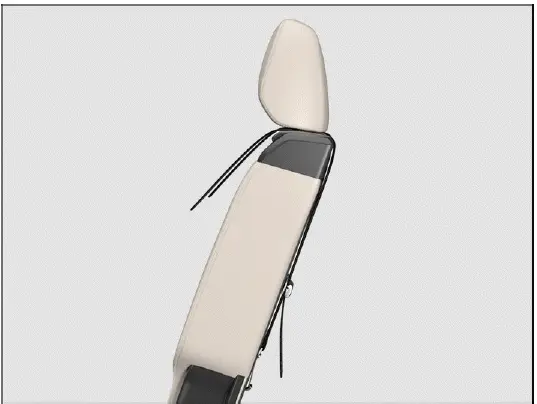
Fig. 39 On the rear side of the rear bench seat: attached top tether safety belt.
Top tether safety belts help reduce the forward movement of a child restraint during a collision. By limiting how far the upper part of the child seat can rotate, the top tether can lower the risk of head and neck injury to the child, especially when a forward-facing child restraint is used.
The anchorages suitable for top tether use are labeled with a symbol and may also have the label "TOP TETHER" fig. 38. Fasten the top tether safety belt only to the top tether anchorages designed for this purpose. Other loops, tie-down points, trim openings, cargo hooks, or seat hardware must not be used because they are not designed to withstand the same crash loads.
In the Volkswagen Taos, the top tether is part of the complete child restraint securing system. It should be used exactly as specified by the child seat manufacturer, together with the lower LATCH/ISOFIX anchors or the vehicle safety belt, depending on the child restraint design.
Fastening the top tether safety belt
1. Pay attention to and follow the information → page, Safety notes on using child restraints.
2. Prepare the top tether safety belt on the child restraint according to the child restraint manufacturer instructions ⇒  .
.
3. If necessary, remove the luggage compartment cover and screen separator so the tether strap can be routed clearly and without twisting.
4. Place the child restraint in the center of the vehicle seat cushion and fasten it securely according to the child restraint manufacturer instructions. The base of the restraint should sit stable on the cushion and should not rest on belt buckles or nearby trim.
5. If necessary, move the rear seat backrest of the vehicle seat to an upright position and adjust it to the backrest of the child restraint. A correct backrest position helps the restraint sit evenly and keeps the tether angle closer to the intended path.
6. Locate the top tether anchorage for the respective seat fig. 38. Make sure you are using the anchorage that belongs to the seating position where the child restraint is installed.
7. If necessary, push the head restraint upwards and guide the top tether safety belt of the child restraint to the rear under the head restraint.
Applies to child restraints with a V-shaped top tether safety belt: Check that the top tether safety belt is taut on the seat and is not redirected by the bars of the head restraint. The strap must run cleanly to the anchorage and must not be caught, folded, twisted, or pressed against sharp edges.
8. Guide the top tether safety belt of the child restraint back over the seat. Keep the belt flat and aligned with the child restraint so it can tighten evenly.
9. Hook the top tether safety belt into the appropriate anchorage marked with "top tether" fig. 39.
10. Pull on the top tether safety belt to remove slack. The strap should become firm without lifting the child restraint away from the seat cushion.
11. Check that the hook of the top tether safety belt is closed. The hook must be fully seated on the anchorage and must not be attached only to the edge of the bracket.
12. Tighten the top tether safety belt according to the child restraint manufacturer instructions ⇒  .
.
13. If necessary, guide the head restraint back into the starting position. After adjustment, confirm that the tether strap still follows the correct route and remains tight.
After securing the child restraint, check the complete installation at the lower attachment point or belt path and at the top tether. A properly installed child restraint should remain stable, the strap should not be twisted, and the tether hook should stay locked to the correct anchorage. For Volkswagen Taos top tether child seat installation, this final check is important because the tether works only when it is routed and tightened correctly.
WARNING
Fastening the child restraint incorrectly increases the risk of serious and fatal injuries during an accident.
- Always follow the child restraint manufacturer instructions for fastening the child restraint in the vehicle.
- Never fasten a child restraint without the top tether safety belt if the use of a top tether safety belt is prescribed by the child restraint manufacturer or legally required for the child restraint.
For example, the use of a top tether safety belt in conjunction with a forward-facing child restraint is legally required in Canada.
- Improper fastening of the top tether safety belt can lead to serious injuries during an accident. The top tether anchorages are only approved for correctly installed child restraints.
- Always only fasten a top tether safety belt of a child restraint to a top tether anchorage.
- Never fasten a child restraint top tether safety belt to a tie-down.
- Never fasten a safety belt or another belt of the child restraint to a top tether anchorage.
- Never fasten luggage or other objects to a top tether anchorage.
The top tether anchorage is engineered for the load path of a correctly installed child restraint, not for cargo, loose equipment, pets, luggage straps, or other belts. Using the wrong attachment point can cause the restraint to rotate too far or detach during a crash. If there is any doubt about which anchorage belongs to the selected rear seat position, the installation should be checked before the vehicle is driven.
Releasing the top tether safety belt
1. Release the top tether safety belt according to the child restraint manufacturer instructions.
2. Release the catch on the hook and release the top tether safety belt from the top tether anchorage. After removal, make sure the tether strap is not left loose where it could become tangled, caught in the seatback, or damaged during cargo loading.
When the child restraint is reinstalled later, repeat the full fastening procedure instead of relying on the previous adjustment. Seat position, strap routing, head restraint position, and child seat angle can change after removal, so the Volkswagen Taos child restraint top tether must be checked each time it is installed.
Securing a child restraint with a safety belt
Please read the introductory information and heed the Warnings and Notice ⇒  Introduction.
Locking the safety belt
If a child restraint is fastened with a safety belt, the belt must be locked so the restraint remains firmly secured during the trip. Always follow the child restraint manufacturer’s instructions, because belt routing, tightening points, and locking requirements can differ depending on the seat design.
When the safety belt is locked, the belt webbing cannot unwind. This prevents the belt from loosening while driving, which could otherwise allow the child restraint to shift, tilt, or lose the tight contact needed for proper protection. In the Volkswagen Taos, this locking function is especially important when a child restraint is installed with the vehicle belt instead of ISOFIX/lower LATCH anchors.
1. Pay attention to and follow the information → page, Safety notes on using child restraints.
2. If available, adjust the height of the safety belt so that the belt webbing runs naturally along the child restraint without sharp bends, rubbing points, or twisted sections.
3. Install the child restraint according to the instructions from the child restraint manufacturer and make sure that the safety belt belonging to the selected seating position is used. Do not route the belt through the wrong guide or across a part of the restraint not intended to carry belt load.
4. Insert the buckle tongue into the belt buckle belonging to the corresponding seat until the buckle tongue audibly and securely latches into place.
5. Check that the safety belt is not twisted. A twisted belt can reduce the contact area of the webbing and may prevent the child restraint from being tightened evenly.
6. Check that the lap section of the safety belt is taut. The lower belt section should hold the child restraint firmly against the seat cushion and should not lie loosely across the belt path.
7. Completely pull out the shoulder belt section of the safety belt and then let it gently roll up.
While the safety belt is rolling back into the retractor, a clicking sound can be heard. Once the safety belt is locked, it can no longer be pulled out farther. This confirms that the lockable belt system has been activated.
8. Press the child restraint into the seat and let the safety belt roll up further. If necessary, guide the shoulder belt section of the safety belt back into the automatic safety belt retractor by hand so the belt tightens without slack.
9. Pull the belt guide of the child restraint.
Check that the child restraint cannot move more than 2.5 cm (approx. 1 inch) when tested at the belt path. Do not judge the installation by pulling from the top of the child restraint, because some movement at the upper shell may be normal depending on the design. For Volkswagen Taos child seat belt installation, the most important check is firm attachment at the actual belt path.
After the child restraint is installed, confirm that the buckle is not trapped under the restraint, the belt is not pressing against a sharp edge, and the seat does not lean to one side. The restraint should sit securely on the seat cushion and backrest, with the belt routed exactly as shown in the child seat instructions.
Releasing the locked safety belt
The lockable safety belt may only be used to fasten certain child restraint systems in the vehicle. When a regular vehicle occupant uses the safety belt, an activated locking mechanism must be released so the belt can move normally with the occupant’s body.
1. Release the safety belt from the belt buckle.
2. Remove the child restraint according to the instructions from the child restraint manufacturer. Avoid pulling the restraint out against a locked or tight belt, because this may twist the webbing or make removal more difficult.
3. Press the red button in the belt buckle and guide the safety belt back fully by hand.
The safety belt is no longer locked. After the belt has fully retracted, gently pull it out again to confirm that it moves freely before it is used by a passenger.
Keep any safety belts that are not being used out of the reach of children
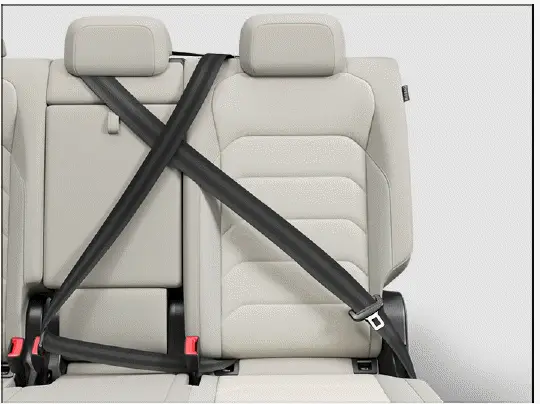
Fig. 40 Securing unused safety belts (general example).
Secure any safety belts that are not being used so a child cannot play with them or become tangled in the belt webbing. A child may pull the belt out, wrap it around the body or neck, or accidentally activate the locking mechanism. The procedure for securing an unused safety belt depends on the seating position and the arrangement of the installed child restraint.
To secure a safety belt that is not being used for one of the outer seats:
1. Position the safety belt around the head restraint of the center seating position fig. 40.
2. Make sure that the safety belt is out of reach of any children so they cannot touch it, pull it out, or play with it during the journey.
Before driving, check the surrounding rear seat area after every child restraint installation. Loose belts, accessible buckles, and unused webbing near a child can create avoidable risk. In the Volkswagen Taos, unused rear safety belts should remain controlled and away from children while the installed child restraint stays firmly secured in its correct position.
3. Make sure that the safety belt is not blocking the lower anchors.
If the anchor points are covered or restricted by the belt webbing, the child restraint may not connect correctly to the lower anchors. A blocked anchor can prevent the attachment arms from locking fully, which may make the installation unstable even if the child restraint appears to be positioned in the right place.
4. Do not activate the lockable safety belt.
If the lockable belt system is activated by mistake while securing an unused belt in this position, it may be difficult to return the safety belt to its normal operating mode. When the belt retracts, you should not hear clicking noises. Clicking usually indicates that the locking mechanism has been engaged, which is not intended for this step.
To secure a safety belt that is not being used for the middle seat:
1. Insert the buckle tongue of the safety belt into the belt buckle belonging to the seat fig. 40.
2. Pull the shoulder strap of the safety belt out completely to activate the lockable safety belt. When the belt is allowed to roll up again, you should hear a clicking sound, which confirms that the locking function has been engaged.
3. Let the safety belt roll up fully. Pull on the safety belt to confirm that the lockable safety belt is activated and that the belt is properly fastened and tightened. The belt must be positioned so that a child cannot reach it, pull it out, wrap it around the body, or play with it during the trip.
If a child is secured in a seat in the second row, adjust the seating position in front of the child restraint so the child has enough space. For example, move or adjust the front passenger seat according to the child’s size and the child restraint positioned directly behind it. Always make sure that the front occupant still maintains the correct seating position ⇒ Seating position.
If child restraints are no longer needed, return all safety belts to their normal storage positions. This ensures that the safety belts are available for regular passenger use and that the belt webbing is not left twisted, locked, or routed around the head restraints unnecessarily.
In the Volkswagen Taos, unused rear safety belts should always be checked after installing a child restraint. A belt that is loose, reachable, or incorrectly locked may create an avoidable risk for a child seated nearby, especially on longer trips when children may try to pull or play with surrounding belts.
Installing on the center seating position
When installing a child restraint on the center seating position, correct installation is especially important because this seating position is narrower than the outer rear seats. If the child restraint is wider than the available seat surface, it may cover the belt buckle of an adjacent seating position. This can damage the buckle, make it difficult to use, or prevent another passenger or child restraint from being secured correctly.
When installing child seats, always make sure that all belt buckles remain visible, accessible, and free from pressure. The child restraint should not sit on top of a buckle, push against it, or force it into an unnatural angle. In a Volkswagen Taos rear seat child restraint installation, buckle clearance is just as important as belt tightness and seat alignment.
- If nothing else is specified by the child restraint manufacturer, the child restraint must rest close against the backrest and seat surface and must not overlap neighboring seat surfaces.
- The child restraint must be installed straight and centered on the seating position, and it must not be able to move more than 2.5 cm (approx. 1 inch) when checked at the belt path or attachment point.
- The child restraint must not rest on the belt buckles, because this can damage the buckle housing or prevent the restraint from sitting securely.
- When installing multiple child restraints, the child restraints must not become caught on one another, press each other sideways, or rely on each other for support.
In some cases, even a child restraint that initially appears to be installed correctly on the center seating position may shift slightly during driving and cover the belt buckles. If this happens repeatedly, the buckles could become damaged or difficult to use. For this reason, check the position of the child restraint regularly, especially after passengers enter or exit the rear seat, after adjusting the seatback, or after moving another child restraint nearby.
If the child restraint does not sit straight, blocks the neighboring buckle, or cannot remain stable in the center position, use a different approved seating position or a different child restraint that fits the seat more securely. The safest setup is the one that allows the child restraint to stay centered, tightened, and clear of all buckle hardware.
WARNING
A child that is in a child restraint that has been secured with the anchor points or with a safety belt may play with any unused safety belts on the rear seat and get tangled up, which could result in serious or even fatal injuries.
- Always keep any safety belts for the rear seats that are not being used out of the reach of children.
Before every trip, inspect the rear seating area and confirm that unused belts are secured, buckles are accessible, and the installed child restraint has not shifted. This simple check helps keep the Volkswagen Taos child seat safety setup reliable and reduces the chance of belt entanglement during normal driving.
Securing a booster seat with a safety belt
Please read the introductory information and heed the Warnings and Notice ⇒  Introduction.
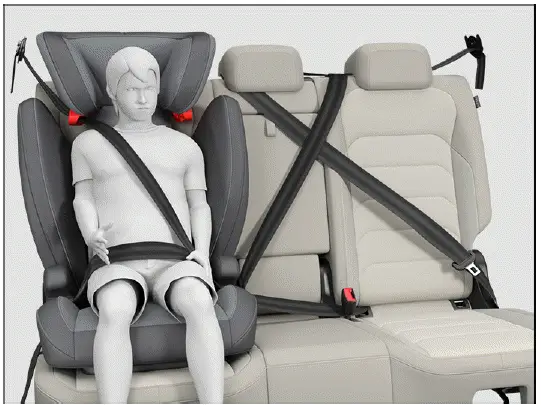
Fig. 41 Correctly fastened child on a booster seat (general example).
Children between approximately 8 and 12 years of age are usually best protected when they ride on a booster seat that is appropriate for their age, height, weight, and body proportions. A booster seat helps raise the child into a position where the vehicle safety belt can fit the body correctly instead of crossing the neck, face, or stomach.
The safety belts in the vehicle generally fit children correctly only when they are 145 cm (approx. 4 ft, 9 in) tall or taller. Booster seats help children below this height use the vehicle safety belt in the intended way, with the shoulder belt across the shoulder and chest and the lap belt low across the hips. In the Volkswagen Taos, correct belt fit is more important than the child’s age alone.
- Never activate the lockable belt system when securing children on a booster seat with a belt.
- The upper area of the belt must always be positioned on the child's shoulder. Ensure that the belt does not rest on the child's face or neck.
- The lap belt must always run across the child's lap. It must never run across the child's stomach.
A booster seat is not installed in the same way as a child restraint with a locked belt. The child uses the vehicle safety belt as the restraint, and the booster seat positions the child so the belt can work correctly. If the belt is locked unnecessarily, the child may sit awkwardly, the belt may not adjust naturally, and the restraint may become uncomfortable or poorly positioned during the trip.
Children above 145 cm (approx. 4 ft, 9 in) can generally be secured with the safety belt if the belt fits correctly. Pay attention to the information at ⇒ Safety belt positioning. The shoulder belt should lie across the center of the shoulder, not against the neck, and the lap belt should stay low over the hips rather than across the abdomen.
Your child no longer needs a booster seat if they are taller than 145 cm (approx. 4 ft, 9 in) and the following conditions are met:
- The child is seated with their back fully against the backrest.
- The child's knees bend over the edge of the seat.
- The child's feet sit fully flat on the vehicle floor.
- The child can comfortably stay in this position for the entire journey.
Children aged 12 or under must always travel on a rear seat. The rear seat gives better separation from the front airbag area and is generally the preferred place for children who still need a booster seat or other child restraint system.
Before driving, check that the child does not slide forward, place the shoulder belt behind the back, move the lap belt onto the stomach, or lean out of the correct seating position. A booster seat only provides the intended benefit when the child remains seated upright for the entire journey. For Volkswagen Taos booster seat safety, the belt fit should be checked every time the child is buckled in, especially if the child is growing quickly or wearing bulky clothing.
WARNING
Not using or incorrectly using a booster seat or incorrectly fastening a safety belt can result in severe injury or death in the event of an accident.
- Always observe all instructions regarding the installation and use of child restraints and booster seats.
- If, under exceptional circumstances, you need to install a booster seat on the front passenger seat, ensure that the PASSENGER AIR BAG
 indicator light turns on and remains on.
If a booster seat must be used on the front passenger seat in an exceptional situation, the seat should be moved as far back as possible and the child must sit upright with the belt routed correctly. The PASSENGER AIR BAG indicator must be checked before driving. Even with advanced airbag technology, the rear seat remains the safer and preferred location for a child using a booster seat.
In case of an emergency
Securing yourself and the vehicle
Follow all legal regulations for securing a vehicle during a breakdown or emergency stop. In many countries, you must switch on the emergency flashers, set up a warning triangle, and wear a reflective vest before leaving or approaching the vehicle ⇒ Emergency equipment.
Checklist of what to do in the event of a breakdown
For your own safety and the safety of your passengers, follow the points below in the order they are given. Staying calm and making the vehicle visible to other road users can reduce the risk of a secondary collision.
1. Park your vehicle a safe distance from traffic and on suitable ground. If possible, choose a level, stable area away from moving vehicles. Observe all important information on parking when doing so ⇒  , ⇒ Parking.
2. Switch on the emergency flashers ⇒ Center console. This makes the Volkswagen Taos more visible to traffic approaching from behind or from the side.
3. Have all vehicle occupants exit the vehicle on the side facing away from traffic and move to a safe area, such as behind a guard rail. Follow the local regulations regarding wearing a reflective vest. Children, elderly passengers, and anyone needing assistance should be guided away from the roadway first.
4. Set up the warning triangle to warn others on the road about the vehicle. Place it at the distance required by local regulations and road conditions so approaching drivers have enough time to react.
5. Observe the safety instructions → page, Safety precautions for working in the engine compartment. Do not open the hood or inspect the vehicle in an unsafe traffic location unless it is necessary and safe to do so.
6. If necessary, contact an authorized Volkswagen dealer or authorized Volkswagen Service Facility for assistance.
Volkswagen recommends contacting the Volkswagen emergency assistance service. Professional assistance is especially important if the vehicle cannot be moved safely, warning lights are displayed, fluid is leaking, smoke is visible, or the vehicle has been involved in a collision.
When the emergency flashers are switched on, for example while towing the vehicle, you can still indicate turns or lane changes using the turn signal lever. The emergency flashers will stop temporarily while the turn signal is active and then resume afterward.
Read and observe the important information about towing ⇒  Introduction.
WARNING
A stalled vehicle increases the risk of a crash that could cause injury to you, your vehicle occupants, or others on the road.
- Stop the vehicle as soon as it is safe to do so.
- Park the vehicle a safe distance from moving traffic.
- Switch on the emergency flashers.
- Never leave any persons, particularly children or people requiring assistance, in the vehicle. This is especially true when the doors are locked. Individuals locked in the vehicle could be exposed to very high or very low temperatures.
A disabled vehicle can be difficult for other drivers to notice, especially in darkness, rain, fog, heavy traffic, or on the shoulder of a high-speed road. For this reason, visibility and distance from traffic are the first priorities. If the vehicle cannot be moved out of the traffic lane, occupants should leave only when it is safer to do so than to remain inside.
WARNING
Exhaust system components will become very hot. This can result in fires and serious injuries.
- Never park the vehicle in such a way so that any exhaust system components could come into contact with flammable materials under the vehicle such as dry grass or fuel.
Hot exhaust parts can ignite dry vegetation, leaves, spilled fuel, or other flammable material beneath the vehicle. After a long drive or heavy engine load, allow extra caution when stopping on grass, dirt shoulders, or roadside areas with dry debris.
NOTICE
Pushing the vehicle by hand may cause damage to the vehicle or cause the rear spoiler to detach.
- When pushing the vehicle by hand, make sure that you do not apply any pressure to the taillights, the rear spoiler or large sheet metal surfaces.
If the vehicle must be pushed by hand, apply force only to strong structural areas where pressure will not damage trim, lamps, body panels, sensors, or exterior attachments. On the Volkswagen Taos, avoid pushing on delicate rear components and never use the spoiler as a handhold.
Checklist of what to do after an accident
In the event of an accident, for your own safety and the safety of your passengers, follow the points below in the order in which they are given. After a collision, the main priorities are preventing further crashes, moving people away from traffic when safe, and contacting emergency services.
1. Switch the ignition off.
2. Switch on the emergency flashers  ⇒ Center console.
3. Set up the warning triangle to warn others on the road about the vehicle.
4. Have all vehicle occupants exit the vehicle on the side facing away from traffic and move to a safe area, such as behind a guard rail. Provide first aid and follow the local regulations regarding wearing a reflective vest.
5. Report the accident to the fire department.
6. Wait at the location of the accident for the rescue services to arrive. Do not move injured persons unless they are in immediate danger, and do not stand between damaged vehicles or near moving traffic.
Switch on the emergency flashers in the following situations, for example:
- To warn traffic behind your vehicle if the traffic ahead slows suddenly or you reach the end of a traffic jam.
- If there has been an accident.
- If the vehicle malfunctions.
- When towing the vehicle.
Always follow the applicable local requirements for use of the emergency flashers. They are intended to warn other road users that the vehicle is stopped, moving unusually slowly, being towed, or creating a hazard.
If the emergency flashers do not work, others on the road must be informed about the stalled vehicle in another way that meets applicable legal regulations. This may include a warning triangle, reflective vest, roadside assistance, or other approved warning equipment.
 The 12 V vehicle battery will drain if the emergency flashers remain on for a long period of time, even if the ignition is switched off.
 Depending on vehicle equipment, the brake lights may blink quickly if you brake hard while driving at speeds above approx. 80 km/h (approx. 50 mph) or brake the vehicle to a complete stop. This is done to warn traffic behind your vehicle.
If the braking continues, the emergency flashers will switch on automatically when the vehicle speed is below approx. 10 km/h (approx. 6 mph). The emergency flashers will switch off automatically when you accelerate.
During hard braking, this automatic warning function can help alert following traffic before the vehicle comes to a stop. After the situation is over and the Volkswagen Taos accelerates again, the system switches the emergency flashers off automatically, allowing normal signaling and driving to continue.
Emergency equipment
First aid kit
Depending on the country, legal requirements, and vehicle equipment, the first aid kit may be stored in a storage compartment, in a dedicated holder in the luggage compartment, under the luggage compartment floor, or in the vehicle interior. In the Volkswagen Taos, the exact location may vary by market and equipment level, so it is important to know where it is before an emergency occurs.
The first aid kit must meet the legal regulations that apply in the country where the vehicle is operated. It should be complete, easy to reach, and stored securely so it does not move around while driving.
- Check the expiration date of the contents regularly, especially before long trips or seasonal travel.
- Replace used, damaged, missing, or expired contents if necessary, and then put the first aid kit securely back into its designated place.
A first aid kit is useful only when it is accessible and ready for use. Avoid burying it under luggage, tools, shopping bags, or loose cargo. If the kit is removed for inspection or use, return it to its proper storage point so it can be found quickly by the driver or passengers in an emergency.
Warning triangle
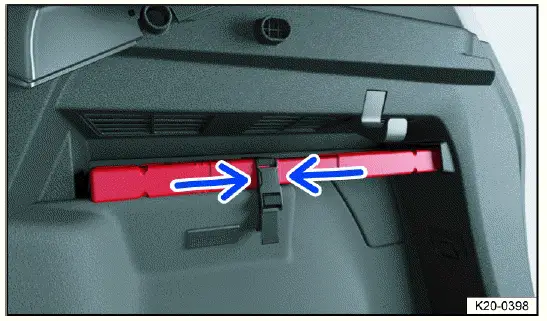
Fig. 42 In the luggage compartment on the right-hand side: Holder for the warning triangle.
Depending on the country and the vehicle equipment, the warning triangle may be located in the luggage compartment on the right-hand side. It is intended to warn approaching traffic if the vehicle is stopped because of a breakdown, accident, tire damage, or another emergency situation.
1. Squeeze the catch on both sides fig. 42 (arrows) and remove the sleeve of the warning triangle from the holder.
2. After use, store the warning triangle back in the sleeve and insert the sleeve back into the holder.
The warning triangle must meet the legal regulations. When using it on the road, place it according to local rules and far enough behind the vehicle to give other drivers time to slow down or change lanes safely. On highways, curves, hills, or low-visibility roads, correct placement becomes especially important.
Reflective vest
Depending on the vehicle equipment and country of use, the reflective vest may be stored in a compartment in the front door trim panel or in the glove compartment ⇒ Driver door, ⇒ Passenger's side.
The reflective vest must meet the legal regulations. It should be stored where it can be reached before leaving the vehicle, not in a place that requires standing in traffic or opening the luggage compartment first. For Volkswagen Taos emergency equipment, keeping the vest close to the driver’s seat is a practical way to improve visibility during roadside stops.
Fire extinguisher
Depending on the vehicle equipment and country of use, a fire extinguisher may be located in a holder in the footwell under the front passenger seat.
The fire extinguisher must meet the legal regulations, always be ready to operate, and be checked regularly. Refer to the inspection seal on the fire extinguisher and replace or service it when required. A fire extinguisher that is expired, discharged, loose, damaged, or missing its safety pin may not work correctly when needed.
If a fire extinguisher is installed in the vehicle, make sure all regular drivers know where it is located and how to remove it from its holder. It must remain firmly secured during normal driving, because a loose extinguisher can become dangerous during sudden braking or a collision.
WARNING
Objects that are loose or secured incorrectly can be thrown around the vehicle interior during sudden driving or braking maneuvers or in a collision and cause serious injuries.
- Always position the first aid kit, warning triangle and fire extinguisher securely in the holders provided in the vehicle.
- Store the reflective vest in a storage compartment so that it is easy to access.
Emergency equipment should never be left loose on the seats, floor, dashboard, rear shelf, or luggage compartment without being secured. In the Volkswagen Taos, every safety item should remain in its holder or storage compartment so it can be reached quickly but cannot become a projectile during an abrupt stop, emergency maneuver, or impact.
Information Call, Roadside Assistance Call and Emergency Call Service
Fig. 43 In the roof console: Controls for call services and indicator light.
 Information call.
 Roadside assistance call.
 Emergency Call Service.
The controls in the roof console fig. 43 can be used for voice-based assistance services, depending on vehicle equipment, market availability, and country of use. These buttons allow the driver or occupants to contact service support, roadside assistance, or emergency help without using a separate phone.
The required connection is established through a control module installed by the manufacturer. This module supports the communication link needed for call services and, where available, may transmit selected vehicle data to help the call center respond more effectively.
In the Volkswagen Taos, these call functions are designed to improve access to help during travel, but their availability depends on connectivity, active services, valid licenses, and local regulations. They should be understood as assistance systems, not as a replacement for personal judgment, safe driving, or contacting emergency services directly when required.
 Note the additional information on VW Car-Net.
Indicator lights for the Emergency Call Service
An indicator light fig. 43 (arrow) for voice and data transmission services is located in the control panel. The indicator light comes on in different colors and light patterns depending on the operating status of the Emergency Call Service. Checking this indicator can help you understand whether the system appears ready, limited, offline, or currently active.
 The indicator light does not light up:
  The vehicle is offline and has no connectivity. The red indicator light comes on and remains on: system error. The Emergency Call Service is limited or not available.
  The green indicator light lights up: Displays the availability of mobile radio signal. Does not display whether VW Car-Net services have been purchased and are active, except for the Emergency Call Service.
  The indicator light blinks green: there is a call in progress.
If the red indicator remains on, the system should be checked because emergency call availability may be restricted. A green indication confirms mobile signal availability for the relevant function, but it does not necessarily confirm that every connected service is active or subscribed. For Volkswagen Taos Emergency Call Service operation, the light pattern should be interpreted together with service availability, vehicle status, and network coverage.
Information call
- With an information call, a call can be made to the VW Car-Net call center for questions regarding VW Car-Net services.
- The information call is only available in certain sales regions.
- The information call can be executed whenever the ignition of the vehicle is switched on.
- The information call can be manually executed with the control panel in the roof console or the function key in the telephone menu of the Infotainment system.
The information call is intended for service-related questions, feature support, account details, or general help with connected services. It is not intended for urgent medical, fire, police, or crash situations. In an emergency, the emergency call function or local emergency services should be used instead.
Roadside assistance call
- If you break down, you can contact an authorized Volkswagen dealer or authorized Volkswagen Service Facility for assistance with the roadside assistance call.
- Some vehicle data, e.g. its current location, is transferred in parallel to the voice call.
- The Roadside Assistance Call can be executed whenever the ignition of the vehicle is switched on.
- Roadside Call Assist can be manually executed with the control panel in the roof console or the function key in the telephone menu of the Infotainment system.
The roadside assistance call can be useful if the vehicle has a flat tire, cannot be started, displays a critical warning, has run into a technical fault, or cannot be driven safely. Transmitting location and selected vehicle data may help support personnel understand where the Volkswagen Taos is located and what type of assistance may be needed.
Emergency Call Service
- Using the Emergency Call Service, assistance can be organized as quickly as possible in dangerous situations.
- The Emergency Call Service is only available if a corresponding license is acquired.
- If the Emergency Call Service is triggered, a call to the VW Car-Net call center will be made.
- If an emergency call is triggered manually or by a collision with airbag deployment or safety belt pretensioner deployment, data that is relevant to the emergency call, such as the vehicle's current location, is automatically transmitted ⇒ Customer information.
- The contact partner will communicate in the language that is set in the vehicle's Infotainment system. If this language is not available at the current emergency call location, English will be used.
The Emergency Call Service is intended for situations where immediate help may be needed, such as a serious accident, medical emergency, or hazardous roadside situation. If the system is triggered automatically after a collision involving airbag or safety belt pretensioner deployment, the transmitted information may help the response center identify the vehicle location and coordinate help more quickly.
Manual activation should be used only when emergency assistance is genuinely needed. If occupants are injured, the vehicle is in a dangerous position, smoke or fire is present, or there is a risk from surrounding traffic, use the emergency call function and follow local emergency procedures as safely as possible.
WARNING
The following conditions may restrict or prevent a manual or automatic emergency call:
- The emergency call location is in an area with no cell phone and satellite reception, or insufficient reception.
- You are in a location where there is sufficient mobile phone and satellite reception, but the telecommunications provider's mobile communications network is unavailable.
- The Emergency Call Service is not permitted by law in some countries.
- VW Car-Net has not been activated.
- No valid license for the use of the Emergency Call Service has been acquired or the license has expired.
- The vehicle components required for manual or automatic emergency calls are damaged or do not have sufficient power.
- The vehicle's ignition is not switched on.
Emergency call systems depend on several technical and legal conditions. Poor signal, damaged vehicle electronics, a weak power supply, inactive service status, or regional restrictions may prevent the call from being completed. If the system does not connect, use another available method to contact emergency services, such as a mobile phone, roadside assistance phone, or help from nearby road users.
Triggering an emergency call manually
1. If fitted, press on the button cover briefly and fold the cover downward.
2. Press the emergency call button fig. 43 until the green indicator light starts to flash.
When the green indicator begins flashing, a call is being established or is already in progress. Speak clearly, describe the situation, and follow the instructions given by the contact partner. In the Volkswagen Taos, remain near the vehicle if it is safe to do so, but move occupants away from traffic, fire, smoke, or other immediate dangers before continuing the call.
The emergency call is triggered and a voice connection to the VW Car-Net call center is established. Once the connection is active, the contact partner can speak with the occupants and, when available, receive emergency-related vehicle information to help assess the situation.
If you pressed the emergency call button by mistake, cancel the emergency call immediately:
1. Press the emergency call button again until the indicator light remains green. After cancellation, make sure the system returns to its normal status and that no emergency assistance is required.
Automatic emergency call
The automatic emergency call is only triggered when the ignition is switched on.
A connection to the VW Car-Net response center is automatically established in the following situations:
- Immediately after the airbags have been deployed.
- Immediately after the safety belt pretensioners have been triggered.
- Depending on the vehicle equipment, in the event of a system intervention by the Emergency Assist system.
The automatic emergency call cannot be stopped by pressing the emergency call button fig. 43. This is intentional, because an automatic call may be triggered after a serious crash when occupants are unable to respond or operate the controls.
If questions from the VW Car-Net call center remain unanswered, rescue operations will automatically start. In the Volkswagen Taos, this automatic response can help emergency services react even when the driver or passengers cannot speak after a collision.
Integrated battery
The integrated battery helps keep the Emergency Call Service available for a limited period of time if the 12 V vehicle battery is disconnected, discharged, or faulty. This backup power supply is important because a collision or electrical fault may interrupt the normal vehicle power source.
If the integrated battery is drained or faulty, a message indicating this will be displayed in the instrument cluster. If this message appears, have the integrated battery replaced immediately by an authorized Volkswagen dealer or authorized Volkswagen Service Facility. Volkswagen recommends contacting an authorized Volkswagen dealer or authorized Volkswagen Service Facility because the Emergency Call Service may not remain available as intended if the backup battery is weak or defective.
 Have the integrated battery checked, and if necessary, replaced by an authorized Volkswagen dealer or authorized Volkswagen Service Facility after approximately three years. Volkswagen recommends contacting an authorized Volkswagen dealer or authorized Volkswagen Service Facility.
Regular inspection of the integrated battery helps maintain the reliability of the emergency call function. If the battery is ignored after a warning message appears, the system may lose backup capability at the exact time it is needed most.
Data transmission
The available data will be sent to the VW Car-Net call center during an emergency call to help determine what rescue measures may be needed. This information can support faster decision-making by showing where the vehicle is, how the call was triggered, and what type of incident may have occurred.
The data regarding the location of the vehicle is continuously overwritten, so that only the ten most recent saved locations required for the Emergency Call Service to function are available. The vehicle cannot be tracked on a continuous basis through this emergency call data storage.
The emergency call data is processed only to ensure the proper function of the Emergency Call Service. In the Volkswagen Taos, the system is designed to provide relevant emergency information when a call is triggered, not to create a continuous driving history for normal use.
The following data will be sent:
- The current vehicle position at the time the emergency call was triggered.
- Nine other positions shortly before the emergency call was triggered, showing the route driven over a few km or a few mi.
- Vehicle Identification Number (VIN).
- Type of vehicle drive.
- Vehicle model.
- Trigger type, automatic or manual.
- Call type.
- Direction in which the vehicle was moving at the time the emergency call was triggered.
- Accident severity.
- Accident direction.
- Time of impact.
- Reliability of the positioning data.
- Data set version.
- Counter of the data sets transmitted per call.
- Calculated number of passengers.
- Language selected in the Infotainment system.
- Optional data ID.
This data can help the call center understand whether the emergency was manually requested or automatically triggered by a crash event. Details such as direction of travel, accident direction, impact time, and approximate passenger count may help emergency responders prepare for the situation before they arrive.
 The Emergency Call Service function may be limited by any after-market Infotainment systems that are installed.
Aftermarket infotainment equipment, wiring changes, or non-factory communication components may interfere with the vehicle systems needed for emergency calls. For Volkswagen Taos Emergency Call Service reliability, any modification to the infotainment or communication system should be checked carefully before regular use.
Troubleshooting
 Emergency Call Service malfunction
The red indicator light in the emergency call button comes on and remains on  . The message
  Error: Emergency call function. Service vehicle may also be displayed in the instrument cluster.
There is a system error with the Emergency Call Service. You may not be able to make an emergency call manually or rely on automatic emergency call operation after a qualifying crash event.
1. Contact an authorized Volkswagen dealer or authorized Volkswagen Service Facility immediately and have the fault rectified. Volkswagen recommends contacting an authorized Volkswagen dealer or authorized Volkswagen Service Facility so the communication module, backup battery, indicator status, fault memory, and related vehicle systems can be checked correctly.
 Emergency Call Service limited
The red indicator light in the emergency call button comes on and remains on  . The message
  Emergency call function limited. Service vehicle may also be displayed in the instrument cluster.
The Emergency Call Service function has restricted availability. For example, it may not be possible to make a voice call to the VW Car-Net call center, even though other parts of the system may still appear to be present in the vehicle.
1. Contact an authorized Volkswagen dealer or authorized Volkswagen Service Facility immediately and have the fault rectified. Volkswagen recommends contacting an authorized Volkswagen dealer or authorized Volkswagen Service Facility because a limited emergency call function can reduce the ability to request help quickly in a serious situation.
If either warning remains active, do not assume the system will operate normally in an emergency. The vehicle may still be driveable, but the connected safety function should be inspected without delay. Until the fault is repaired, use a mobile phone or another available method to contact emergency services if assistance is needed.