
Volkswagen Taos: Fuel and emissions control system
Safety precautions for handling fuel
WARNING
Handling fuel incorrectly can cause explosions, fires, severe burns, and other injuries.
- Before refueling, switch off the engine, the ignition and your cell phone, as well as other radio equipment.
- To reduce the risk of discharging static electricity, do not enter the vehicle while refueling.
- Make sure that the fuel tank cap is sealed correctly and no fuel is leaking out.
- Note the applicable safety precautions and local regulations for handling fuel.
- Do not smoke, use open flames, or create sparks near fuel or fuel vapors.
Fuel vapors are highly flammable. When refueling the Volkswagen Taos, stay near the fuel filler area, follow the fuel station instructions, and stop refueling if fuel spills, the pump shuts off repeatedly, or an unusual fuel odor is noticed.
WARNING
Refueling incorrectly can cause fires, serious or fatal injuries, and vehicle damage.
- Only use fuel that is approved for your vehicle.
- Do not use any fuels containing metal and only use service additives approved by Volkswagen in the respective proportion.
- Immediately remove any fuel that has spilled on vehicle components.
- Do not overfill the fuel tank after the fuel pump nozzle has automatically switched off.
Using the wrong fuel can affect engine performance, emissions control components, fuel system durability, and drivability. If incorrect fuel has been added, do not start the engine and seek qualified assistance immediately.
CAUTION
Fuel may leak out of reserve canisters and ignite. This can cause fires and injuries.
- Do not transport any reserve canisters in the vehicle.
Reserve fuel containers can release vapors, leak during movement, or become dangerous in a collision. Keeping fuel inside the approved vehicle tank is the safest way to transport it.
 Fuels can contaminate the environment. Collect any leaking operating fluids and dispose of them according to legal regulations.
Fuel spills should be cleaned up promptly and responsibly. Do not allow fuel or contaminated materials to enter drains, soil, waterways, or household waste.
 The fuel filler flap does not have an emergency release. If necessary, contact an authorized Volkswagen dealer or authorized Volkswagen Service Facility for assistance.
If the fuel filler flap cannot be opened normally, do not force it with tools or sharp objects. Forcing the flap can damage the bodywork, locking mechanism, paint, or fuel filler area, so professional inspection is recommended.
Fuel types and refueling
Introduction
The fuel filler flap is located on the right rear side of the vehicle. Before refueling, park safely, switch off the engine, and make sure the fuel selected matches the information shown on the fuel label inside the flap.
Designation of fuels and fuel standards
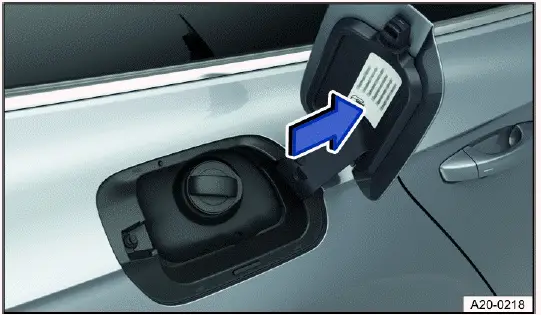
Fig. 142 On the inside of the fuel filler flap: fuel label (general example)
Fuel label
The correct fuel type depends on the engine installed in the vehicle. When the vehicle leaves the factory, a fuel information sticker is placed inside the tank flap. This sticker shows the minimum required fuel type and gives the driver a quick reference before refueling fig. 142.
The designation on the label identifies which fuels are suitable for the vehicle. This is a minimum requirement, not a suggestion to use lower-quality fuel. The vehicle must not be refueled with fuels of lower quality or with fuel types that do not match the required specification ⇒  .
.
For the Volkswagen Taos, checking the fuel label is especially important if the vehicle is driven in another region, rented, borrowed, or refueled at an unfamiliar station. Fuel names and pump labels can vary, but the required standard and octane rating must still be followed.
Fuel standards
The fuel used must meet one of the following standards. The vehicle must not be refueled with other fuels ⇒  .
.
If fuel with the specified standards is not available, contact suitably qualified professionals for information about which fuels are suitable for the vehicle. Volkswagen recommends contacting an authorized Volkswagen dealer or authorized Volkswagen Service Facility.
Using fuel that meets the required standard helps protect the engine, fuel injectors, catalytic converter, oxygen sensors, and emissions control components. Incorrect or contaminated fuel can cause poor drivability, warning lights, reduced performance, or expensive repairs.
Gasoline
Gasoline and methanol mixture
- AKI 87 or higher.
- Maximum 3% methanol.
Gasoline and ethanol mixture
- AKI 87 or higher.
- Maximum 15% ethanol.
Gasoline and MTBE mixture
- AKI 87 or higher.
- Maximum 15% MTBE.
These limits describe the maximum permitted fuel blend components for the listed gasoline types. If the fuel pump label shows a higher alcohol or additive content than allowed, do not use that fuel in the Volkswagen Taos.
NOTICE
Refueling with non-standard and non-approved fuels can cause reduced performance and considerable damage to the engine and the fuel system.
- Before refueling, check if the fuel to be used corresponds to the label on the fuel pump.
- Only use fuel that conforms to the specified standard and label.
- Do not rely only on the commercial fuel name if the required octane rating or blend information is unclear.
If the wrong fuel is added, do not start the engine. Starting the engine can circulate unsuitable fuel through the fuel system and increase the risk of damage. In this situation, seek qualified assistance before driving.
Gasoline
Gasoline types
Gasoline types differ by their Anti-Knock Index (AKI), which is calculated using the formula (RON+MON) / 2, or by the Research Octane Number (RON). The vehicle may also be refueled with gasoline that has a higher AKI or RON than the minimum required by the engine. However, using a higher octane fuel than required will not necessarily improve fuel consumption or increase engine power.
The fuel label may list more than one gasoline type, for example AKI 93 with AKI min. 91. The highlighted gasoline type, AKI 93 in this example, is the preferred gasoline type for which the vehicle is designed and optimized. The listed alternative gasoline type, AKI 91 in this example, should only be used if the preferred type is not available.
If your vehicle has a gasoline engine, fuel it only with gasoline that does not contain any metal additives, including lead, manganese, or iron ⇒  .
.
Metal-containing additives can damage emissions-related components and may cause engine or exhaust system problems. Always choose clean, approved gasoline from a reliable source and avoid fuel of uncertain origin or quality.
The most frequently purchased gasoline types in the USA and Canada have the following octane values, which are normally listed on the fuel pump:
- Regular (normal gasoline): AKI 87 to 90 or RON 91.
- Premium (super gasoline): AKI 91 to 93 or RON 95.
For everyday refueling, follow the fuel filler flap label rather than choosing fuel only by price or pump color. Correct fuel selection helps the engine in the Volkswagen Taos run smoothly, supports proper emissions performance, and reduces the risk of fuel-system damage.
Volkswagen recommends using "TOP TIER Detergent Gasoline" where it is available, for example in some regions of North America, Central America, and South America. This type of gasoline contains detergent additives intended to help keep fuel system components cleaner during normal operation.
For more information on "TOP TIER Detergent Gasoline", visit the official website at:
https://www.toptiergas.com
Using high-quality gasoline that meets the required specification can support smoother engine operation, cleaner combustion, and proper emissions system performance in the Volkswagen Taos. Fuel quality may vary by region, so the pump label and fuel standard should always be checked before refueling.
NOTICE
The use of gasoline that does not meet the minimum requirements for the octane number can impair engine performance.
The use of poor-quality gasoline or gasoline with an AKI of under 87 or a RON of under 91 can cause engine damage.
- Only fuel with gasoline that meets or exceeds the specified octane number, Research Octane Number (RON) or Anti-Knock Index (AKI).
- Do not use fuel if the octane rating, fuel blend, or quality standard is unclear.
If unsuitable gasoline has been added by mistake, do not continue driving if engine knocking, rough running, warning lights, or loss of power occurs. Seek qualified assistance before the fuel causes further damage to the engine or fuel system.
Refueling
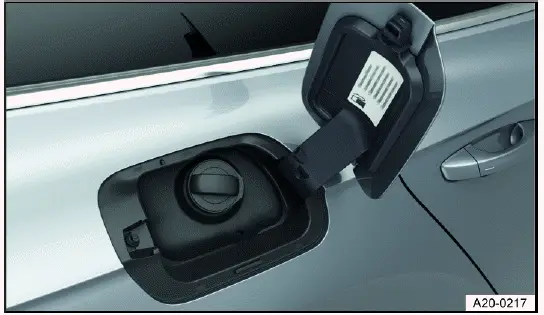
Fig. 143 Behind the fuel filler flap: fuel tank cap (general example)
Venting the fuel tank
When you press the release button  in the driver door, the fuel tank is automatically vented.
A warning chime sounds and an automatic venting message is displayed in the Volkswagen Digital Cockpit.
If you cannot open the fuel filler flap, pay attention to the messages in the instrument cluster display. The message may indicate that the tank is still being vented or that another condition is preventing the flap from opening.
Wait until the venting process is complete before attempting to refuel. Forcing the fuel filler flap or cap can damage the fuel filler area and may interfere with normal tank ventilation.
Refueling procedure
1. Unlock the fuel filler flap with the  button in the driver door.
2. Open the fuel filler flap.
3. Remove the fuel tank cap and insert it into the opening at the fuel filler flap provided for this fig. 143.
4. Insert the nozzle into the fuel filler neck and start the refueling process.
Hold the fuel pump nozzle handle down to ensure optimum refueling.
The fuel tank is full once the fuel pump nozzle turns off for the first time ⇒  .
.
5. Screw the fuel tank cap onto the fuel filler neck.
6. Close the fuel filler flap.
Do not continue filling after the fuel pump nozzle switches off. The expansion area in the fuel tank may fill with fuel, for example due to heating. This can cause fuel to overflow or prevent the automatic ventilation process from working correctly ⇒ Troubleshooting.
After refueling the Volkswagen Taos, make sure the fuel tank cap is tightened securely and the fuel filler flap is fully closed. If fuel is spilled on painted surfaces, wipe it off immediately to help prevent staining or damage.
WARNING
Fuel may spray out and overflow if the fuel tank is overfilled. This can cause explosions, fires, and serious or fatal injuries.
- Do not continue filling after the pump nozzle switches off for the first time.
- Keep your face, hands, clothing, and ignition sources away from the fuel filler neck while refueling.
NOTICE
If the tank content is not consumed up to the reserve quantity at regular intervals, it may not be possible to maintain the fuel quality and system function required for driving, under certain circumstances.
- At least every six months, only refuel when the warning light
 turns on.
This helps ensure that older fuel is used and replaced with fresh fuel over time. Fuel that remains in the tank for too long may lose quality, especially if the vehicle is driven infrequently or mostly refueled before the reserve level is reached.
 Fuels can contaminate the environment. Collect any leaking operating fluids and dispose of them according to legal regulations.
Do not allow spilled fuel, contaminated wipes, or fuel-soaked materials to enter drains, soil, or household waste. Proper disposal protects the environment and reduces fire risk around the refueling area.
Exhaust system
Introduction
The exhaust-related components help reduce exhaust emissions and support proper engine operation. In the Volkswagen Taos, these components are part of the emissions control system and must be kept in good working condition.
- Catalytic converter ⇒ Catalytic converter.
- Particulate filter, depending on the vehicle equipment ⇒ Particulate filter.
The exhaust system can become extremely hot during normal driving, especially after highway driving, regeneration, climbing hills, or driving with higher engine load. Always treat the area around the exhaust and underbody as a high-temperature zone.
WARNING
If the engine runs in enclosed spaces, poisonous gases may enter the vehicle interior. This can cause serious injuries and death due to asphyxiation.
- Never start the engine in confined spaces.
- Do not allow the engine to run in confined spaces.
- Do not leave your vehicle unattended while the engine is running.
- Make sure there is sufficient ventilation whenever the engine must be operated briefly in a workshop, garage, or similar area.
Exhaust gases can contain carbon monoxide, which is colorless and odorless. Even a short period of engine operation in a closed garage or poorly ventilated space can create a dangerous situation.
WARNING
The parts of the exhaust system become very hot and can ignite flammable materials, for example shrubs, leaves, dry grass or spilled fuel. This can lead to a fire and cause accidents and serious or fatal injuries.
- Never park the vehicle in such a way so that the exhaust system components come into contact with flammable materials under the vehicle.
- Never use additional undercoating or corrosion protection for exhaust pipes, catalytic converters, heat shields, or particulate filters.
- After driving, avoid parking over dry vegetation, paper, plastic, spilled fuel, or other materials that can ignite easily.
Catalytic converter
Please read the introductory information and heed the Warnings and Notice ⇒  and
and  Safety precautions for handling fuel.
To ensure that the exhaust system and catalytic converter can work correctly for a long time, observe the following instructions. The catalytic converter helps convert harmful exhaust components into less harmful substances, but it can be damaged by poor fuel quality, misfires, overheating, or incorrect vehicle operation.
- Only refuel with fuel permitted for the vehicle.
- Never drive until the fuel tank is completely empty ⇒ Refueling.
- Never add too much engine oil ⇒ Checking the engine oil level and adding oil.
- Do not tow-start the vehicle; use jump-start assistance instead ⇒ Preparing and Performing a Jump-start.
If there are engine misfires, loss of power, rough running, or poor engine operation while driving, reduce speed immediately and have the vehicle checked by suitably qualified professionals ⇒ Troubleshooting. Volkswagen recommends contacting an authorized Volkswagen dealer or authorized Volkswagen Service Facility.
If the vehicle continues to be driven with misfires or poor combustion, unburned fuel may enter the exhaust system and then escape into the atmosphere. The catalytic converter can also overheat and become damaged, which may lead to expensive repairs and increased emissions.
 The exhaust may smell like sulfur when the emissions control system is running correctly.
A temporary sulfur-like smell does not always indicate a defect. However, strong odors, warning lights, unusual smoke, or changes in engine behavior should be checked promptly.
Particulate filter
Please read the introductory information and heed the Warnings and Notice ⇒  and
and  Safety precautions for handling fuel.
Function
The particulate filter, depending on how your vehicle is equipped, filters soot particles from the exhaust gas. This helps reduce particulate emissions during normal operation.
Regeneration
With regular vehicle use, the filter cleans itself automatically. If the vehicle is used mainly for short trips over an extended period, the filter may not reach the conditions needed for self-cleaning and can become loaded with soot. In that case, the particulate filter needs to be cleaned through regeneration.
Noises, light odors, and increased engine speeds may occur during regeneration. The radiator fan may continue to run while driving and after the engine has been switched off.
To support particulate filter regeneration, Volkswagen recommends avoiding frequent short-distance driving whenever possible. Longer drives at steady speed can help the system reach the temperature needed to burn off soot.
In the Volkswagen Taos, regeneration may occur without any special message to the driver. Slight changes in engine sound, fan operation, or smell can be normal during this process, provided no warning lights or driveability problems are present.
 The soot in the particulate filter is burned periodically at high temperatures. The yellow
  indicator light does not turn on during a periodic regeneration.
Troubleshooting
Please read the introductory information and heed the Warnings and Notice ⇒  and
and  Safety precautions for handling fuel.
If the engine does not run smoothly and malfunctions
If the engine does not run smoothly or malfunctions while driving, it may indicate poor fuel quality, incorrect fuel, ignition problems, emissions system faults, or another engine-related issue.
1. Reduce your speed immediately.
2. Drive with a moderate RPM and low engine load to the nearest suitably qualified professional. Volkswagen recommends contacting an authorized Volkswagen dealer or authorized Volkswagen Service Facility.
3. If these symptoms occur directly after refueling, stop the engine immediately to prevent subsequent damage.
4.  Do not continue driving! Contact an authorized Volkswagen dealer or authorized Volkswagen Service Facility for assistance.
Continuing to drive with severe misfires, shaking, or loss of power can increase damage to the engine, catalytic converter, and exhaust system. If the vehicle feels unsafe to drive, stop in a safe place and seek assistance.
 Particulate filter clogged with soot
The yellow  indicator light turns on.
The particulate filter is clogged with soot and regeneration is necessary.
Prerequisite for the regeneration drive: The engine is at operating temperature.
For gasoline engines
1. Drive at a speed of between approx. 50 km/h and 120 km/h (30 mph and 75 mph).
The resulting temperature increase burns off the soot in the filter.
2. Only end the regeneration drive once the indicator light turns off.
3. If the indicator light is still illuminated after driving for approximately 40 minutes, drive immediately to suitably qualified professionals for assistance. Volkswagen recommends contacting an authorized Volkswagen dealer or authorized Volkswagen Service Facility.
If, during the regeneration drive, the prompt to refuel appears in the Volkswagen Digital Cockpit, the particulate filter regeneration process can be interrupted.
- Refuel if necessary and then continue the regeneration drive.
During a regeneration drive, choose a route where steady driving is possible and legal. Avoid unnecessary stops, heavy acceleration, or very short trips, because these conditions may prevent the filter from reaching the temperature needed to complete regeneration.
Automatic fuel tank ventilation malfunction
If the fuel tank is opened without prior ventilation, fuel vapors will escape from the filler neck. This may lead to temporary odors.
Opening the fuel tank without ventilation:
1. Press the release button  .
.
The fuel filler flap will release without ventilation.
2. Open the fuel filler flap.
Refueling with an automatic fuel tank ventilation malfunction:
1. Hold the fuel pump nozzle handle down to ensure optimum refueling.
2. Only continue carefully in this case until the fuel tank is full.
3. If the automatic ventilation process is still not working, contact a suitably qualified professional and have the ventilation system checked. Volkswagen recommends contacting an authorized Volkswagen dealer or authorized Volkswagen Service Facility.
The fuel pump nozzle may turn off prematurely when refueling due to the lack of ventilation.
If fuel vapors, repeated pump shutoff, or difficulty refueling occur in the Volkswagen Taos, do not force additional fuel into the tank. Have the ventilation system inspected so the refueling process can work correctly again.
 Exhaust-related malfunction
The yellow  indicator light turns on.
An exhaust-related component is malfunctioning, which could damage the vehicle.
1. Contact a suitably qualified professional and have the engine and the exhaust system checked. Volkswagen recommends contacting an authorized Volkswagen dealer or authorized Volkswagen Service Facility.
 Misfire
The yellow  indicator light flashes.
There is a misfire which could damage the vehicle.
1. Contact a suitably qualified professional and have the engine and the exhaust system checked. Volkswagen recommends contacting an authorized Volkswagen dealer or authorized Volkswagen Service Facility.
A flashing indicator light should be treated as urgent. Reduce load on the engine, avoid hard acceleration, and arrange professional inspection as soon as possible to help prevent catalytic converter damage.
WARNING
Sudden braking or driving maneuvers, for example if an indicator light turns on or if the engine does not run smoothly, can cause accidents. This can result in serious injury or death.
- Always adapt your speed and driving style to the visibility, weather, road and traffic conditions.
- Follow the road traffic laws and regulations that apply in the country you are driving in.
- Only stop the vehicle where it is safe to do so and where you do not endanger yourself or other road users.
 If the indicator lights are on or flashing, it is likely that there is an engine malfunction and that fuel consumption will increase.
Prompt diagnosis helps protect the engine, emissions control system, fuel economy, and long-term reliability. Delaying repairs after exhaust-related warnings can lead to further damage and higher repair costs.