
Volkswagen Taos: Visibility
Window wipers
Operating the windshield wiper lever
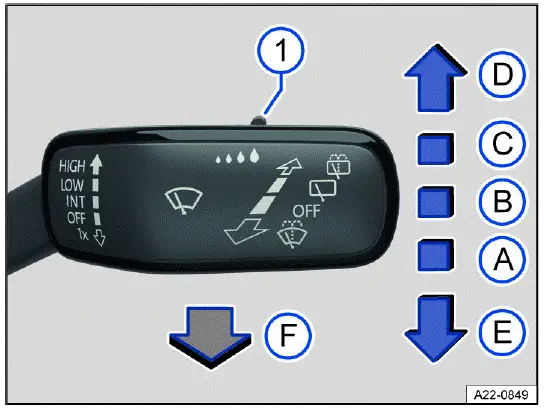
Fig. 80 On the right side of the steering column: operating the windshield wipers.
The windshield wipers only work when the ignition is switched on and the hood or trunk lid is closed. In the Volkswagen Taos, the wiper lever is located on the right side of the steering column and lets the driver choose the wiping mode that best matches rain intensity, road spray, snow, or changing visibility conditions. Move the wiper lever into the desired position ⇒
 :
:
-
 Wipers are switched off. Use this position when the windshield is clear and no wiping is required.
 -
 Interval wiping for the windshield or rain sensor mode. Interval wiping for the windshield depends on the driving speed. The higher the speed, the faster the wipers will move. On vehicles equipped with a rain/light sensor, this position allows the system to react to moisture on the windshield and adjust wiping automatically within the limits of the sensor.
 -
 Slow wiper speed. This setting is suitable for steady light rain, mist, or road spray when continuous wiping is needed but heavy wiping is not necessary.
 -
 Fast wiping. Use this setting in heavy rain or when water quickly builds up on the windshield and reduces forward visibility.
 -
 One-tap wiping - brief wiping. This function is useful for clearing a small amount of moisture, light road spray, or a few drops of water without switching the wipers on continuously.
 -
 Pull the lever to activate the automatic wiper/washer system to clean the windshield. While the wiper/washer system is active, the Climatronic system switches to recirculation mode for approximately 30 seconds to help prevent the washer fluid odor from entering the vehicle interior. After the washer fluid is sprayed, the wipers sweep the glass to help restore a clear forward view.
-
 Switch for interval levels (vehicles without rain/light sensor) or to adjust the sensitivity of the rain/light sensor. Moving this control changes how frequently the wipers operate in intermittent mode or how sensitively the sensor reacts to moisture on the windshield.
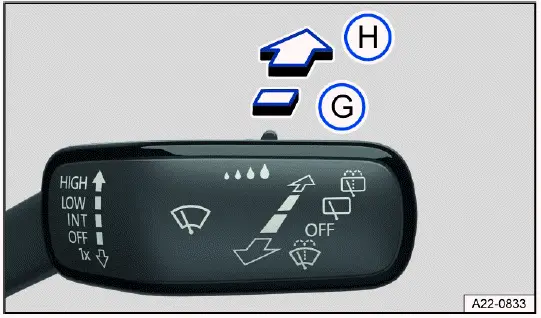
Fig. 81 On the right side of the steering column: operating the rear window wiper.
Move the wiper lever into the desired position ⇒
 . The rear window wiper helps maintain rear visibility when rain, snow, dirt, or road spray collects on the back glass:
-
 Interval wiping for the rear window. The wiper moves approximately every six seconds. This mode is useful when rear visibility is reduced but continuous rear wiping is not needed.
 -
 Press the lever to activate the automatic wiper/washer system to clean the rear window. Use this function when dust, salt, mud, or road film makes it harder to see through the rear glass.
WARNING
Without the sufficient freeze protection, washer fluid can freeze on the window glass and reduce visibility. This can cause accidents and serious or fatal injuries.
- Only use the washer system with sufficient freeze protection in winter temperatures.
- Never use the window washer system in winter temperatures if the windshield has not been warmed up with the air conditioning system.
In cold weather, washer fluid that is not rated for freezing temperatures can form an icy film almost immediately after it contacts the glass. For safe Volkswagen Taos operation in winter, always use washer fluid suitable for the expected outside temperature and allow the windshield to warm before using the washer system when ice may be present.
WARNING
Worn or dirty wiper blades reduce visibility and increase the risk of accidents and serious injuries.
- Always replace wiper blades if they are damaged or worn and are no longer cleaning the window glass sufficiently ⇒ Cleaning and changing wiper blades.
Streaking, skipping, squeaking, split rubber, or areas of the glass that remain wet after wiping are signs that the blades may no longer be cleaning effectively. Good wiper blade condition is especially important during night driving, when water streaks can scatter light from oncoming vehicles.
NOTICE
Incorrect handling of the windshield wipers can cause damage to the windshield, the wiper blades and the wiper motor.
- Before driving and before the ignition is switched on, check that the windshield wiper lever is in the basic position.
- Remove any snow and ice from the windshield wipers and the windshield.
- Always carefully loosen wiper blades that have frozen onto the windshield from the windshield.
- Do not turn on the windshield wipers when the windshield is dry.
Operating the wipers against heavy snow, packed ice, or dry dirt can overload the wiper mechanism and prematurely wear the rubber blade edge. Before starting the vehicle after frost or snowfall, clear the windshield and make sure the blades can move freely across the glass.
 The activated wiper speed temporarily changes to the next lower speed when the vehicle is stationary.
This automatic reduction helps limit unnecessary wiping when the Volkswagen Taos is stopped, such as at traffic lights or in slow traffic. Once the vehicle begins moving again, the selected wiping behavior resumes according to the lever position and system conditions.
 When parking the vehicle in cold weather conditions, moving the windshield wipers to the service position may be helpful for loosening the wiper blades more easily from the windshield ⇒ Putting the windshield wipers in the service position.
The service position can make it easier to lift the wiper arms away from the glass before snow, freezing rain, or overnight frost. This reduces the chance of the blades freezing tightly to the windshield and helps protect the wiper rubber when the vehicle is parked in winter conditions.
Wiper function
Automatic rear window wiping
The rear window wiper switches on automatically when the windshield wipers are operating and reverse gear is selected. In the Volkswagen Taos, this function helps clear the rear glass when backing up in rain, snow, road spray, or dirty driving conditions, improving rear visibility without requiring a separate manual wiper command.
The automatic activation in reverse gear function can be activated and deactivated in the vehicle settings in the Infotainment system ⇒ Vehicle settings menu. This allows the driver to choose whether the rear wiper should respond automatically when reversing or remain under manual control only.
Heated washer nozzles
The heated washer nozzles help thaw frozen washer fluid spray openings. The heat output is automatically regulated when the ignition is switched on and depends on the outside temperature. Only the window washer nozzles are heated and not the washer fluid hoses, so washer fluid with the correct freeze protection is still necessary in cold weather.
Cleaning system of the Rear View Camera system
The cleaning system of the Rear View Camera system cleans the Rear View Camera system and works together with the automatic wiper washing system to clean the rear window. This feature is useful when rain, slush, dust, or road film collects on the camera lens and makes the rear image less clear.
If, after washing the camera several times, the camera's view is still limited, clean the camera lens manually ⇒ Rear view, ⇒ Exterior care and cleaning. For the Volkswagen Taos, a clean rear camera lens is especially important when parking, reversing near obstacles, or using the camera in poor weather.
Rain/light sensor
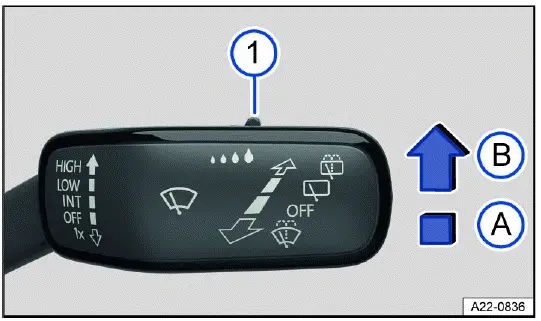
Fig. 82 On the right side of the steering column: windshield wiper lever.
- Switch for adjusting the sensitivity of the rain/light sensor.
- Rain/light sensor deactivated.
- Rain/light sensor activated, automatic wiping as necessary.
When switched on, the rain/light sensor automatically shortens or lengthens the delay between wiping cycles depending on how hard it is raining. Light moisture may cause only occasional wiping, while heavier rainfall can make the system increase wiping frequency to help maintain a clear view through the windshield.
Activating and deactivating the rain/light sensor
1. Press the lever into the desired position fig. 82. Once activated, the system monitors moisture on the windshield and controls wiping within the limits of the sensor.
Automatic wiping can be activated and deactivated in the vehicle settings in the Infotainment system ⇒ Vehicle settings menu. If automatic wiping is deactivated in the Infotainment system, the interval time will be set in fixed stages rather than adjusted automatically by the rain/light sensor.
Adjusting the sensitivity of the rain/light sensor
The sensitivity of the rain/light sensor can be manually adjusted with the switch in the windshield wiper lever fig. 82, ⇒
 .
.
- Move the switch to the right - high sensitivity. The wipers react sooner to moisture on the windshield.
- Move the switch to the left - low sensitivity. The wipers react less frequently and allow a longer delay between wiping cycles.
The best setting may depend on rain intensity, road spray, windshield condition, and driver preference. If the windshield is dirty, oily, or coated with residue, the sensor may not react in the same way as it does on clean glass.
WARNING
The rain/light sensor cannot detect all precipitation sufficiently and activate the windshield wipers accordingly. Reduced visibility can cause accidents and serious or fatal injuries.
- If necessary, switch on the windshield wipers manually if water on the windshield is impairing visibility.
Troubleshooting
 Washer fluid level too low
The yellow indicator light turns on.
1. Fill the washer fluid reservoir ⇒ Washer fluid. Use washer fluid suitable for the season and expected outside temperature, especially before winter driving.
 Windshield wiper malfunction
The yellow indicator light turns on.
The windshield wipers are not working. This may reduce visibility suddenly in rain, snow, or road spray, so avoid driving in poor weather until the fault is checked.
1. Contact a suitably qualified professional. Volkswagen recommends contacting an authorized Volkswagen dealer or authorized Volkswagen Service Facility.
 Rain/light sensor malfunction
The yellow indicator light turns on.
The windshield wipers will not be automatically activated in rain/light sensor mode when it is raining. In this situation, the driver must operate the wipers manually and should not rely on automatic wiping.
1. Contact a suitably qualified professional. Volkswagen recommends contacting an authorized Volkswagen dealer or authorized Volkswagen Service Facility. A sensor-related fault may affect automatic wiping behavior and, depending on equipment, other light-related functions in the Volkswagen Taos.
Changes to rain/light sensor reaction
Some possible reasons for malfunctions and misinterpretations in the sensor area of the rain/light sensor ⇒ View from the front could be:
- Damaged wiper blades: damaged wiper blades can leave a film of water or streaks on the window, and this can extend the activation time, greatly shorten the wiper intervals, or cause fast wiping time. Replace blades that chatter, skip, smear, or no longer clean the glass evenly.
- Insects: insects hitting the windshield may trigger the wipers. A sudden impact or smear near the sensor area can be interpreted as moisture on the glass.
- Salt streaks: salt streaks on the windshield from driving in the winter can cause the wipers to wipe more frequently or continuously on a window that is almost dry. Rinse the windshield and use proper washer fluid to remove road salt residue.
- Dirt: dried dust, wax, any other build-up on the windshield (lotus effect), or washing product residue (car wash) can lower the sensitivity of the rain/light sensor and cause it to react too slowly or not at all. Clean the sensor area for the rain/light sensor regularly and check the wiper blades for damage ⇒ Exterior care and cleaning.
- Crack in the windshield: if a stone strikes and chips the sensor area while the rain/light sensor is on, this will trigger a wiper cycle. After that, the rain/light sensor will detect this irregularity on the sensor surface and react to it. Depending on the size of the chip, the reaction behavior of the rain/light sensor may or may not change.
For reliable operation, keep the windshield area in front of the sensor clean and free from stickers, ice, heavy condensation, wax residue, or interior fogging. Even small contamination in the sensor field can change how the system reads moisture and light.
 If there is an obstacle for the wipers on the window glass, the wipers will attempt to remove it. If it continues to block the wipers, the wipers will stop moving.
1. Remove the obstacle and switch the wipers on again. Before restarting the wipers, make sure that ice, packed snow, leaves, or other debris are no longer restricting the blade movement, because forcing the wipers can damage the wiper motor, linkage, or blade rubber.
Mirrors
General safety precautions
Using the outside mirrors and the interior rearview mirror, the driver can observe traffic behind and beside the vehicle and adjust driving decisions based on surrounding traffic. In the Volkswagen Taos, the mirrors are an important part of everyday visibility, especially when changing lanes, reversing, parking, merging into traffic, or checking the position of vehicles approaching from behind.
For driving safety, it is important that the driver adjusts the outside mirrors and the interior rearview mirror correctly before starting to drive. The best time to adjust the mirrors is before moving off, after the seat and steering wheel have been set, because even a small change in seating position can affect what is visible in the mirror glass.
It is not possible to oversee the entire side and rear area of the vehicle by looking in the outside and interior rearview mirrors. Mirrors improve awareness, but they do not replace careful shoulder checks, direct observation through the windows, and attention to the vehicle surroundings.
These areas that are not visible are called blind spots. Other road users and objects could be in the blind spot, including motorcycles, bicycles, pedestrians, small vehicles, posts, curbs, or low obstacles that may not appear clearly in the mirror view.
Before driving the Volkswagen Taos, make sure the interior rearview mirror provides a clear view through the rear window and that both outside mirrors show the lanes beside the vehicle with minimal unnecessary bodywork visible. This helps create a wider usable field of view while keeping the driver aware of traffic approaching from the side and rear.
WARNING
Adjusting the outside mirrors and interior rearview mirror while driving can distract the driver. This can cause accidents and serious or fatal injuries.
- Only adjust the outside mirror and interior rearview mirror when the vehicle is stationary.
- Always make sure that the mirrors are adjusted correctly and visibility to the rear is not limited by ice, snow, fog, dirt, moisture, glare, luggage, passengers, or other objects.
Dirty or fogged mirror surfaces can reduce detail and make it harder to judge speed, distance, and movement around the vehicle. If the mirror glass, rear window, or side windows are covered by condensation, frost, road film, or snow, clean them before driving instead of relying on a partial view.
WARNING
The view in the outside mirrors and interior rearview mirror does not cover the entire area around the side and rear of the vehicle. Other road users and objects could be in these blind spots. This can cause accidents and serious or fatal injuries.
- When parking, changing lanes, passing, and turning, always pay attention to your surroundings.
When maneuvering the Volkswagen Taos in traffic or tight spaces, use the mirrors together with direct visual checks. A vehicle, cyclist, or pedestrian can enter a blind spot quickly, particularly in urban traffic, at intersections, in parking lots, or when another road user is traveling at a different speed.
WARNING
Curved mirror surfaces (convex or aspheric) enlarge the field of vision and allow objects in the mirror to appear smaller and farther away. This can make it difficult to estimate the exact distance from the vehicles behind, e.g. when changing lane. This can cause accidents and serious or fatal injuries.
- Use the interior rearview mirror as much as possible to more accurately determine the distance to vehicles or other objects behind you.
- Make sure there is sufficient visibility of the area behind the vehicle.
Because curved outside mirrors can visually compress distance, a vehicle seen in the mirror may be closer than it appears. Before changing lanes or pulling into traffic, compare the outside mirror view with the interior rearview mirror and check the blind spot directly whenever necessary.
WARNING
An automatic dimming rearview mirror contains an electrolyte fluid that can leak out if the mirror glass breaks. Coming into contact with this liquid can irritate the skin, eyes, and respiratory organs, especially in individuals with asthma or similar illnesses. This may cause serious injuries.
- If electrolyte fluid is swallowed, rinse out the mouth immediately for at least 15 minutes with plenty of water. Do not induce vomiting unless it ordered to do so by a doctor. Call for medical assistance immediately.
- Immediately get plenty of fresh air and exit the vehicle. If this is not possible, open all the windows and doors.
- If the electrolyte fluid comes into contact with eyes or skin, wash the affected area immediately for at least 15 minutes with plenty of water and seek medical assistance.
- If the electrolyte fluid comes into contact with your shoes or clothing, wash it for at least 15 minutes with plenty of water. Clean the shoes and clothing thoroughly before wearing them again.
If the automatic dimming mirror in the Volkswagen Taos is damaged, avoid touching the broken mirror glass or any leaking fluid with bare hands. Treat the affected area carefully, ventilate the interior, and clean contaminated surfaces only when it is safe to do so.
NOTICE
If the glass on an automatic dimming mirror breaks, electrolyte fluid can leak out. This fluid damages plastic surfaces.
- Remove any leaking fluid as soon as possible, for instance using a wet sponge.
After removing leaked fluid, check nearby trim, mirror housing surfaces, and interior materials for residue. Prompt cleaning helps reduce the chance of staining, discoloration, or surface damage, especially on plastic parts around the mirror area.
Interior rearview mirror
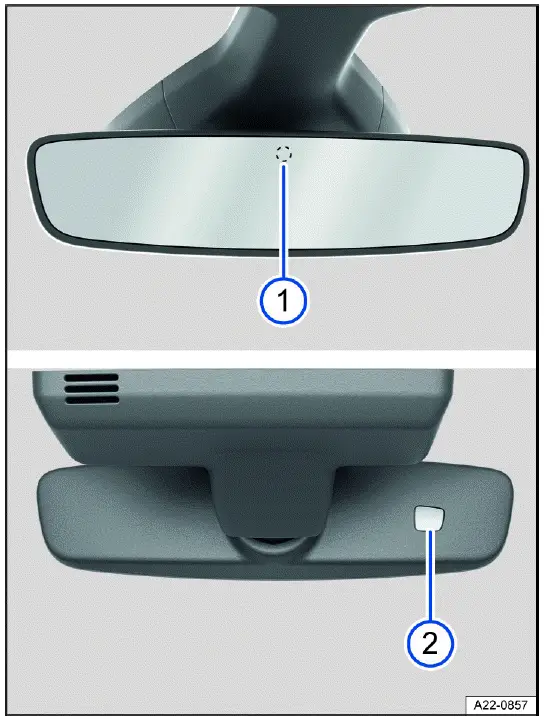
Fig. 83 On the windshield: automatic dimming interior rearview mirror.
-
Sensor for light entering from the rear.
-
Sensor for light entering from the front.
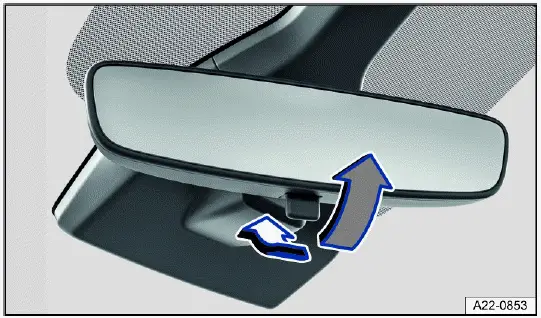
Fig. 84 On the windshield: manual dimming interior rearview mirror.
Automatic dimming interior rearview mirror
When the ignition is on, the sensors measure the amount of light entering from the rear fig. 83 1 and from the front fig. 83 2. The mirror uses these light values to reduce glare from vehicles behind the Volkswagen Taos, especially during nighttime driving or when bright headlights are reflected directly into the cabin.
Depending on the measured values, the interior rearview mirror will dim automatically. This helps the driver maintain a clearer rear view without manually changing the mirror position, while still keeping the image bright enough for normal traffic observation.
If the amount of light entering the sensors is limited or interrupted, for example by a sunshade or attachment, the automatic dimming interior rearview mirror may not function or may malfunction. Mobile navigation devices on the windshield or near the automatic dimming interior rearview mirror can also affect the sensors ⇒
 . For reliable operation, keep the sensor areas clear and avoid placing accessories where they can block light from the front or rear.
Automatic dimming will be deactivated in some situations, for example when reverse gear is engaged. This makes the rearward view brighter while backing up, helping the driver see obstacles, pedestrians, or parking boundaries more clearly.
Manual dimming interior rearview mirror
- Base position: lever on the lower edge of the mirror points forward toward the windshield. This is the normal daytime position and gives the clearest mirror view.
- To dim, pull the lever back fig. 84. This reduces glare from headlights behind the vehicle, but the driver should return the mirror to the base position when dimming is no longer needed.
WARNING
The illuminated display of a mobile navigation system may interfere with the automatic dimming interior rearview mirror.
This may stop you from using the interior rearview mirror to accurately determine the distance from vehicles or other objects behind you. Accidents and serious or fatal injuries could result.
- Switch the mobile navigation system off in such cases.
Outside mirrors
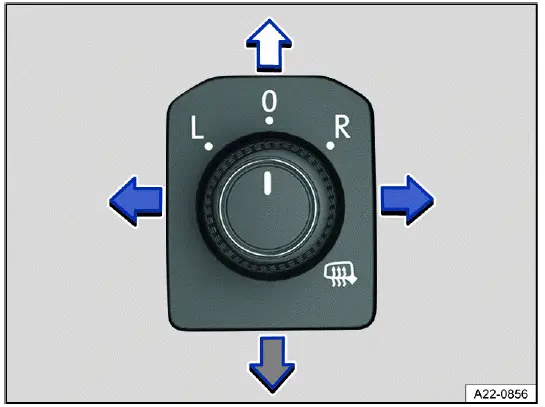
Fig. 85 In the driver door: knob for the outside mirrors.
Adjusting outside mirrors
1. Switch the ignition on.
2. Turn the knob in the driver door to the preferred symbol fig. 85.
3. To adjust the outside mirror, push the knob forward, back, right or left in the direction of the arrow. Adjust both mirrors before driving so the side lanes and the rear area of the vehicle can be monitored with minimal head movement.
 Switch on the outside mirror heating. The exterior mirror heating only works when the ambient temperature is below approx. 20 ºC (around 68 ºF) and provides the most heat when it first turns on. After about two minutes, the mirrors will be heated depending on the ambient temperature. This function helps remove moisture, frost, or light icing from the mirror glass, but heavy snow or dirt should still be removed manually.
 Adjusts the left outside mirror.
 Adjusts the right outside mirror.
 Neutral position. The outside mirror cannot be adjusted and all functions are switched off. Use this position when no mirror adjustment or mirror heating is needed.
Activating outside mirror functions
The following outside mirror functions must be activated in the vehicle settings in the Infotainment system before they are used for the first time ⇒ Vehicle settings menu. Depending on equipment, these settings can make mirror adjustment more convenient and help improve visibility while parking or reversing.
Synchronized mirror adjustment
Depending on vehicle equipment, it may be possible to adjust both outside mirrors at the same time. This is useful after changing the driver seat position or when another driver has used the Volkswagen Taos and the mirror angles need to be reset quickly.
1. Turn rotary knob to position
 .
.
2. Adjusts the left outside mirror. The right outside mirror will be adjusted the same way (synchronized).
3. To correct the adjustment of the right outside mirror, if necessary, turn the knob to the
 position and adjust the right outside mirror. This final correction helps set the passenger-side mirror precisely for the driver’s seating position.
Save the passenger-side outside mirror settings when reversing
1. Unlock the vehicle using the key, to which the setting is allocated.
2. Set the electronic parking brake.
3. Switch the ignition on.
4. Shift the transmission to neutral.
5. Select the reverse gear.
6. Adjust the front passenger outside mirror so that, for example, the edge of the curb can be seen clearly. This lowered mirror position can help when parking close to a curb, driveway edge, or painted parking line.
7. Shift the transmission to neutral.
8. Switch the ignition off.
The selected mirror position will be stored and assigned to the vehicle key. When stored correctly, the mirror can return to this reversing position automatically the next time the same key is used.
Opening the front passenger outside mirror settings for driving in reverse
1. Turn rotary knob for the outside mirrors to the relevant position for adjusting the front passenger outside mirror.
2. With the ignition switched on, select reverse gear.
The front passenger outside mirror will adjust to the stored position. In the Volkswagen Taos, this feature can make low obstacles near the passenger side easier to judge during reverse parking.
The front passenger outside mirror will exit the position stored for driving in reverse when you begin driving forward faster than about 15 km/h (about 9 mph) or when the knob is turned to any other position. After that, the mirror returns to the normal driving view.
WARNING
If you fold the outside mirrors against the vehicle or back without taking care, you could get your fingers jammed between the outside mirror and the mirror base. This can cause severe injuries.
- Do not fold the outside mirrors out or in if there are any obstacles in the path.
NOTICE
If outside mirrors are not folded in when driving through a car wash, they can get damaged.
- Always fold in the outside mirrors.
 Leave the outside mirror heating on only as long as it is needed. Otherwise fuel will be used unnecessarily. Switch the function off once the mirror glass is clear and normal visibility has returned.
 If there is a malfunction in the power outside mirror, you can adjust the position of the mirror manually by hand by pushing on the edge of the mirror surface.
If manual adjustment is needed after a malfunction, press carefully on the mirror glass edge and avoid using excessive force. Have the mirror system inspected if the electric adjustment does not respond, moves unevenly, or the stored mirror position no longer works correctly.
Sunshade
Sun visors
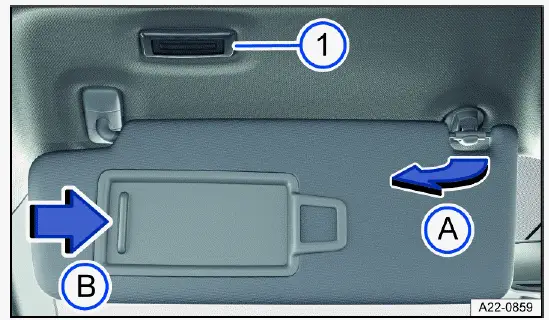
Fig. 86 In the front of the headliner: sun visor.
- Light.
- Remove from holder.
- Slide cover open.
Adjustment options for the sun visors
- Fold toward the windshield. This position helps block glare coming from the front, especially when the sun is low over the road.
- Remove from the holder and tilt toward the door fig. 86. This side position can help reduce glare entering through the side window while driving or when the vehicle is stopped.
Adjustment options for the sun visor
In some vehicle models, the sun visor can be moved farther toward the rear when it is tilted toward the door. On equipped Volkswagen Taos versions, this extended movement gives the driver or front passenger better side coverage when sunlight enters at an angle that a fixed visor position would not fully block.
Illuminated vanity mirror
When the sun visor is folded down, there is a vanity mirror located behind a cover. The lights fig. 86 turn on when the cover fig. 86 slides open. This makes the mirror easier to use in low-light conditions without switching on the main interior lights.
The lighting for the vanity mirror switches off in the following situations:
- The cover is closed.
- The sun visor is swung upwards or fully forwards.
- The sun visor is pushed in a longitudinal direction or not fully pushed in.
Before driving, make sure the sun visor is positioned so that it blocks glare without covering the road, traffic signals, mirrors, or pedestrians near the vehicle. Good visibility remains more important than maximum shade coverage.
WARNING
Visibility may be reduced when sun visors are folded down and the sunshades are extended. This can cause accidents and serious or fatal injuries.
- Always guide sun visors and sunshades back into their holders when they are no longer needed.
 Under certain conditions, the light above the sun visor will turn off automatically after several minutes. This reduces the risk of the 12 V vehicle battery being drained.
Sunshade in the sunroof
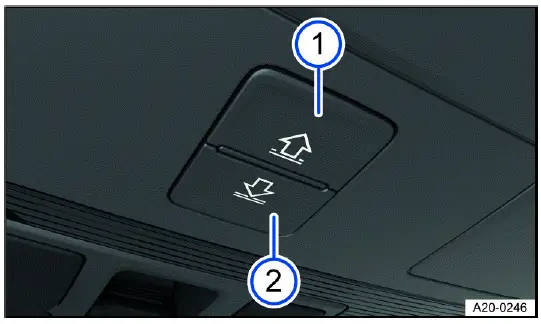
Fig. 87 In the headliner: buttons for controlling the sunshade.
- Button for opening the sunshade.
- Button for closing the sunshade.
The power sunshade only works when the ignition is switched on. The sunshade helps manage sunlight entering through the roof glass and can improve comfort by reducing glare and heat inside the cabin.
When the sunroof is tilted all the way open, the sunshade automatically moves into a position that provides ventilation. The sunshade will remain in the ventilation position after the sunroof is closed. This allows air movement through the sunroof area while still limiting direct sunlight from above.
The fig. 87 and 2 buttons have two detents. In the first detent, the sunshade can be opened or closed either completely or partially. This is useful when the driver wants only a small opening or wants to fine-tune the amount of light entering the vehicle.
In the second detent, pressing the button briefly opens or closes the sunshade completely. Pressing the button again stops the one-touch feature. In the Volkswagen Taos, this two-stage operation makes it possible to choose between precise manual control and quick automatic movement.
Opening the sunshade
1. Press the 1 button to the first level.
Automatic process: Press the 1 button briefly to the second level.
2. To interrupt the automatic opening process, press the button 1 again briefly. The sunshade will stop at the current position, allowing the opening to be adjusted to the desired amount of light or shade.
Closing the sunshade
1. Press the 2 button to the first level.
Automatic process: Press the 2 button briefly to the second level.
2. To interrupt the automatic closing process, press the button 2 again briefly. This can be helpful if a passenger wants the sunshade partly open or if the light level inside the vehicle needs to be adjusted gradually.
The sunshade can still be opened or closed for several minutes after the ignition has been switched off, as long as the driver's or front passenger door has not been opened. This short comfort period lets the driver close the sunshade after parking without switching the ignition back on.
Sunshade pinch protection
The pinch protection can reduce the risk of being pinched and injured when the sunshade is closing ⇒
 . If the sunshade encounters resistance or an obstacle when closing, the sunroof or sunshade will open again immediately.
1. Check why the sunroof did not close. Look for objects, dirt, ice, or anything else that may be blocking the sunshade path.
2. Try again to close the sunshade.
If the sunshade still encounters resistance or an obstacle and will not close, open the sunshade again. Within a short time after opening, you can close the sunshade again without pinch protection. Use this procedure only when the path is clearly free and no person or object is within the operating range.
3. If the sunshade is still not able to close, close the sunshade without pinch protection.
Closing the sunshade without pinch protection
1. Within approximately five seconds after pinch protection is triggered, press and hold the fig. 87 button until the sunshade is completely closed.
This will close the sunshade without pinch protection. Because the safety reversal function is not active in this mode, extra care is required while the sunshade is moving.
2. If the sunshade still will not close, contact an authorized Volkswagen dealer or authorized Volkswagen Service Facility for assistance. Volkswagen recommends contacting an authorized Volkswagen dealer or authorized Volkswagen Service Facility. A professional inspection is recommended if the sunshade moves unevenly, stops repeatedly, makes unusual noises, or does not respond normally to the buttons.
WARNING
Closing the sunshade without pinch protection may result in serious injuries.
- Always be careful when closing the sunshade.
- Ensure that nobody is within the range of operation of the sunshade, especially if it is closing without pinch protection.
Before using the sunshade controls in the Volkswagen Taos, make sure children, passengers, hands, fingers, clothing, and loose objects are kept away from the sunroof opening and sunshade travel path.
 When the sunroof is open, the power sunshade can only be closed to the front edge of the sunroof.