
Volkswagen Taos: Checking and filling
- In the engine compartment
- Operating fluids and operating equipment
- Washer fluid
- Engine oil
- Engine coolant
- Brake fluid
- 12 V vehicle battery
In the engine compartment
Safety precautions for working in the engine compartment
The engine compartment is one of the most potentially dangerous areas of the vehicle. Work there only if you clearly understand the task, know the general safety precautions, and have the correct operating materials, approved fluids, and suitable tools ready before you begin. Incorrect work can lead to burns, electric shock, moving-part injuries, damage to vehicle systems, or other serious injuries ⇒  . If there is any uncertainty about the procedure, have the work performed by suitably qualified professionals. Volkswagen recommends contacting an authorized Volkswagen dealer or authorized Volkswagen Service Facility.
In the Volkswagen Taos engine compartment, different systems may remain hot, pressurized, or electrically active even after the ignition has been switched off. For this reason, routine checks such as engine oil, coolant, washer fluid, or visual inspections should still be carried out slowly and with attention to every warning symbol, cap marking, and service instruction.
WARNING
The engine compartment is a dangerous area. Any work in the engine compartment could lead to accidents and serious or fatal injuries.
- Always work as cautiously and carefully as possible. Do not rush, and stop immediately if you notice steam, smoke, fuel odor, unusual noises, leaking fluid, or damaged wiring.
- Only perform work in the engine compartment if you are familiar with the required activities and understand which parts can be touched safely.
- If you are not sure how to do the work in the engine compartment, go to an authorized Volkswagen dealer or authorized Volkswagen Service Facility. Volkswagen recommends contacting an authorized Volkswagen dealer or authorized Volkswagen Service Facility.
- Before working in the engine compartment, apply the electronic parking brake and move the selector lever to the
 position or move the gearshift lever into the neutral position.
 - Switch off the ignition and store the vehicle key securely and far enough away from the vehicle to ensure that the engine cannot be started accidentally.
- Never touch hot components in the engine. Exhaust parts, coolant hoses, radiator areas, engine covers, and metal brackets may remain hot for a long time after driving.
- Do not leave any items, such as cleaning cloths, gloves, caps, bottles, test equipment, or tools, in the engine compartment.
- Always keep children away from the engine compartment and never leave them unattended near an open hood.
WARNING
The engine compartment contains moving components. When working in the engine compartment, particularly when starting the vehicle or if the engine is running, contact with moving parts, e.g. fan blades in the radiator fan, may cause serious or fatal injuries.
- Never reach into the radiator fan or into the area near the radiator fan, even if the engine is switched off or the ignition is switched off. The ventilator is temperature-controlled and may switch on by itself.
- To reduce the risk of anything becoming caught in engine components, always remove any jewelry and/or ties, tie back long hair, and avoid wearing loose-fitting clothing when performing work.
- Always press the accelerator pedal extremely carefully and never press it without paying close attention. The vehicle could begin moving, even if the electronic parking brake is set.
- Keep hands, clothing, extension cables, and inspection lamps away from belts, pulleys, fans, and other rotating parts whenever the engine is running or may start.
WARNING
Escaping hot steam or hot coolant and hot components may cause serious burns.
- Never open or close the hood if steam or engine coolant is escaping.
- Always wait until you can no longer see or hear steam or engine coolant escaping from the engine compartment.
- Allow the engine to cool before checking fluid levels or touching caps, hoses, reservoirs, or metal surfaces near the cooling system.
WARNING
The engine cooling system is under pressure when the engine is hot. If the cover is opened carelessly, coolant may spray out and cause serious burns or fatal injuries.
- Never open the cap on the coolant expansion tank when the engine is hot.
- Always protect your face, hands and arms from hot coolant or steam with a large, thick cloth if you have to open the cover of the coolant tank.
- Slowly and very carefully turn the cap on the coolant expansion tank counterclockwise while pressing down lightly on the cap.
- Do not add coolant when the system is overheated unless the correct procedure can be followed safely and the risk of pressure release has passed.
WARNING
Additional insulation, such as covers in the engine compartment or discarded items such as cleaning cloths or tools, can cause malfunctions, damage to the engine, or fires. This could result in serious or fatal injuries.
- Never cover the engine with blankets or other insulating materials.
- Never leave items in the engine compartment.
- After completing any check or service work, inspect the area once more to make sure nothing has been left behind near hot or moving components.
If you are working around the Volkswagen Taos after a drive, remember that heat can collect under the hood even when the outside temperature is low. Let the vehicle sit for a suitable period, use gloves where needed, and avoid resting your hands on unknown components until you are sure they are cool enough to touch.
Always park the vehicle on a horizontal and firm surface before carrying out any work on the engine compartment ⇒  , ⇒ Parking.
WARNING
If the vehicle is not secured against rolling away during maintenance procedures, the vehicle may move unintentionally.
This could result in accidents and serious or fatal injuries.
- Manually deactivate the start-stop system.
- Never carry out any work underneath the vehicle unless it is adequately secured to prevent it from rolling.
- Ensure that the vehicle is situated on a horizontal and firm surface and that the wheels are blocked to prevent them from moving when carrying out work underneath the vehicle with its wheels touching the ground.
- If you are working underneath the vehicle, additionally support the vehicle securely with suitable stands. The vehicle jack is not sufficient for this purpose and may collapse.
- Before working underneath the Volkswagen Taos, check that the support points are stable, the stands are correctly positioned, and no one can enter the vehicle or release the brake during the work.
WARNING
The high voltage in the electrical system may cause electric shocks and burns. This could result in serious or fatal injuries.
- Never short-circuit the electrical system. The 12 V vehicle battery may explode, and nearby components may be damaged by heat, sparks, or battery gases.
- Never touch the electrical wires and connections of the gas discharge lamps. These components can carry dangerous voltage even when the lighting system appears to be switched off.
- If wiring, connectors, lamp housings, or electrical components appear damaged, stop work immediately and have the system inspected by a qualified specialist.
Preparing the vehicle for work in the engine compartment
Always perform the following activities in the specified sequence before all work in the engine compartment. Careful preparation helps prevent accidental starting, rolling movement, burns, and contact with moving or electrically active components. On the Volkswagen Taos, this is especially important before checking fluids, inspecting the hood area, or working near the cooling system and 12 V electrical system.
1. Safely park the vehicle on a horizontal and firm surface ⇒ Parking. Avoid slopes, loose gravel, soft ground, or any surface where the vehicle may shift while the hood is open.
2. If necessary, remove the vehicle key from the vehicle and store it outside of the vehicle so that the vehicle does not start accidentally. Keep the key far enough away that no person can unintentionally activate the vehicle while work is being performed.
3. Let the engine cool down sufficiently. Hot metal parts, coolant hoses, the radiator area, and nearby components can remain hot for a long time after driving.
4. Always keep other people away from the engine compartment. Children, passengers, and bystanders should not stand near the open hood or reach into the engine area.
5. Secure the vehicle against rolling away. Apply the electronic parking brake, select the correct gear position, and use wheel chocks if work conditions require additional protection.
Opening and closing the hood
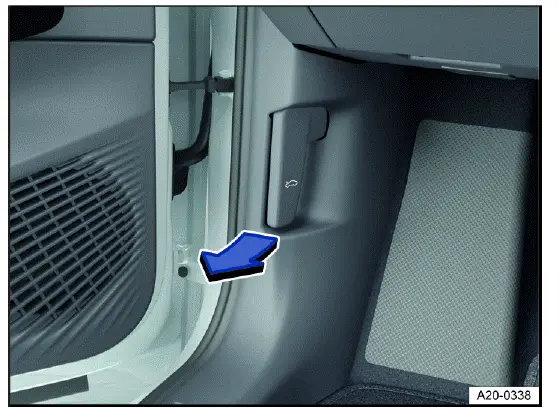
Fig. 162 In the driver's side footwell: Release lever for the hood (general example).
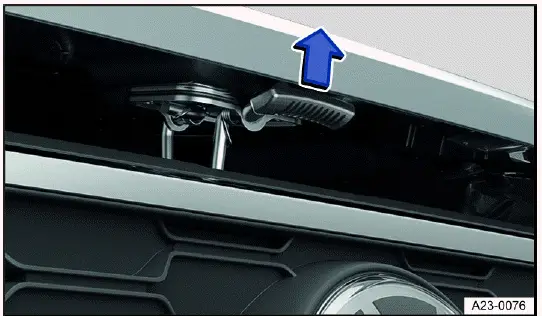
Fig. 163 Above the radiator grille: Opening lever for the hood (general example).
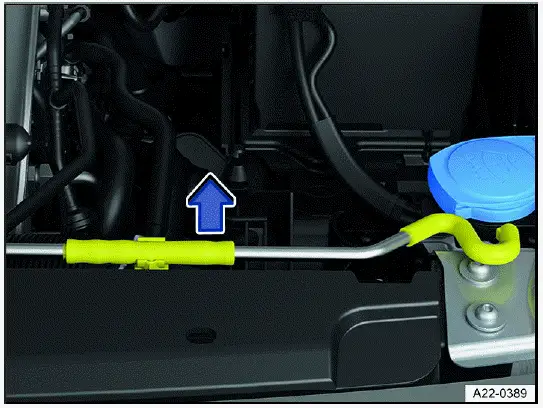
Fig. 164 In the engine compartment: Hood support in the bracket.
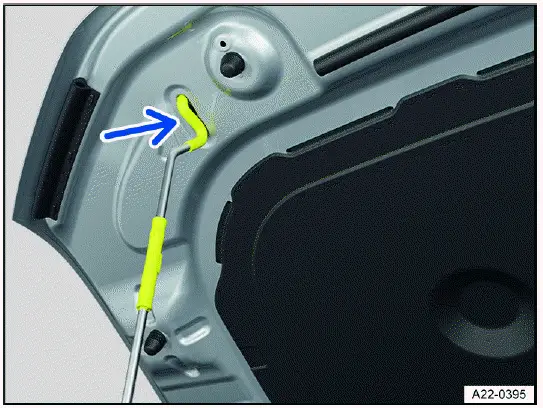
Fig. 165 On the engine hood: Hood support bracket (general example).
Opening the hood
1. Open the driver door and pull the release lever in the direction of the arrow fig. 162. Pull the lever smoothly until the primary hood latch releases.
The hood will pop open due to spring force from the catch in the lock carrier ⇒  . If the hood does not lift slightly, do not force it upward; check that the release lever has been pulled completely.
2. To open the hood fully, slightly lift the hood while pushing the actuating lever in the direction of the arrow fig. 163. Keep one hand on the hood so it does not drop back into the latch while the secondary release is being operated.
3. Remove the hood support from the bracket in the direction of the arrow fig. 164 and insert it into the holder for the hood support fig. 165. Make sure the support is seated firmly before reaching farther into the engine compartment.
Closing the hood
1. Lift the hood slightly and hold it ⇒  . Keep fingers, tools, clothing, and loose objects away from the closing area.
2. Unhook the hood support from the holder for the hood support fig. 165 and insert it into the bracket fig. 164. The support must be returned securely to its storage position so it cannot rattle, shift, or interfere with the hood when closed.
3. Allow the hood to fall from approx. 20 cm (approx. 8 inches) into the catch of the lock carrier, without pressing down on it. Pressing down on the hood can bend the panel or damage the paint, especially near the front edge.
When the hood is closed correctly, it will be flush with the surrounding sections of the vehicle body ⇒  . The gaps at the front and sides should look even, and the hood should not sit higher than the adjacent body panels.
If the hood is not closed correctly, lift the hood up and try to close it again. Do not drive with the hood only partly latched, and do not try to secure it with improvised straps, tape, or pressure on the panel.
If the hood is not correctly closed, an indicator will appear in the display of the Volkswagen Digital Cockpit. Once the hood is correctly closed, the indicator will turn off. In the Volkswagen Taos, this display warning should always be treated as a safety message, not as a minor reminder.
WARNING
If the hood is not closed correctly, it could open suddenly while driving and block the view through the windshield.
Accidents and serious or fatal injuries could result.
- After closing the hood, check that the catch is engaged correctly in the lock carrier.
- If you realize when driving that the hood is not closed properly, park the vehicle safely and close the hood.
- Do not continue driving if the hood moves, vibrates, sits unevenly, or if the hood warning remains visible in the instrument cluster.
WARNING
Failing to take care when opening and closing the hood can result in serious injuries.
- Do not open or close the hood if any persons are in the closing range of the hood.
- Keep hands and fingers away from the hinges, latch area, front edge, and hood support while opening or closing the hood.
NOTICE
Opening and closing the hood incorrectly can cause damage to the hood or wiper arms.
- Only open the hood when wiper mode is switched off and with the windshield wipers folded in.
- Always fold the wiper arms against the windshield before driving.
- Do not lift the hood if the wiper arms are raised, because the hood edge and wiper components may strike each other.
Display
An image in the instrument cluster display indicates if the hood is open or has not closed correctly ⇒  . This warning helps the driver identify an incorrectly latched hood before the vehicle is driven at higher speeds.
 Do not continue driving!
1. Stop the vehicle as soon as it is safe to do so. Choose a location away from moving traffic, switch on the emergency flashers if needed, and avoid opening the hood in a dangerous area.
2. If necessary, lift the hood and close it again. Confirm that it sits flush with the surrounding body panels and that the warning disappears from the display.
The image is also displayed when the ignition is switched off and it disappears several seconds after the doors are closed and the vehicle is locked. If the message returns after the hood has been closed again, the latch or sensor may need inspection by an authorized Volkswagen dealer or authorized Volkswagen Service Facility.
WARNING
Disregarding warning notifications could lead to breakdowns while driving, accidents and serious or fatal injuries.
- Never ignore warning notifications.
- Stop the vehicle as soon as it is safe to do so.
- Do not continue driving and seek professional assistance if the warning light does not go out.
- After any hood-related warning on the Volkswagen Taos, verify the latch engagement before returning to normal driving.
Operating fluids and operating equipment
All fluids and operating equipment, including engine coolant, engine oil, washer fluid, brake-related fluids, and vehicle batteries, are continuously being improved as vehicle technology develops. The correct specification is important for reliable operation, long service life, and protection of sensitive components. For the Volkswagen Taos, fluids and operating equipment should be selected and replaced according to the approved requirements, not by color, container shape, or general description alone. Have fluids and operating equipment replaced by suitably qualified professionals when the procedure requires special tools, diagnostic equipment, or technical knowledge. Volkswagen recommends contacting an authorized Volkswagen dealer or authorized Volkswagen Service Facility.
WARNING
Carrying out work on the fuel system may cause fires and serious or fatal injuries due to electrical discharge and flying sparks.
- Always disconnect the 12 V vehicle battery before work that requires this safety step.
- Always have a fully-functioning, checked fire extinguisher nearby and make sure it is suitable for vehicle-related fires.
- Make sure that the vehicle is unlocked when the 12 V vehicle battery is disconnected. Otherwise, the anti-theft alarm system will be activated.
- Keep sparks, static discharge, smoking materials, and open flames away from the fuel system and the engine compartment.
WARNING
Fluids may be poisonous. Improper use and storage may cause serious or fatal injuries.
- Only store fluids in their sealed original containers with the labels clearly readable.
- Never use empty food cans, bottles, cups, or other household containers to store fluids, because someone could drink the fluids by mistake.
- Keep children away from all fluids and operating equipment.
- Always read and heed the information and warnings on the packaging for the fluids before opening, mixing, or using them.
- When using products that emit harmful vapors, always work outdoors or in a well-ventilated area.
- Avoid contact with skin, eyes, clothing, and painted surfaces. If contact occurs, follow the instructions on the product packaging.
WARNING
Fluids and some materials in the engine compartment are highly flammable and may ignite on contact with hot surfaces, sparks or naked flames. This can lead to a fire and cause accidents and serious or fatal injuries.
- Never smoke near the engine compartment.
- Never work near open flames or sparks.
- Never perform work near sources of heat, boilers, heaters, welding equipment, or other open flames.
- Never pour or spill fluids on the engine, exhaust components, electrical connectors, belts, or hot surfaces.
- Always have a fully-functioning, checked fire extinguisher nearby.
- Clean up spilled fluids immediately using a suitable method, and dispose of contaminated cloths safely.
NOTICE
The use of fluids that do not correspond to the specification can cause serious malfunctions and damage to the engine.
- When topping up or changing fluids, make sure that the fluids correspond to the respective specification.
- Only fill fluids into the designated filler openings.
- Do not mix fluids unless the product instructions and vehicle specifications clearly allow it.
- If the wrong fluid has been added, do not continue driving until the vehicle has been checked by a qualified specialist.
Fluids leaking from the vehicle can cause environmental damage and may also indicate a technical fault that should not be ignored. Even a small spot under the vehicle can point to a coolant leak, engine oil leak, washer fluid leak, or another system that requires inspection.
1. Regularly check the ground beneath the vehicle, especially after the Volkswagen Taos has been parked overnight or after service work has been carried out.
2. If you see spots of fluid on the ground under the vehicle, have the vehicle checked by an authorized Volkswagen dealer or authorized Volkswagen Service Facility. Volkswagen recommends contacting an authorized Volkswagen dealer or authorized Volkswagen Service Facility. Do not rely only on smell or color to identify a fluid, because some fluids can look similar after they mix with dirt or road debris.
3. Dispose of leaking fluids correctly. Used fluids, contaminated cleaning cloths, empty containers, and drained operating materials must never be poured onto the ground, into drains, or into household waste unless local regulations allow a specific disposal method.
Washer fluid
General information
The windshield washer fluid reservoir is located in the engine compartment. It supplies the washer system so the windshield can be cleaned while driving, helping maintain visibility in rain, dust, insects, road salt, and winter road spray.
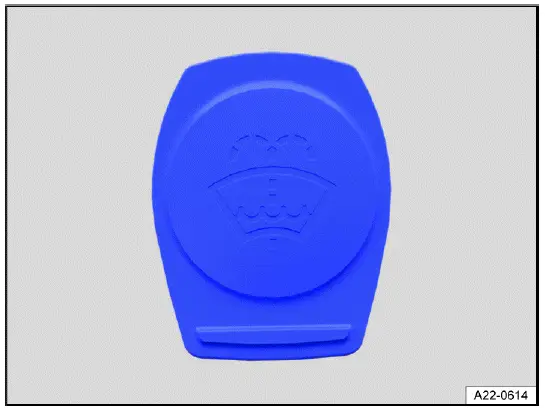
Fig. 166 In the engine compartment: Cap on the washer fluid reservoir (general example).
The washer fluid reservoir is identified with the  symbol on the cap fig. 166. Always confirm the symbol before filling, because adding washer fluid to the wrong reservoir can damage other vehicle systems.
1. Check the washer fluid level regularly and fill if necessary. Check it more often during winter, long trips, dusty road conditions, or when the windshield becomes dirty frequently.
Preparations
1. Prepare the vehicle for work in the engine compartment → page, In the engine compartment. Park safely, switch off the ignition, allow hot components to cool if necessary, and make sure the hood is supported correctly.
2. Open the hood. Keep loose clothing, gloves, and filling containers away from hot or moving parts in the engine compartment.
Checking and refilling
1. Check if there is enough washer fluid in the reservoir. If the level is low, refill before driving in conditions where the windshield may become dirty quickly.
2. To top it up, mix clean water with a suitable alcohol-based windshield cleaner. Follow the mixing instructions on the packaging of the windshield cleaner ⇒  , ⇒
, ⇒  . The correct mixture helps remove dirt and road film while protecting the washer nozzles and lines.
3. When the outside temperatures are cold, an anti-freeze agent should be added to the water so that it does not freeze. Frozen washer fluid can block the lines, prevent spray from reaching the windshield, and reduce visibility when cleaning is needed most.
Follow the mixing instructions on the packaging of the anti-freeze agent. Use enough frost protection for the expected outside temperature, especially if the vehicle will be parked outdoors overnight.
There is a screen in the filler tube in the windshield washer fluid reservoir. The screen keeps large particles of contaminants from entering the washer nozzles when you refill the washer fluid ⇒  . Do not remove this screen during normal filling, because dirt in the tank can lead to weak spray, uneven spray patterns, or clogged nozzles.
 Do not use distilled water to fill the windshield washer fluid tank.
For the Volkswagen Taos, use a washer fluid mixture that matches the season and local driving conditions. A summer mixture may clean insects and road dust well, while winter operation requires proper freeze protection to keep the washer system usable in low temperatures.
WARNING
Unsuitable additives in the windshield washer fluid can create an oily film on the vehicle windshield. This may reduce visibility and increase the risk of accidents and serious or fatal injuries.
- Never add coolant additive or similar unsuitable additives to the windshield washer fluid.
- Do not use household detergents, dish soap, or oily cleaning products, because they may smear the windshield and damage washer system components.
NOTICE
Using a cleaning agent that contains acid may result in damage and cause the spray nozzles to malfunction.
- Never top up the windshield washer fluid tank using a cleaning agent that contains acid, e.g. vinegar-based cleaners.
- Use only products intended for automotive windshield washer systems.
NOTICE
Mixing different windshield cleaners can cause the components to flocculate and the spray nozzles to clog.
- Only use suitable alcohol-based windshield cleaners.
- Never mix different windshield cleaners together.
- If the washer spray becomes weak after refilling, have the system checked before adding more cleaner or other additives.
NOTICE
When you top up the windshield washer fluid, if you use a damaged screen or do not use a screen at all, dirt particles may get into the windshield washer fluid tank. The spray nozzles may become clogged.
- Take the screen out only to clean it.
- Replace a damaged or missing screen.
- Always close the washer fluid cap securely after refilling to help keep dirt and debris out of the reservoir.
Engine oil
Introduction
Engine oil requirements are determined by the design of the engine, the emissions control system, the expected fuel quality, and the operating conditions the vehicle may face. In every combustion engine, the oil is exposed to combustion residue, fuel traces, heat, pressure, moisture, and microscopic wear particles. These factors gradually age the oil and reduce its protective qualities. Using the correct engine oil is essential for proper lubrication, cooling support, internal cleanliness, fuel efficiency, and long engine service life. The Volkswagen Taos is filled at the factory with a special multi-purpose, low-viscosity engine oil that is generally suitable for year-round use when the approved specification is followed.
The vehicle can consume engine oil during normal operation. Engine oil consumption can vary depending on engine load, driving style, outside temperature, traffic conditions, service history, and the age of the vehicle. Depending on use, consumption can be up to 1 l (1 qt) per 2000 kilometers (1200 miles), and it may be higher during the first 5000 kilometers (3100 miles) on new vehicles while internal engine components are still bedding in. Because of this, the engine oil level must be checked regularly. It is especially sensible to check the level before long trips, after sustained highway driving, before mountain travel, and whenever a warning message or unusual engine behavior appears.
WARNING
Engine oil gets extremely hot when the engine is running. Failure to take care when handling hot engine oil can cause serious bodily burns. This could result in serious or fatal injuries.
- Always allow the engine to cool down before starting work with the engine oil.
- Do not touch the oil filler cap, dipstick area, oil drain plug, oil filter housing, or nearby metal parts if the engine has recently been running.
- If hot oil contacts the skin, cool the affected area with clean water and seek medical help if burns or irritation occur.
WARNING
Engine oil is poisonous. Contact with engine oil, especially swallowing engine oil, may result in serious or fatal injuries.
- If you swallow engine oil, seek urgent medical help.
- If you have health problems after working with engine oil, seek medical help.
- Always store engine oil in the sealed original container and keep it out of the reach of children. This also applies to used oil until it is disposed.
- Never use empty food cans, bottles, cups, or other household containers to store engine oil, because someone could drink the engine oil by mistake.
- Avoid regular contact with engine oil to prevent damage to your skin.
- Protect your skin, face and particularly your eyes when working with engine oil.
- Do not eat, drink or smoke when working with engine oil.
- Wash your skin with soap and water after working with engine oil.
- Wear suitable gloves when handling fresh or used engine oil, and change contaminated clothing as soon as possible.
 Engine oil that has dripped, leaked, or spilled can pollute the environment. Catch any leaking operating fluids, wipe up spills carefully, and dispose of used oil, contaminated cloths, and empty oil containers correctly according to environmental regulations. Never pour engine oil onto the ground, into drains, or into household waste.
Engine oil standards
Please read the introductory information and heed the Warnings and Notice ⇒  Safety precautions for working in the engine compartment.
Engine oil label
There is a label on the lock carrier at the front of the engine compartment that shows which engine oil should be added fig. 167. This label helps identify the correct oil standard and viscosity information for the engine. Before topping up, compare the oil container with the label and make sure the required specification is clearly stated.
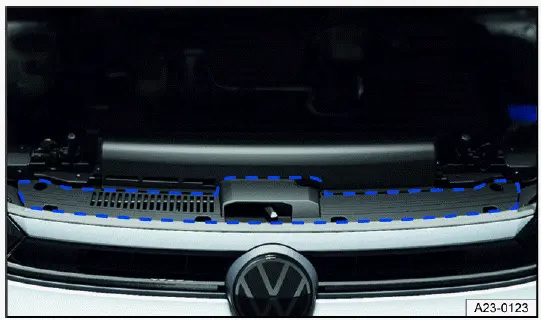
Fig. 167 In the marked area: space for the sticker for engine oil standard and engine oil viscosity (general example).
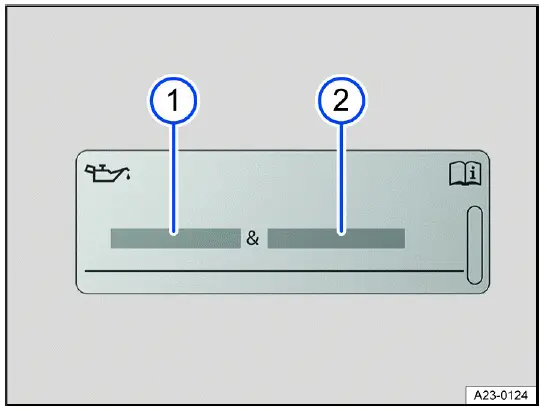
Fig. 168 Engine oil standard and engine oil viscosity label (general example).
- Engine oil viscosity information.
- Engine oil standard information.
If the prescribed engine oil is used fig. 168, the engine oil level can be corrected any number of times as needed ⇒ Checking the engine oil level and adding oil. Correct oil selection is not only about the viscosity number; the VW oil standard is equally important because it defines performance requirements for wear protection, deposits, emissions system compatibility, and long-term stability.
If no engine oil that meets the prescribed standard is available, you may, in an emergency, top up the engine oil no more than once before your next standard oil change using no more than 0.5 l (0.5 qt) of engine oil that meets the following deviating standards. This emergency allowance is intended only to bring the oil level into a safe range until the correct oil can be used.
- Gasoline engines: VW standard 504 00 and ACEA C3, ACEA C4, API SP or ILSAC GF-6A. All viscosity classes in these standards are permitted.
For the Volkswagen Taos, using oil that meets the proper approval is a direct part of engine protection. Oil that looks similar or has a familiar viscosity grade may still be unsuitable if it does not meet the required VW standard. Having the oil change carried out by an authorized Volkswagen dealer or authorized Volkswagen Service Facility is recommended. Volkswagen recommends contacting an authorized Volkswagen dealer or authorized Volkswagen Service Facility.
NOTICE
Using engine oils that have not been approved in accordance with the respective VW standard can cause damage to the engine.
- When refilling, only use engine oils that comply with the quality requirements of the respectively applicable VW standard.
- Only if you absolutely must, add max. 0.5 l (0.5 qt) of engine oil that does not comply with the specified engine oil standards.
- Do not mix unknown oil types or rely only on color, brand name, or viscosity markings when the VW standard is missing.
- If an unsuitable oil has been added, have the vehicle inspected before continuing normal operation.
 Volkswagen recommends Volkswagen Genuine oil.
Changing the engine oil
Please read the introductory information and heed the Warnings and Notice ⇒  Safety precautions for working in the engine compartment.
The engine oil must be changed regularly and in line with the service intervals → page, Information About Service. Oil change intervals are designed to protect the engine under normal and demanding operating conditions. Short trips, cold starts, high temperatures, heavy traffic, dusty roads, and frequent stop-and-go driving can place additional stress on the oil.
Additives in the engine oil can make new engine oil appear dark after a brief engine run time. This is normal and is no reason to change the engine oil more frequently. The oil color alone does not reliably show whether the oil has reached the end of its service life, because detergents and dispersants can darken quickly while doing their job of holding contaminants in suspension.
When servicing the Volkswagen Taos, the oil filter should be replaced together with the engine oil according to the correct service procedure. A fresh filter helps maintain oil flow and keeps collected particles from circulating through the engine after the new oil has been added.
WARNING
If care is not taken when changing engine oil, the oil can cause environmental damage, serious burns, or fire. This could result in serious or fatal injuries.
- Always allow the engine to cool down completely before the engine oil change.
- Always wear eye protection for the engine oil change.
- Keep your arms horizontal when using your fingers to unscrew the oil drain plug, so that the draining oil does not drip down your arm.
- Use a container suitable for collecting used oil that can hold at least the entire quantity of oil in the engine.
- Keep used oil away from hot exhaust parts, sparks, open flames, and electrical equipment.
- Clean spilled oil immediately so it cannot reach belts, pulleys, hoses, painted surfaces, or the ground.
NOTICE
Changing the engine oil and filter requires special tools and specialist knowledge. Failing to act properly may cause damage to the vehicle.
- For this reason, always have the engine oil and filters changed by an authorized Volkswagen dealer or authorized Volkswagen Service Facility. Volkswagen recommends contacting an authorized Volkswagen dealer or authorized Volkswagen Service Facility.
- Incorrect tightening of the drain plug, wrong oil quantity, an unsuitable oil filter, or oil spilled onto engine components can cause leaks, warning messages, engine damage, or fire risk.
 Dispose of the engine oil in a way that will not harm the environment and only at a collection point for used oil, e.g. a recycling center or specialist retailer. Used oil must be kept in a sealed container during transport and must not be mixed with coolant, brake fluid, solvents, fuel, or household chemicals.
Checking the engine oil level and adding oil
Please read the introductory information and heed the Warnings and Notice ⇒  Safety precautions for working in the engine compartment.
Preparations
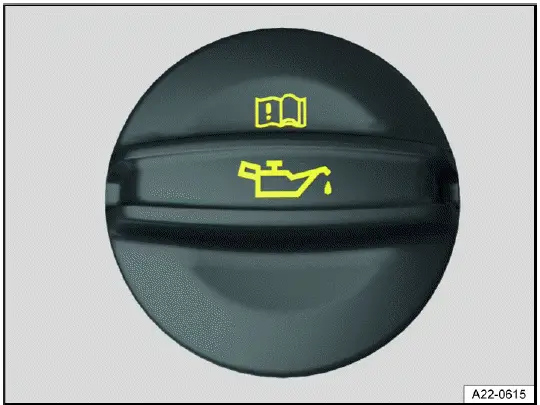
Fig. 169 In the engine compartment: engine oil filler cap (general example).
To avoid an incorrect oil level reading, perform the following steps carefully and in the correct order. The engine oil must have enough time to drain back into the oil pan, and the vehicle must be level so the dipstick reading reflects the actual amount of oil in the engine.
1. With the engine warm from operation, safely park the vehicle on a horizontal and firm surface ⇒ Parking. Avoid checking the oil on a slope, uneven driveway, soft ground, or immediately after switching the engine off.
2. Wait at least five minutes for the engine oil to flow back into the oil pan. This waiting time is important because oil remains distributed through the engine after driving.
3. Open the hood. Make sure the hood is supported correctly and that no loose clothing, tools, or filling containers can fall into the engine compartment.
4. Find the engine oil filler and the dipstick. On the Volkswagen Taos, these points are located in the engine compartment and should be identified before any oil is added.
You can identify these by the  fig. 169 symbol on the engine oil filler cap and the colored handle on the oil dipstick. Never confuse the engine oil filler with another reservoir, because adding oil to the wrong opening can cause serious damage.
Checking the engine oil level
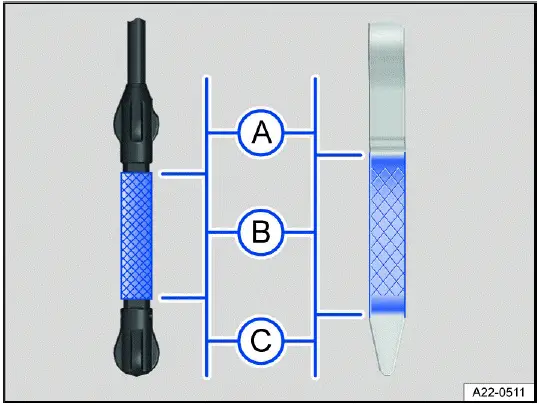
Fig. 170 Engine oil level markings on the oil dipstick (versions).
- The engine oil level is too high.
- Oil level in the normal range.
- The engine oil level is too low.
1. Remove the dipstick from the guide tube and wipe the dipstick off using a clean, lint-free cloth. Dirt, fibers, or old oil streaks can make the reading unclear.
2. Reinsert the dipstick into the guide tube and push it all the way in. If there is an alignment tab on the top of the engine oil dipstick, make sure it lines up with the notch in the guide tube, and that the dipstick goes all the way in. A dipstick that is not fully seated may show an inaccurate oil level.
3. Remove the dipstick again and read the oil level on the dipstick as described below fig. 170. Hold the dipstick level and look at both sides if necessary, because fresh oil can sometimes be difficult to see clearly.
- The engine oil level is too high. If necessary, follow the messages in the instrument cluster display or contact an authorized Volkswagen dealer or authorized Volkswagen Service Facility ⇒
 .
. - Oil level in the normal range. Engine oil can be added up to the upper edge of this area, for example if there is heavy engine load, long-distance driving, or demanding operating conditions.
- The engine oil level is too low. Add engine oil immediately using only oil that meets the correct specification.
4. After reading the oil level, reinsert the oil dipstick into the guide tube and push it all the way in. Make sure it is seated securely so oil vapors and dirt cannot enter through the guide tube.
For high vehicle loads, for example when driving long distances on highways in the summer or when driving through high mountains, the engine oil level should be in the upper section of the permitted area. This gives the engine a safer reserve during extended heat, higher RPM, or steep uphill driving.
Adding engine oil
WARNING
When you top up the engine oil, it could spill or overflow and ignite on contact with engine parts that are hot or may heat up. This may cause burns or a fire. This could result in serious or fatal injuries.
- Always make sure that the engine oil cap is installed securely on the engine filler opening after adding oil and that the oil dipstick is inserted correctly in the guide tube.
- Always use a suitable filling aid when topping up the engine oil.
- Wipe away spilled oil immediately and do not allow oil to run onto hot exhaust parts, belts, hoses, electrical connectors, or painted surfaces.
Only perform these activities in the specified order ⇒  ⇒
⇒  :
:
1. Remove the cap on the engine oil filler fig. 169. Place the cap where it cannot fall into the engine compartment or collect dirt.
2. Top up the engine oil gradually in small quantities, not more than 0.5 l (0.5 quart), or follow the recommendation in the display of the Volkswagen Digital Cockpit. Volkswagen recommends using the approved engine oils in accordance with the respective VW standard. For the Volkswagen Taos, the correct oil approval is just as important as the amount being added.
3. To avoid overfilling, you must wait at least one minute each time you add engine oil so that the engine oil can flow into the oil pan up to the marking on the oil dipstick. Adding oil too quickly can lead to a false low reading and accidental overfilling.
4. Read the oil level on the dipstick again before adding a little more. Never add too much oil. It is safer to add small amounts and recheck than to pour in a large quantity at once.
When you are done adding oil, the oil level should be in the center of area fig. 170 B. The engine oil level must not be in the area fig. 170 A. Overfilled oil can foam, increase crankcase pressure, affect emissions components, and cause engine damage.
5. If you accidentally add too much engine oil and the engine oil level is in area fig. 170 A, do not start the engine ⇒  .
.
Contact an authorized Volkswagen dealer or authorized Volkswagen Service Facility for assistance. The excess oil must be removed correctly before the engine is operated again.
6. Close the cap on the engine oil filler when you are done adding engine oil. Tighten it securely so oil cannot leak or splash from the filler opening while the engine is running.
7. Insert the oil dipstick all the way into the guide tube. If there is an alignment tab on the top of the engine oil dipstick, make sure it lines up with the notch in the guide tube, and that the dipstick goes all the way in.
8. Close the hood. After the hood is closed, check that it is properly latched and flush with the surrounding body panels before driving.
NOTICE
Starting the engine with the engine oil level too high after refilling can cause engine damage.
- Do not start the engine, and seek professional assistance.
- If too much oil has been added, have the excess oil removed using the correct service procedure.
NOTICE
Using incorrect fluids can result in malfunctions and engine damage.
- When topping up fluids, make sure the correct fluids are added to the correct reservoirs.
- Use only engine oil that meets the required VW standard for this model, and do not rely only on the viscosity number or brand name.
 Volkswagen recommends using the approved engine oils in accordance with the respective VW standard.
 If you are not sure where the cap and the oil dipstick are located, contact an authorized Volkswagen dealer or authorized
  Volkswagen Service Facility for assistance. Volkswagen recommends contacting an authorized Volkswagen dealer or authorized Volkswagen Service Facility.
After topping up the engine oil in the Volkswagen Taos, monitor the instrument cluster for warning messages and recheck the level if the vehicle has been driven under heavy load. If the oil level drops again quickly, have the vehicle inspected for leaks or abnormal oil consumption.
Troubleshooting
Please read the introductory information and heed the Warnings and Notice ⇒  Safety precautions for working in the engine compartment.
 Engine oil pressure too low
The red warning light blinks and a message is shown in the instrument cluster display. This warning must be treated as urgent because oil pressure is necessary for lubricating moving engine parts. If pressure is too low, internal engine components may be damaged within a very short time.
 Do not continue driving! Engine damage could result.
1. Stop the vehicle as soon as it is safe to do so ⇒ Parking. Choose a safe location away from traffic and avoid hard acceleration or high engine speed while stopping.
2. Stop the engine. Do not allow the engine to idle while the warning is active.
3. Check the engine oil level ⇒ Checking the engine oil level and adding oil. Make sure the vehicle is on level ground and wait long enough for the oil to drain back into the oil pan before reading the dipstick.
4. If the warning light flashes, do not continue driving or let the engine run, even if the oil is at the correct level. Engine damage could result. Contact an authorized Volkswagen dealer or authorized Volkswagen Service Facility for assistance. In the Volkswagen Taos, this warning may point to a pressure problem that cannot be corrected simply by topping up oil.
 Engine oil level very low
The red warning light blinks and a message is shown in the instrument cluster display. A very low engine oil level can reduce lubrication, increase friction, raise engine temperature, and lead to severe engine damage if the vehicle continues to be driven.
 Do not continue driving! Engine damage could result.
1. Stop the vehicle as soon as it is safe to do so ⇒ Parking. Avoid parking on a steep incline if possible, because an accurate oil level check requires a level surface.
2. Stop the engine and allow it to cool enough for safe checking.
3. Check the engine oil level ⇒ Checking the engine oil level and adding oil.
4. If necessary, top up the engine oil gradually in small quantities, not more than 0.5 l (0.5 qt) in total, or observe the top-up recommendation in the display of the Volkswagen Digital Cockpit. Add oil slowly and recheck the level to avoid overfilling.
5. If the warning light lights up, do not continue driving or let the engine run, even if the oil is at the correct level. Engine damage could result. Contact an authorized Volkswagen dealer or authorized Volkswagen Service Facility for assistance. Continuing to drive with this warning may turn a simple oil level issue into major engine damage.
 Engine oil level too low
The yellow indicator light turns on and a message is shown in the instrument cluster display. This warning indicates that the oil level should be checked and corrected promptly, even if the vehicle may still seem to drive normally.
1. Stop the vehicle as soon as it is safe to do so ⇒ Parking.
2. Stop the engine and wait before checking the oil level so the reading is not distorted by oil still circulating through the engine.
3. Check the engine oil level ⇒ Checking the engine oil level and adding oil.
4. If necessary, top up the engine oil gradually in small quantities, not more than 0.5 l (0.5 qt) in total, or observe the top-up recommendation in the display of the Volkswagen Digital Cockpit. Use only oil that meets the required VW standard.
5. If the indicator light comes on, do not continue driving or let the engine run, even if the oil is at the correct level. Engine damage could result. Contact an authorized Volkswagen dealer or authorized Volkswagen Service Facility for assistance.
 Engine oil level too high
The yellow indicator light turns on and a message is shown in the instrument cluster display. Too much oil can be just as harmful as too little oil, because overfilling may cause foaming, increased crankcase pressure, leaks, or damage to engine and emissions-related components.
1. Stop the vehicle as soon as it is safe to do so ⇒ Parking.
2. Stop the engine. Do not keep the engine running to “burn off” excess oil.
3. Check the engine oil level ⇒ Checking the engine oil level and adding oil. Read the dipstick carefully and confirm the level after waiting the required time.
4. If the engine oil level is too high, do not drive any further or leave the engine running. Engine damage could result. Contact an authorized Volkswagen dealer or authorized Volkswagen Service Facility for assistance. The excess oil must be removed correctly before normal operation continues.
 or
or  Engine oil system malfunction
The indicator light flashes yellow and a message is shown in the instrument cluster display. This may indicate a fault in oil level monitoring, oil measurement, or another part of the engine oil warning system. The vehicle should not be ignored simply because the engine appears to run normally.
1. Contact a suitably qualified professional. Volkswagen recommends contacting an authorized Volkswagen dealer or authorized Volkswagen Service Facility. A diagnostic check may be needed to identify whether the problem is caused by a sensor, wiring, oil level condition, or another system fault.
Engine coolant
Introduction
Only perform work on the engine cooling system if you are familiar with the necessary activities and the general safety precautions, and if the correct operating equipment, approved fluids, and suitable tools are available. The cooling system operates under heat and pressure, so careless work can cause burns, fluid leaks, engine overheating, or serious injuries ⇒  . Have all work performed by suitably qualified professionals if necessary. Volkswagen recommends contacting an authorized Volkswagen dealer or authorized Volkswagen Service Facility.
Information about warning and indicator lights can be found in the troubleshooting section at the end of the chapter ⇒ Troubleshooting. These warnings should be checked immediately, because coolant level, coolant temperature, and cooling system faults can affect engine protection and safe vehicle operation.
In the Volkswagen Taos, the engine coolant helps regulate engine temperature, protect against freezing, reduce corrosion, and support reliable operation in both hot and cold weather. The correct coolant mixture is important; plain water or unsuitable additives may reduce protection and can lead to deposits, freezing, overheating, or component damage.
WARNING
Engine coolant is poisonous. Contact with coolant, especially swallowing coolant, may result in serious or fatal injuries.
- If you swallow coolant, seek urgent medical help.
- If you have health problems after working with coolant, seek medical help.
- Always store engine coolant out of the reach of children and only within the sealed original container.
- Never use empty food cans, bottles, cups, or other household containers to store engine coolant, because someone could drink the engine coolant by mistake.
- Avoid regular contact with coolant to prevent damage to your skin.
- Protect your skin, face, and particularly your eyes when working with coolant.
- Do not eat, drink, or smoke when working with coolant.
- Wash your skin with soap and water after working with coolant.
- Clean up spilled coolant immediately, because it can be slippery and may attract children or animals due to its smell or color.
WARNING
In extremely low temperatures, the coolant can freeze and the vehicle could break down. This can cause the heating to stop working in the vehicle. Vehicle occupants could die of exposure if they do not have sufficient warm clothing.
- Make sure the coolant additive is always adjusted according to the ambient temperature.
- Only use coolant additive approved by the manufacturer.
- Before winter operation or travel to colder regions, have the coolant frost protection checked if there is any doubt about the mixture.
 Coolant and coolant additives can pollute the environment. Catch any leaking operating fluids and dispose of them correctly according to environmental regulations. Do not pour coolant onto the ground, into drains, or into household waste, and have coolant leaks repaired before they lead to overheating or further system damage.
Engine coolant specifications
Please read the introductory information and heed the Warnings and Notice ⇒  Safety precautions for working in the engine compartment.
The cooling system is filled at the factory with a carefully balanced mixture of specially prepared water and at least 40% coolant additive G12evo (TL 744-L). This mixture is designed to help the engine maintain a stable operating temperature, protect internal cooling system passages, and support reliable performance in both hot and cold weather.
The proportion of coolant additive must always be at least 40% to protect the engine cooling system. If stronger freeze protection is required because of the climate, the proportion of coolant additive may be increased. However, the coolant additive content must not exceed 55%, because a mixture that is too concentrated can reduce freeze protection and lower the cooling effect. The correct balance is important for the Volkswagen Taos because the cooling system must provide corrosion protection, heat transfer, and freezing resistance at the same time.
The engine coolant additive can be recognized by its violet color. The mixture of water and coolant additive provides freeze protection down to approx. -25 ºC (approx. -13 ºF), protects the light-alloy parts in the cooling system against corrosion, helps prevent calcium deposits, and significantly increases the boiling point of the coolant. These properties are important for long-term cooling system durability, especially during high outside temperatures, long climbs, heavy traffic, or winter operation.
If the engine coolant is being topped up, use a blend of distilled water and at least 40% G12evo engine coolant additive to ensure optimum corrosion protection ⇒  . Do not top up based only on color or container description; the coolant must meet the required specification.
NOTICE
The coloring of the engine coolant results from the mixture of the purple coolant additive and distilled water. If the fluid in the coolant expansion tank is not purple, but for example brown, the engine coolant has been mixed with another non-suitable coolant. This may result in serious malfunctions or damage to the drive and cooling system.
- Only use coolant additive approved by the manufacturer.
- If the coolant turns brown, have it changed immediately by an authorized Volkswagen dealer or authorized Volkswagen Service Facility. Volkswagen recommends contacting an authorized Volkswagen dealer or authorized Volkswagen Service Facility.
- Never mix original Volkswagen coolant additives with coolant additives that are not approved by Volkswagen when topping up.
- Do not add universal coolant, unknown coolant, or coolant from an unmarked container, even if the color appears similar.
Engine coolant and coolant additives can harm the environment. Even small leaks should be taken seriously because coolant can contaminate soil and water, and it may also indicate a cooling system fault that can lead to overheating.
1. Catch any leaking operating fluids and dispose of them correctly according to environmental regulations. Do not pour coolant onto the ground, into drains, or into household waste.
Checking and filling engine coolant
Please read the introductory information and heed the Warnings and Notice ⇒  Safety precautions for working in the engine compartment.
Preparations
1. Safely park the vehicle on a horizontal and firm surface ⇒ Parking. A level surface is necessary because an uneven position can make the coolant level appear higher or lower than it actually is.
2. Allow the engine to cool ⇒  . Never rely only on a short waiting time after driving; hoses, coolant, and metal parts can remain hot and pressurized for a long period.
3. Open the hood. Work slowly and keep your face, hands, clothing, and tools away from hot parts in the engine compartment.
The coolant expansion tank is identified with the  red symbol on the cap fig. 171.
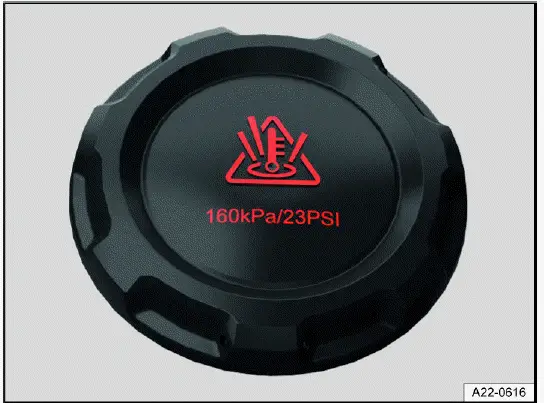
Fig. 171 In the engine compartment: cap on the engine coolant expansion tank.
WARNING
Escaping hot steam or hot coolant and hot components may cause serious burns.
- Never open the engine hood if you can see or hear steam or coolant escaping from the engine compartment.
- Always wait until you can no longer see or hear steam or engine coolant escaping from the engine compartment.
- Keep away from the front of the vehicle if coolant is spraying or dripping onto hot engine parts.
WARNING
The engine cooling system is under pressure when the engine is hot. If the cover is opened carelessly, coolant may spray out and cause serious burns or fatal injuries.
- Never open the cap on the coolant expansion tank when the engine is hot.
- Always protect your face, hands and arms from hot coolant or steam with a large, thick cloth if you have to open the cover of the coolant tank.
- Slowly and very carefully turn the cap on the coolant expansion tank counterclockwise while pressing down lightly on the cap.
- If pressure, steam, or hot coolant begins to escape, stop turning the cap and wait until the system has cooled further.
Checking the coolant level
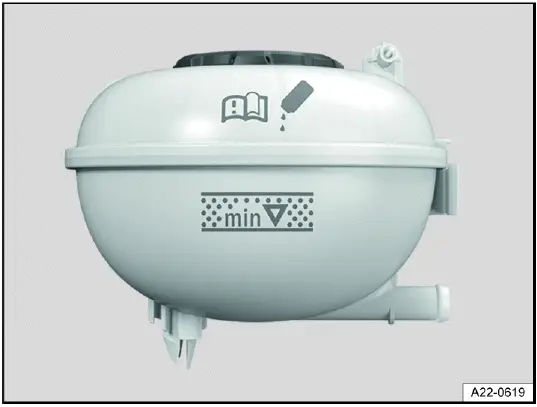
Fig. 172 In the engine compartment: markings on the engine coolant expansion tank.
When new vehicles are delivered or after repairs to the cooling system, the coolant level may be above the marked area. This can be normal and the coolant does not need to be extracted simply because it is slightly higher after service. The level should still be monitored during later checks.
The coolant level cannot be checked exactly for every model, because the view of the fluid level in the coolant expansion tank may be obstructed. If you cannot read the engine coolant level accurately, contact a suitably qualified professional rather than guessing or overfilling the system.
Volkswagen recommends contacting an authorized Volkswagen dealer or authorized Volkswagen Service Facility. A professional inspection is especially useful if the coolant level changes repeatedly, the color looks wrong, or a warning message appears.
1. When the engine is cold, check the coolant level using the markings on the side of the engine coolant expansion tank fig. 172. The coolant level must be between the markings. On the Volkswagen Taos, this check should be done with the vehicle parked level and the engine fully cooled.
2. If the fluid level in the coolant expansion tank is below the minimum mark ("min"), have coolant added. When the engine is warm, the engine coolant level may be slightly above the upper marking because coolant expands as it heats up.
3. If no coolant is visible in the coolant expansion tank, do not add coolant ⇒  . An empty expansion tank may indicate that air has entered the cooling system or that a leak is present.
Filling the coolant
1. Carefully unscrew the cap ⇒  . Open it slowly and only when the engine has cooled enough to avoid pressure-related injury.
2. Only add new coolant that conforms to the Volkswagen specification ⇒ Engine coolant specifications. Use clean filling equipment so dirt, oil, or other fluids do not enter the cooling system.
If there is no engine coolant available that conforms to the required specification, initially only top up with distilled water. This is only a temporary emergency measure and does not replace the correct coolant mixture.
Then have the correct mixture ratio using the specified coolant additive restored as soon as possible by an authorized Volkswagen dealer or authorized Volkswagen Service Facility. Volkswagen recommends contacting an authorized Volkswagen dealer or authorized Volkswagen Service Facility ⇒  .
.
3. Top up the engine coolant to the upper fill level marker. After topping up the engine coolant, the coolant level must be between the markings on the coolant expansion tank fig. 172. Add coolant slowly to avoid splashing and to reduce the risk of overfilling.
4. Install the cap securely. The cap must be tightened correctly so the cooling system can maintain proper pressure during operation.
5. Check the coolant level after one day. If the fill level of the coolant reservoir again drops below the "min" minimum marking, contact an authorized Volkswagen dealer or authorized Volkswagen Service Facility and have the cooling system checked. Volkswagen recommends contacting an authorized Volkswagen dealer or authorized Volkswagen Service Facility. A repeated drop in level may point to a leak, trapped air, or another cooling system fault.
NOTICE
Coolant expands when it heats up. If coolant is topped up above the marked level, excess coolant may leak out and cause damage to the vehicle.
- Do not refill the system with engine coolant above the upper edge of the marked area of the engine coolant tank.
- After topping up, recheck the level only under the recommended conditions so you do not confuse normal expansion with overfilling.
NOTICE
If there is no more engine coolant in the coolant expansion tank, air can get into the cooling system. This could result in damage to the engine.
- Do not continue driving.
- Do not top up the coolant.
- See an authorized Volkswagen dealer or authorized Volkswagen Service Facility for assistance.
- Do not start the engine to “check again” if the expansion tank is empty and a cooling system fault is suspected.
NOTICE
The chemical components contained in water that is not distilled can cause considerable corrosion damage in the engine.
This can cause engine malfunctions.
- Only use distilled water for refilling the system!
- If you have added water that is not distilled, have the fluid in the cooling system changed completely by an authorized Volkswagen dealer or authorized Volkswagen Service Facility. Volkswagen recommends contacting an authorized Volkswagen dealer or authorized Volkswagen Service Facility.
- Do not use tap water, mineral water, rainwater, or unknown water sources for normal coolant refilling.
NOTICE
The use of incorrect fluids can cause serious malfunctions and damage to the engine.
- When filling or changing fluids, make sure the correct fluids are added to the corresponding reservoirs.
- Never confuse the coolant expansion tank with the washer fluid reservoir or any other filler opening in the engine compartment.
Troubleshooting
Please read the introductory information and heed the Warnings and Notice ⇒  Safety precautions for working in the engine compartment.
 Engine coolant
The red warning light blinks. The coolant temperature is too high or the coolant level is too low. This warning requires immediate attention because overheating can quickly lead to engine damage, reduced performance, or a breakdown.
 Do not continue driving! Engine damage could result.
1. Stop the vehicle as soon as it is safe to do so ⇒ Parking. Avoid stopping in traffic if a safer place is available nearby, but do not continue driving for longer than necessary.
2. Stop the engine. Do not allow the engine to idle in an attempt to cool it if the warning remains active.
3. Allow the engine to cool. Keep the hood closed if steam or coolant is escaping, and wait until the engine compartment is safe to approach.
4. Check the engine coolant level on the coolant expansion tank ⇒ Checking and filling engine coolant. In the Volkswagen Taos, only check the level when it is safe to do so and never open the tank while the system is hot and pressurized.
5. If the warning light does not turn off, do not continue driving or let the engine run, even if the engine coolant is at the correct level. A temperature warning can also be caused by a circulation fault, sensor issue, cooling fan problem, or another malfunction.
6. Contact an authorized Volkswagen dealer or authorized Volkswagen Service Facility for assistance. Have the cooling system inspected before returning the vehicle to normal driving, especially if the warning appeared more than once or coolant level dropped again after topping up.
Brake fluid
Introduction
Brake fluid gradually absorbs moisture from the air over time. If too much water enters the brake fluid, the brake system can be damaged and braking performance can be reduced. Moisture lowers the boiling point of the brake fluid, and during heavy braking or repeated full braking, vapor lock may form inside the brake system. Vapor lock can noticeably reduce braking efficiency, increase stopping distance, and in severe cases lead to brake system failure. For the Volkswagen Taos, properly maintained brake fluid is essential because safe stopping depends on consistent hydraulic pressure every time the brake pedal is pressed.
Brake fluid condition should never be judged only by appearance. Fluid that looks clean may still contain too much moisture or may no longer meet the required specification. Regular inspection and timely replacement help protect brake lines, hydraulic components, seals, and the braking response of the vehicle. Your safety and the safety of other road users depend on a brake system that functions correctly in normal driving, emergency braking, wet roads, mountain descents, and stop-and-go traffic.
WARNING
Brake fluid is poisonous. Contact with brake fluid - in particular, if brake fluid is swallowed - may result in serious injury or death.
- If you swallow brake fluid, seek urgent medical help.
- If you have health problems after working with brake fluid, seek medical help.
- Always store brake fluid out of the reach of children and only within the sealed original container.
- Never use empty food cans, bottles, cups, or other household containers to store brake fluid, because someone could drink the brake fluid by mistake.
- Avoid regular contact with brake fluid to prevent damage to your skin.
- Protect your skin, face, and particularly your eyes when working with brake fluid.
- Do not eat, drink, or smoke when working with brake fluid.
- Wash your skin with soap and water after working with brake fluid.
- Wear suitable gloves and avoid breathing vapors when handling brake fluid in a closed area.
NOTICE
Spilled or leaking brake fluid will damage the vehicle's surfaces. The vehicle's paint, plastic parts, and tires may be damaged.
- Immediately wipe up any spilled or leaking brake fluid that comes into contact with vehicle components.
- Then rinse all vehicle parts with plenty of water.
- Do not allow brake fluid to remain on painted panels, trim, rubber parts, wheels, or tires.
 Brake fluid can pollute the environment. Collect spilled brake fluid and dispose of it correctly. Never pour brake fluid onto the ground, into drains, or into household waste, and keep used fluid in a sealed container until it can be taken to an approved collection point.
Brake fluid specifications
Please read the introductory information and heed the Warnings and Notice ⇒  Safety precautions for working in the engine compartment.
Volkswagen has developed a special brake fluid that is optimized for the vehicle's brake system. For optimum brake response, long-term component protection, and stable performance under high temperature load, Volkswagen recommends only using brake fluid that complies with VW standard 501 14.
Before using brake fluid, check that the brake fluid specification printed on the bottle matches the vehicle requirements. Do not rely only on the words “DOT 4” or on the brand name, because the exact chemical composition and performance class still matter.
Brake fluid that complies with VW standard 501 14 can be obtained from an authorized Volkswagen dealer or authorized Volkswagen Service Facility. This is the safest choice when servicing the brake system because it is matched to the expected requirements of the Volkswagen Taos brake components.
If this type of brake fluid is not available and it is therefore necessary to use a different high-quality brake fluid instead, a brake fluid that meets the requirements of DIN ISO 4925 or the US standard FMVSS 116 DOT 4 CLASS 6 can be used. This should be treated as a specification-based choice, not as permission to use any general brake fluid.
Not all brake fluids that comply with the requirements of DIN ISO 4925 or US Standard FMVSS 116 DOT 4 CLASS 6 have the same chemical composition. Some of these brake fluids can contain chemicals that may damage seals, hydraulic components, or other parts of the vehicle brake system over time.
Brake fluid that complies with VW standard 501 14 meets the requirements of DIN ISO 4925 or the US Standard FMVSS 116 DOT 4 CLASS 6. Using the correct fluid helps maintain braking consistency, corrosion protection, and compatibility with the brake system materials.
Checking the Brake Fluid
Please read the introductory information and heed the Warnings and Notice ⇒ Safety precautions for working in the engine compartment.
Preparations
1. Safely park the vehicle on a horizontal and firm surface ⇒ Parking. The vehicle should be stable and secured so the brake fluid level can be checked under normal conditions.
2. Open the hood. Make sure the hood is properly supported and that no dirt, tools, or cleaning cloths can fall into the engine compartment.
Checking the Brake Fluid Level
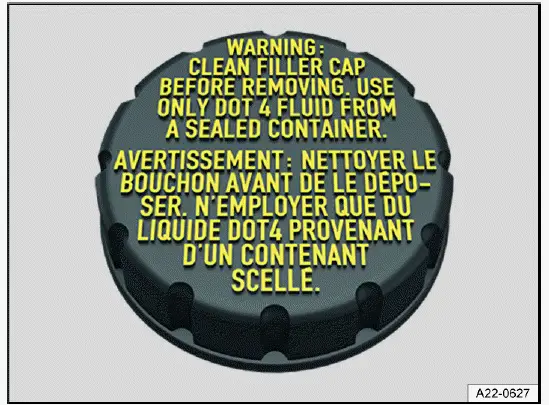
Fig. 173 In the engine compartment: cap on the brake fluid reservoir.
The brake fluid reservoir can be recognized by its cap fig. 173. Before checking the level, make sure you are looking at the correct reservoir and not another fluid container in the engine compartment.
The brake fluid level cannot be checked precisely on all models because the hood or engine components may obstruct the view of the fluid level in the reservoir. If the markings are difficult to see, do not guess or add fluid blindly.
- If you cannot read the brake fluid level clearly, see an authorized Volkswagen dealer or authorized Volkswagen Service Facility for assistance. Volkswagen recommends contacting an authorized Volkswagen dealer or authorized Volkswagen Service Facility.
- If the brake fluid level is not between the min. and max. marking on the brake fluid reservoir, contact an authorized Volkswagen dealer or authorized Volkswagen Service Facility ⇒
 . Volkswagen recommends contacting an authorized Volkswagen dealer or authorized Volkswagen Service Facility.
The brake fluid level decreases slightly when the vehicle is being used as the brake pads wear and the brakes automatically adjust themselves. A small gradual change can be normal, but a low level, sudden drop, or repeated warning must be checked because it may indicate worn brake components or a leak in the hydraulic system.
WARNING
A low brake fluid level or unsuitable brake fluid may cause the brakes to fail or may reduce braking efficiency. Accidents and serious or fatal injuries could result.
- Have the brake system and brake fluid level checked regularly.
- Be sure to use the correct brake fluid.
- Only use brake fluid that expressly complies with the VW standard 501 14.
- In the exceptional case that a brake fluid that conforms to VW standard 501 14 is not available, use only a high-quality brake fluid that complies with DIN ISO 4925 CLASS 6 or the US standard FMVSS 116 DOT 4.
- Do not continue driving if brake pedal feel changes, the warning light comes on, or the brake fluid level is below the permitted range.
Changing brake fluid
Have the brake fluid changed regularly. An authorized Volkswagen dealer or authorized Volkswagen Service Facility can provide information about the interval for changing the vehicle brake fluid. Volkswagen recommends contacting an authorized Volkswagen dealer or authorized Volkswagen Service Facility. On the Volkswagen Taos, brake fluid replacement should be performed with the correct fluid and the proper bleeding procedure so the hydraulic system remains free of air and contamination.
1. Only have brake fluid added that meets the required specifications. Fresh brake fluid must come from a clean, sealed container because opened containers can absorb moisture from the air.
WARNING
Vapor lock may occur in old brake fluid due to absorbed moisture during hard braking, reducing braking efficiency and potentially causing total brake failure. Accidents and serious or fatal injuries could result.
- Have the brake fluid changed regularly.
- Only have new brake fluid added.
- Never reuse drained brake fluid or fluid from an unsealed container.
- Have the brake system inspected if the brake pedal feels soft, travel increases, or braking performance changes.
Troubleshooting
Please read the introductory information and heed the Warnings and Notice ⇒ Safety precautions for working in the engine compartment.
Brake fluid level
 Brake fluid level
The red warning light turns on. The brake fluid level is too low. This warning must be treated as serious because the brake system may no longer be able to build the pressure needed for safe braking.
 Do not continue driving! This could result in the brake failing.
1. Stop the vehicle immediately as soon as it is safe to do so ⇒ Parking. Avoid hard braking if possible, increase distance from other traffic, and choose a safe place to stop.
2. Check the brake fluid level. Do not open the reservoir unnecessarily if dirt or moisture could enter the brake system.
3. If the brake fluid level is too low, contact an authorized Volkswagen dealer or authorized Volkswagen Service Facility. Do not continue driving the Volkswagen Taos until the brake system has been inspected and the cause of the low level has been corrected.
12 V vehicle battery
Introduction
The 12-volt vehicle battery is an essential part of the electrical system and supplies energy to many vehicle functions when the engine is not running or when electrical support is required. It helps power control units, lighting, locking functions, starting systems, convenience features, and other electronic equipment. During maintenance procedures, the 12 V vehicle battery is checked for condition, charge level, secure installation, and possible replacement if its performance is no longer reliable.
You may only perform procedures on the electrical system yourself if you are familiar with the required activities, understand the general safety precautions, and have the correct operating equipment, suitable fluids, and proper tools available. Work performed incorrectly can result in serious injuries, electrical damage, battery explosion, acid burns, or fire ⇒  . If there is any doubt, have all work performed by suitably qualified professionals. Volkswagen recommends contacting an authorized Volkswagen dealer or authorized Volkswagen Service Facility.
Information about warning and indicator lights can be found in the troubleshooting section at the end of the chapter ⇒ Troubleshooting. These warnings should be taken seriously because a weak, disconnected, damaged, or incorrectly charged battery can affect vehicle starting, electronic systems, safety functions, and stored settings.
Battery switch-off in an accident with triggering of the airbag
In vehicles with a 12 V vehicle battery installed in the vehicle interior or luggage compartment, the electrical connection to the 12 V vehicle battery is pyrotechnically disconnected in an accident with airbag deployment. This safety function helps prevent a short circuit after a severe collision. For more information on the installation location of the vehicle battery, refer to section → page, Checking the 12 V vehicle battery acid level. In the Volkswagen Taos, battery-related inspection after an accident should be handled by qualified personnel because electrical and restraint system components may require diagnosis.
Detailed warnings for the 12 V vehicle battery
 Always wear eye protection.
  Battery acid is highly corrosive. Always wear protective gloves and eye protection.
 Fire, sparks, open flame are forbidden.
  A highly explosive mixture of gases forms when charging the 12 V vehicle battery.
  Always keep children away from battery acid and the 12 V vehicle battery.
  Always heed the Owner's Manual.
WARNING
Performing work on the 12 V vehicle battery and the electrical system can cause serious injuries, fires, or electric shocks.
This could result in serious injuries.
- Always read and follow the warning information on the 12 V vehicle battery before touching cables, terminals, covers, clamps, or related electrical components.
- Before performing any work on the 12 V vehicle battery, switch off the ignition and all electrical equipment and disconnect the 12 V battery negative cable.
- Always keep children away from battery electrolyte and the 12 V vehicle battery.
- When handling 12 V vehicle batteries, always protect your hands, arms, and face from spraying battery acid.
- Always wear eye protection and safety gloves.
- Never short circuit the battery terminals. Do not place tools, jewelry, cables, metal parts, or conductive objects across the positive and negative terminals.
- Do not tilt, drop, strike, open, or modify the 12 V vehicle battery. Damage to the housing can allow acid to escape.
WARNING
When work is carried out on the 12 V vehicle battery, a highly explosive, flammable gas mixture builds up. Sparks could form and ignite the flammable gas that is released by the 12 V vehicle battery. This can result in serious injury or death.
- Always keep fires, sparks, cigarettes, glowing objects, and open flames far away from the 12 V vehicle battery.
- Avoid creating sparks when working with wires and electrical equipment or when discharging static electricity.
- Do not connect or disconnect chargers, jumper cables, or battery terminals carelessly. Follow the correct sequence and use only suitable equipment.
- Work in a well-ventilated area whenever the 12 V vehicle battery is being charged or inspected.
WARNING
California Proposition 65 Warning.
- This product can expose you to chemicals including lead and lead components, which are known to the State of California to cause cancer and birth defects or other reproductive harm. For more information go to https://www.P65Warnings.ca.gov.
NOTICE
UV rays can damage the battery housing.
- Do not expose the 12 V vehicle battery to direct sunlight for a long period of time.
- If the battery is removed from the vehicle, store it in a protected, cool, dry, and well-ventilated place.
NOTICE
The 12 V vehicle battery could freeze and be destroyed.
- Protect the 12 V vehicle battery against freezing temperatures if the vehicle is parked for long periods of time.
- A discharged battery is more likely to freeze than a properly charged battery, so have the charge level checked if the vehicle will not be used for an extended period.
 After starting the engine when the 12-volt vehicle battery is severely drained or when it has been replaced or jump-started, the system settings such as time, date, personal convenience settings, programming, and user profiles may be changed or erased. Check and correct the settings after the 12 V vehicle battery is sufficiently recharged. In the Volkswagen Taos, it may also be necessary to verify comfort functions, clock settings, stored profiles, and other electronic features after battery service or a deep discharge.
Checking the 12 V vehicle battery acid level
Please read the introductory information and heed the Warnings and Notice ⇒ Safety precautions for working in the engine compartment.
The 12 V vehicle battery generally does not require routine maintenance by the driver. However, its condition can still affect starting performance, electrical reliability, convenience settings, and the operation of many vehicle systems. For this reason, the battery should be checked whenever there are signs of weak starting, repeated electrical warnings, long parking periods, or visible battery-related concerns.
Check the acid level of the 12 V vehicle battery regularly in the following situations:
- On vehicles with high mileage, because age and operating history can gradually reduce battery performance.
- In countries with a warm climate, where heat can accelerate battery aging and fluid loss.
- On vehicles with an old 12 V vehicle battery, especially if starting has become slower or electrical functions behave irregularly.
12 V vehicle battery location
The 12 V vehicle battery is located in the engine compartment. On the Volkswagen Taos, access may vary depending on equipment, covers, and nearby brackets, so always identify the battery area carefully before starting any inspection.
Preparations
1. Prepare the vehicle for work in the engine compartment. Park the vehicle safely, switch off the ignition, secure it against rolling, and make sure the engine compartment is cool enough to work around.
2. Wear suitable eye protection and safety gloves. Battery acid can cause serious injury even if only a small amount contacts the skin or eyes.
3. Open the hood. Make sure the hood is properly supported and keep tools, jewelry, loose clothing, and metal objects away from the battery terminals.
Checking the battery acid level
WARNING
Battery acid is corrosive. Contact with battery acid, especially swallowing battery acid, can result in serious burns.
- Never open a 12 V vehicle battery.
- Never tilt the 12 V vehicle battery. Acid can leak out of the vent openings.
- Protect your skin, face, and particularly your eyes when working with the 12 V vehicle battery.
- Do not eat, drink, or smoke when working on the 12 V vehicle battery.
- Wash your skin with soap and water after working on the 12 V vehicle battery.
- If acid comes into contact with your skin or hair, remove all soiled or wet clothing and wash your skin and hair with water. Consult a doctor.
- If acid comes into contact with your eyes, rinse the affected area carefully with water for several minutes. Then consult a doctor immediately.
- If you swallow battery acid, immediately drink plenty of water and swallow activated charcoal. Consult a doctor immediately.
- If you have inhaled acid vapors, leave the hazard area and breathe in fresh air. Consult a doctor immediately.
- Do not touch your face, eyes, or clothing while working near the battery, even if no visible acid is present.
WARNING
When work is carried out on the 12 V vehicle battery, a highly explosive, flammable gas mixture builds up. Sparks could form and ignite the flammable gas that is released by the 12 V vehicle battery. This can result in serious injury or death.
- Always keep fires, sparks, cigarettes, hot objects, and open flames far away from the 12 V vehicle battery.
- Avoid creating sparks when working with wires and electrical equipment or when discharging static electricity.
- Do not place metal tools across the terminals, and do not allow the positive terminal to contact grounded metal parts.
- Only use suitable test equipment and follow the correct procedure if the battery or electrical system must be inspected.
Depending on the vehicle equipment, an additional bracket must be removed to see the viewing window. An additional tool that is not available in the vehicle tool kit is required to do this. Because incorrect removal can damage parts around the battery or disturb the electrical system, always have the acid level of the 12 V vehicle battery checked by an authorized Volkswagen dealer or authorized Volkswagen Service Facility. Volkswagen recommends contacting an authorized Volkswagen dealer or authorized Volkswagen Service Facility.
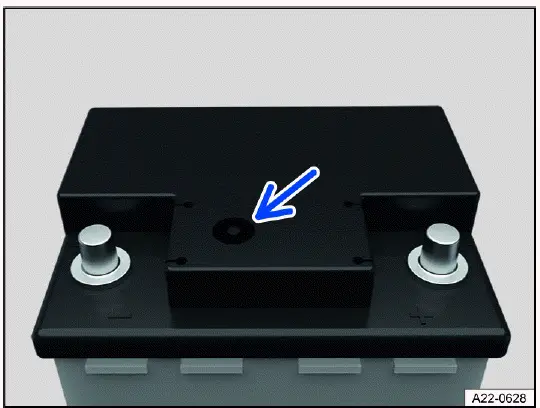
Fig. 174 On the top of the 12 V vehicle battery: Window (general example).
Make sure there is enough lighting to clearly see the color indicator in the circular window on the top of the 12 V vehicle battery fig. 174. Do not use an open flame or any unsafe light source near the battery. If the viewing window is dirty or difficult to read, have the battery inspected professionally rather than guessing the condition.
Light yellow or colorless
- The 12 V vehicle battery acid level is too low. Have the 12 V vehicle battery replaced by an authorized Volkswagen dealer or authorized Volkswagen Service Facility. Volkswagen recommends contacting an authorized Volkswagen dealer or authorized Volkswagen Service Facility. Do not attempt to open, refill, tilt, or repair the battery yourself.
Black
- The 12 V vehicle battery acid level is OK. Even when the viewing window shows a normal indication, battery performance may still need professional testing if the vehicle starts poorly, electrical warnings appear, or the Volkswagen Taos has been parked for a long time.
The acid level of 12 V vehicle batteries labeled AGM cannot be checked for technical reasons. Suitably qualified professionals can inspect the battery condition with the correct diagnostic equipment. Volkswagen recommends contacting an authorized Volkswagen dealer or authorized Volkswagen Service Facility, especially if the battery is old, repeatedly discharged, or suspected of causing electrical faults in the Volkswagen Taos.
Charging, replacing, disconnecting, or connecting the 12 V vehicle battery
Please read the introductory information and heed the Warnings and Notice ⇒ Safety precautions for working in the engine compartment.
If you suspect that the 12 V vehicle battery is damaged, weak, deeply discharged, or malfunctioning, have it checked by suitably qualified professionals before any charging, replacement, disconnection, or reconnection work is attempted. A battery fault can affect starting, comfort systems, control modules, warning lights, and stored vehicle settings. Volkswagen recommends contacting an authorized Volkswagen dealer or authorized Volkswagen Service Facility.
Charging the 12 V vehicle battery
The 12 V vehicle battery should be charged by suitably qualified professionals because the battery installed at the factory requires a controlled charging process with limited voltage ⇒  . Using an unsuitable charger, incorrect charging mode, or excessive voltage can damage the battery, electronic control units, and electrical consumers. Volkswagen recommends contacting an authorized Volkswagen dealer or authorized Volkswagen Service Facility.
For the Volkswagen Taos, charging should be carried out with equipment that is compatible with the vehicle battery type and the vehicle electrical system. Do not use improvised chargers, damaged cables, or equipment that cannot regulate charging voltage. If the battery has frozen, leaked, swollen, overheated, or produced an unusual odor, do not charge it.
Replacing the 12 V vehicle battery
The 12 V vehicle battery is designed to fit the location where it is installed and is equipped with safety features matched to the vehicle. If a 12 V vehicle battery needs to be replaced, have the replacement part fitted by qualified professionals. Volkswagen recommends contacting an authorized Volkswagen dealer or authorized Volkswagen Service Facility. Qualified professionals can confirm the correct component information, including size, capacity, maintenance requirements, performance rating, safety features, and battery type. They must also have the necessary technical documentation and equipment. Volkswagen recommends contacting an authorized Volkswagen dealer or authorized Volkswagen Service Facility. The vent opening on the 12 V vehicle battery must always be located on the negative terminal side. The vent opening on the positive terminal side must always be sealed ⇒  .
.
Only use a maintenance-free 12 V vehicle battery that conforms to the TL 825 06 and VW 7 50 73 standards. These standards must be from October 2014 or later. A battery that only appears similar in size may still be unsuitable if its electrical characteristics, safety design, venting arrangement, or mounting points do not match the required specification.
Always have the 12 V vehicle battery replaced by qualified professionals because the vehicle electronics must be adapted as part of the replacement. Only qualified professionals have the necessary equipment to perform the adaptation and have access to the correct replacement batteries. Without the correct adaptation, the charging strategy, energy management, warning messages, and battery monitoring functions may not operate as intended.
Disconnecting the 12 V vehicle battery
If the 12 V vehicle battery must be disconnected from the vehicle electrical system, note the following steps. Work slowly, keep metal tools away from the terminals, and make sure no electrical consumer is active before disconnecting the cables.
1. Switch off all electrical consumers, including lights, infotainment equipment, climate control, seat heating, and any connected accessories.
2. Unlock the vehicle before disconnecting the battery. Otherwise, the anti-theft alarm system will be triggered. Make sure the vehicle can still be accessed after power is disconnected.
3. Disconnect the negative cable first, and then the positive cable ⇒  . Disconnecting the cables in the wrong order can create a short circuit risk if a tool touches grounded metal parts.
Connecting the 12 V vehicle battery
If the 12 V vehicle battery must be connected to the vehicle electrical system, note the following steps. Before reconnecting, check that the battery is correctly positioned, securely fastened, and that the terminals and cable clamps are clean and undamaged.
1. Switch off all electrical consumers. This helps reduce the load on the electrical system when the battery is reconnected.
2. Connect the positive cable first, and then the negative cable ⇒  . Make sure the clamps are seated firmly and cannot move on the terminals.
Various indicator lights may turn on after connecting the 12 V vehicle battery and switching the ignition on. They will usually turn off after driving a short distance at a speed of approx. 15 to 20 km/h (approx. 10 to 12 mph). If the indicator lights remain on, contact an authorized Volkswagen dealer or authorized Volkswagen Service Facility and have the vehicle checked. Volkswagen recommends contacting an authorized Volkswagen dealer or authorized Volkswagen Service Facility.
If the 12 V vehicle battery was disconnected for a long period of time, the next scheduled maintenance may not display correctly or may not be calculated correctly ⇒ Service interval display. Follow the maximum permissible maintenance interval ⇒ Maintenance. In the Volkswagen Taos, it may also be necessary to check the time, date, user profiles, convenience settings, window functions, and other stored settings after the battery has been disconnected or replaced.
Vehicles with a starter button: If the ignition cannot be switched on after connecting the 12 V vehicle battery, carry out the following activities carefully. This situation can occur when the vehicle electronics need to recognize the restored power supply after the battery has been disconnected, replaced, or deeply discharged.
1. Lock and unlock the vehicle from the outside. This may help the control systems complete the wake-up process and restore normal access authorization.
2. Try to switch the ignition on again. Make sure the vehicle key is inside the vehicle and that no warning messages indicate a problem with key recognition or the electrical system.
3. If the ignition will not switch on, see an authorized Volkswagen dealer or authorized Volkswagen Service Facility for assistance. In the Volkswagen Taos, further diagnosis may be needed if the ignition, immobilizer, or battery management system does not respond correctly after the 12 V battery has been reconnected.
Automatic equipment deactivation
If the ignition is switched on for a very long time while the engine is off, or if the parking light remains switched on for a long period while the vehicle is parked, the intelligent power management system cannot always prevent the 12 V vehicle battery from being drained. Even though the system is designed to protect battery capacity, extended electrical use without the engine running can still reduce the charge level.
If the 12 V vehicle battery is under a heavy load, the intelligent power management system will automatically begin certain measures to help prevent the battery from draining completely. These measures may be noticeable to the driver, but they are intended to keep enough power available for important vehicle functions and starting.
- The idle speed will be increased so that the alternator delivers more power and helps recharge the 12 V vehicle battery more effectively.
- If necessary, equipment that uses a lot of power will have its performance limited or will be switched off temporarily, for example comfort or convenience systems that are not essential for driving.
- The power supply to the 12 V socket will be interrupted temporarily when the engine is started so that more electrical energy is available for starting and basic vehicle operation.
12 V Vehicle Battery Draining
If the battery is drained, it may not be possible to start the engine. A low battery charge can also cause warning lights, reset settings, reduced convenience functions, or temporary electrical malfunctions. The 12 V vehicle battery may be drained in the following situations:
- If the vehicle is parked for long periods of time without running the engine, especially if the ignition is on or electrical systems remain awake.
- If electrical equipment is used when the ignition is switched off, such as interior lighting, infotainment functions, charging accessories, or other connected devices.
- If the vehicle is used mainly for short trips and the battery does not have enough time to recharge between starts.
- If accessories are connected to the 12 V socket or another power supply for too long while the engine is not running.
WARNING
Use of a 12 V vehicle battery that does not have identical specifications and dimensions to the 12 V vehicle battery that was installed at the factory may cause short circuits or fire. This could result in serious or fatal injuries.
- Always use a maintenance-free and leak-proof 12 V vehicle battery that has the same characteristics, specifications, and dimensions as the 12 V vehicle battery that was installed at the factory.
- Do not install a battery simply because it fits physically. Capacity, terminal position, venting, safety design, and compatibility with the vehicle electronics must also match the requirements of the Volkswagen Taos.
WARNING
Fitting 12 V vehicle batteries incorrectly may cause short circuits or fire. This could result in serious or fatal injuries.
- Always attach the 12 V vehicle battery to the attachment points provided in the vehicle.
- Replace all covers that are required for the vehicle back on the battery.
- Make sure the battery is seated securely and cannot move, tilt, or vibrate while the vehicle is being driven.
- Keep the battery terminals, cable clamps, protective covers, and nearby wiring correctly positioned after installation.
WARNING
A highly explosive mixture of oxyhydrogen can form when charging the 12 V vehicle battery. Sparks or naked flames could ignite the gas mixture. This could cause serious burns.
- Only charge 12 V vehicle batteries in well-ventilated areas.
- Keep sparks and naked flames away from the 12 V vehicle battery.
- Do not smoke near the battery, and do not connect or disconnect charging equipment carelessly.
- Never charge a battery that is damaged, leaking, frozen, swollen, or visibly deformed.
WARNING
If the degassing tube is not attached to the 12 V vehicle battery correctly, the highly explosive gas mixture that builds up when the vehicle is running may enter the vehicle interior. The flammable gas could ignite and cause serious injuries or death.
- For vehicles with the 12 V vehicle battery in the vehicle interior or luggage compartment, ensure that the degassing hose is connected to the 12 V vehicle battery correctly. The degassing hose must always be connected to the negative terminal side of the 12-volt vehicle battery.
- Always ensure that the opening on the positive terminal side of the 12 V vehicle battery is capped.
- After battery replacement, have the venting arrangement checked if there is any doubt about the hose position or sealing cap.
CAUTION
A drained 12 V vehicle battery can freeze at temperatures around 0 ºC (+32 ºF). Acid may escape from a 12 V vehicle battery that has been frozen and thawed. This can cause injuries and damage to the vehicle over the long term.
- Never charge a frozen or thawed 12 V vehicle battery.
- Always replace the 12 V vehicle battery if it freezes.
- If the Volkswagen Taos has been parked in freezing temperatures with a weak or drained battery, have the battery inspected before charging, jump-starting, or continued use.
CAUTION
Cables that are connected incorrectly can cause a short circuit. This could damage the on-board electronics and result in serious injuries.
- Connect the positive cable first and then the negative cable. Always make sure the cable clamps are positioned securely and cannot touch each other or nearby metal parts.
- Use insulated tools where appropriate and avoid wearing jewelry, watches, or other conductive objects when working near the battery terminals.
NOTICE
If the 12 V vehicle battery is connected or disconnected when the ignition is switched on or the engine is running, this could damage the electrical system or electronic components, resulting in electrical malfunctions.
- Never connect or disconnect the 12 V vehicle battery when the ignition is on or the engine is running.
- Before touching the battery cables, switch off all electrical consumers and make sure the vehicle is in a safe, stationary condition.
NOTICE
If accessories that provide power for charging the 12 V vehicle battery are connected to the 12 V socket, this could damage the electrical system or electronic components, resulting in electrical malfunctions.
- Never connect accessories that provide power, such as solar panels or battery chargers, to the 12 V socket in order to charge the 12 V vehicle battery.
- Only use charging equipment and connection points that are suitable for the vehicle electrical system and approved for this type of work.
 12 V vehicle batteries can contain toxic substances such as sulfuric acid and lead. Dispose of 12 V vehicle batteries correctly. Do not place old batteries in household waste, do not leave them exposed outdoors, and do not allow leaking battery fluid to reach the ground, drains, or water sources.
 Battery acid can pollute the environment. Collect spilled battery acid and dispose of it correctly. If acid has leaked, avoid direct contact, keep people and animals away from the area, and have the battery handled by qualified professionals.
Troubleshooting
Please read the introductory information and heed the Warnings and Notice ⇒ Safety precautions for working in the engine compartment.
 12-volt power supply
The red warning light turns on and a message is shown in the instrument cluster display. This warning indicates a serious problem with the 12-volt power supply. If the electrical system can no longer provide stable power, important vehicle functions may be affected, including engine management, lighting, steering assistance, brake-related systems, and driver assistance functions.
 Do not continue driving! Possible failure of the electrical system.
1. Stop the vehicle immediately and park it safely. Choose a location away from moving traffic if possible, switch on the emergency flashers if they are still available, and avoid unnecessary steering or braking maneuvers.
2. Turn off electrical equipment that is not needed. This includes heated seats, rear window defroster, interior lighting, infotainment functions, climate control settings, and connected accessories.
3. Switch the ignition off. Do not restart the engine repeatedly if the warning remains active, because unstable voltage can create additional malfunctions.
4. Contact an authorized Volkswagen dealer or authorized Volkswagen Service Facility for assistance. The vehicle should be checked with proper diagnostic equipment to determine whether the issue is caused by the battery, alternator, charging system, wiring, battery monitoring, or another electrical fault.
If the red warning light comes on, the start-stop system is switched off. The start-stop system will only be automatically switched on again after the engine is restarted and the electrical system has enough reserve capacity. In the Volkswagen Taos, this behavior is intended to preserve power for essential vehicle functions rather than convenience operation.
 12-volt power supply
The yellow indicator light turns on and a message is shown in the instrument cluster display. This usually indicates that the 12 V vehicle battery charge level is low or that the 12-volt power supply needs attention. The vehicle may still be drivable, but electrical functions can be limited to reduce battery load.
Messages about the battery charge level of the 12 V vehicle battery.
1. Let the engine run so that the 12 V vehicle battery can be recharged. Avoid switching on unnecessary electrical consumers while the battery is recovering.
2. If the message about the battery charge level of the 12 V vehicle battery does not turn off after a few minutes despite the measures having been taken, then contact an authorized Volkswagen dealer or authorized Volkswagen Service Facility. A weak battery, charging system fault, poor connection, or repeated short-trip use may prevent the battery from recovering normally.
Messages about the 12 V power supply.
1. Contact an authorized Volkswagen dealer or authorized Volkswagen Service Facility for assistance. A diagnostic check may be needed if the warning is repeated, appears after battery replacement, or is accompanied by other electrical warnings.
If the yellow indicator light lights up, the start-stop system will not be able to start the engine. If the yellow indicator light has turned off, the 12 V vehicle battery has a sufficient battery charge level to automatically restart the engine. For the Volkswagen Taos, this is a normal protective strategy: automatic restarting is only allowed when the battery condition is strong enough to support it safely.